Part 4 of 5 · JLPT N2
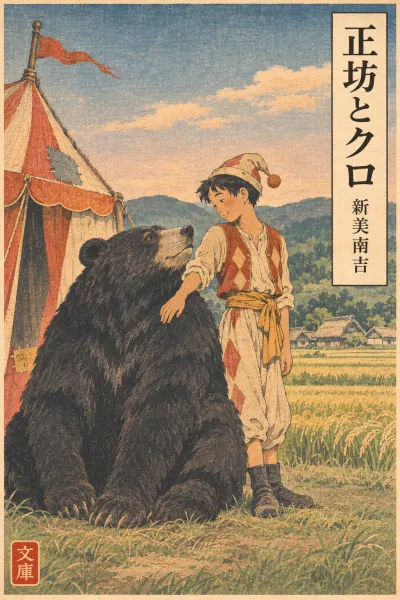
正坊とクロ(四) Shōbō to Kuro, part 4: The Circus Falls Apart
In this part
The little circus earns barely enough to get by, and then one of its horses dies of illness. About a month later, all the other acrobats run away, leaving only the ringmaster, Ochiyo and Shōbō, so the troupe has to break up. Kuro is sold to a town zoo and the circus's things are sold off. Before heading home with nothing, the ringmaster asks the police to find Shōbō and Ochiyo live-in jobs at a knitwear factory.
AI translation · independently checked
小さなサーカスは、村むらをねっしんにうってまわりましたが、みいりはほんの、みんなが、かつかつたべていけるだけの、わずかなものでした。The little circus worked hard, going from village to village putting on shows, but its earnings were tiny, only just enough for everyone to scrape by.
そのうちに、一とうの馬が病気で死んでしまいました。Before long, one of the horses fell ill and died.
「おしいことをしたなあ」と、団長をはじめ、留じいさんもお千代さんも、正坊も五郎も、馬の死がいをとりまいてなげきました。"What a pity," they lamented, and everyone, from the ringmaster on down, including old Tome, Ochiyo, Shōbō and Gorō, gathered around the horse's body and grieved.
それからひと月もたったある朝、目をさましてみると、団長とお千代さんと、正坊の三人きりをのこして、ほかの軽業師は、みんな小屋をにげ出していました。A month or so later, they woke one morning to find that all the other acrobats had run away from the circus, leaving only the ringmaster, Ochiyo and Shōbō behind.
これではいよいよ、興行することができなくなりました。Now there was really no way they could put on any more shows.
団長もしかたなく、わかれわかれになることに話をきめました。The ringmaster had no choice, and it was decided that they would all go their separate ways.
クロはおりにいれられたまま、車にゆられて、町の動物園に売られていきました。Kuro, still shut inside his cage, was jolted along in a cart and sold to the zoo in town.
正坊とお千代さんは、のこった一とうの馬と、テントやテーブルやいすなぞを売りはらって、できたお金をもらいました。Shōbō and Ochiyo sold off the one remaining horse and the tent, the tables, the chairs and so on, and were given the money it brought.
「団長さんはなんにもなくなって、どうするの」"You've got nothing left now, sir. What are you going to do?"
と、正坊がたずねますと、団長はさびしそうにわらって、When Shōbō asked this, the ringmaster gave a lonely smile
「なんにもなくって家を出たんだから、なんにもなくって家へかえるんだよ」"I had nothing when I left home, so I'll go back home with nothing."
と、いいました。he said.
団長は、町の警察にたのんで、正坊とお千代さんを、メリヤス工場へすみこませてもらいました。The ringmaster asked the town police for help and got Shōbō and Ochiyo placed as live-in workers at a knitwear factory.
Vocabulary
| Word | Meaning | JLPT |
|---|---|---|
| うってまわりましたうってまわる | to tour around putting on showsdictionary form: 打って回る打つ here means to stage a performance (興行を打つ); 回る adds the idea of going from place to place. | — |
| みいりみいり | earnings, incomedictionary form: 実入りLiterally 'the filling of the grain'; used for how much money something brings in. | — |
| かつかつかつかつ | barely, only just (enough)Often かつかつ食べていく: to just about make a living. | — |
| おしいおしい | regrettable, a shame to losedictionary form: 惜しいおしいことをした: 'what a loss', said when something valuable is lost. | N2 |
| 死がいしがい | dead body, carcassdictionary form: 死骸Used for animals as well as people. | — |
| なげきましたなげく | to grieve, to lamentdictionary form: 嘆く | N1 |
| 軽業師かるわざし | acrobat軽業 = acrobatics; 〜師 marks a professional performer or craftsman. | — |
| 興行こうぎょう | putting on a show, staging a performance | — |
| いよいよいよいよ | now really, finally (things have come to this) | N2 |
| わかれわかれわかれわかれ | separated, each going their own waydictionary form: 別れ別れ | — |
| ゆられてゆられる | to be jolted, to be rocked aboutdictionary form: 揺られるPassive of 揺る/揺らす, typical for riding in a bumpy vehicle. | — |
| 売りはらってうりはらう | to sell off (everything)dictionary form: 売り払う | — |
| メリヤスめりやす | knitted fabric, knitwearOld loanword (from Spanish/Portuguese 'medias', stockings); today ニット is more common. | — |
| すみこませてすみこむ | to live in (at one's workplace)dictionary form: 住み込むWorkers who live where they work are 住み込み. | — |
Grammar
〜てしまう N4 completion, often with regret
Adding てしまう to 死ぬ stresses that the event is final and unfortunate. It conveys the troupe's sense of loss.
一とうの馬が病気で死んでしまいました。
One of the horses fell ill and died.
〜をはじめ N2 starting with, including (as the chief example)
Names the most important member of a group first, then lists the others with も. Here the ringmaster heads the list of mourners.
団長をはじめ、留じいさんもお千代さんも、正坊も五郎も
the ringmaster first of all, and old Tome and Ochiyo, Shōbō and Gorō too
〜きり N2 only, just (nothing more)
Attached to a number or noun, きり limits it strictly: only these three were left. It is close in meaning to だけ but sounds more emphatic.
正坊の三人きりをのこして
leaving only the three of them, including Shōbō
〜たまま N4 while still in a certain state
Verb in た-form + まま means the state continues unchanged while something else happens. Kuro stays locked in the cage the whole journey.
クロはおりにいれられたまま、車にゆられて
Kuro, still shut inside his cage, was jolted along in a cart
〜させてもらう N3 to get someone to let/arrange for something to happen
Causative + てもらう means getting someone to arrange or allow something for your benefit. Here the ringmaster is the beneficiary: he asked the police, and through them got Shōbō and Ochiyo taken in as live-in workers at a knitwear factory.
正坊とお千代さんを、メリヤス工場へすみこませてもらいました。
they arranged for Shōbō and Ochiyo to live and work at a knitwear factory.