Part 5 of 5 · JLPT N2
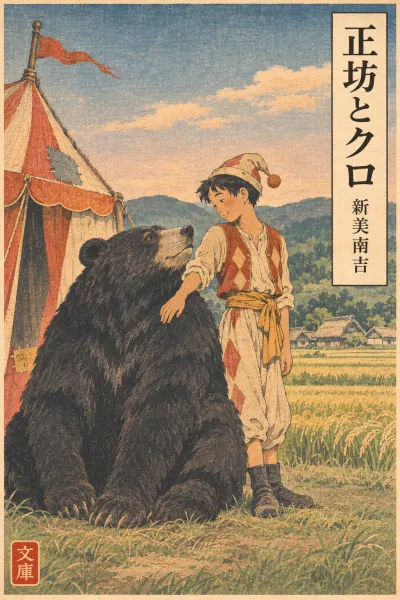
正坊とクロ(五) Shōbō to Kuro, part 5: A Familiar Tune at the Zoo
In this part
Kuro now lives in a cage at the town zoo and spends his days gazing listlessly at the sky, longing for Shōbō and Ochiyo. One day a familiar voice calls his name, and Shōbō hums 'The Brave Sailor'. Kuro springs up and marches around just as he did in the circus. Shōbō and Ochiyo have used their first day off to visit him, and Kuro cries out with joy.
AI translation · independently checked
クロは町の動物園にかわれるようになってからは、まい日、力のない目で、青い空のほうばかりを見あげていました。After Kuro came to be kept at the zoo in town, he spent every day just gazing up at the blue sky with listless eyes.
正坊やお千代さんはどうしているんだろうなあ、もういちどあって、あの「ゆうかんなる水兵」の曲がききたいなあと、そんなことを思いつづけてでもいるようなかっこうでした。He looked as if he kept thinking, over and over: "I wonder how Shōbō and Ochiyo are doing. I wish I could see them once more and hear that tune, 'The Brave Sailor.'"
おりの前には、まい日、いろんなきものをきたいろんな子どもたちが、立ちふさがりました。Every day, all sorts of children in all sorts of clothes stood crowded in front of the cage.
クロは、正坊やお千代さんが、もしかきているかもしれないと思って見まわしました。Kuro looked all around, thinking that Shōbō or Ochiyo might perhaps have come.
それは正坊だったら、赤と白のダンダラ服をきているから、すぐわかると思ったからでした。That was because he thought that if it were Shōbō, he would know him at once, since Shōbō would be wearing his red-and-white striped costume.
ゆめのように、ぼんやりそんなことを思いつづけているとき、すぐ鼻のさきで「クロ」とよぶ、ききなれた声がひびきました。As he went on vaguely thinking such things, as if in a dream, a familiar voice rang out right under his nose, calling, "Kuro!"
クロはものうい目をあげて、声のするほうをのぞきました。Kuro lifted his weary eyes and peered toward the voice.
ウウウウ、ウウウ、Mmm-mmm-mmm-mmm, mmm-mmm-mmm,
ウウウウウ、Mmm-mmm-mmm-mmm-mmm,
ウウウウ、ウウウ、Mmm-mmm-mmm-mmm, mmm-mmm-mmm,
ウウウウウ、Mmm-mmm-mmm-mmm-mmm,
と、正坊は「ゆうかんなる水兵」の曲をうなりだしました。and with that, Shōbō began humming the tune of "The Brave Sailor."
クロはきゅうにからだじゅうに、血がめぐりだしてきたように、いさましく立ちあがって、サーカスでしていたときのように、歩調をとっておりの中を歩きまわりました。All at once, as if blood had begun to flow through his whole body, Kuro rose boldly to his feet and marched around the cage in step, just as he used to do in the circus.
それから、かなぼうの間から口を出して、なつかしそうに、正坊のほうをあおぎ見ました。Then he pushed his mouth out between the iron bars and looked up at Shōbō fondly.
ダンダラの服はきていませんでしたが、正坊にちがいないことがわかると、クロはウォーンウォーンと、のどをしぼるような、うれしなきのさけびをあげました。Shōbō was not wearing his striped costume, but when Kuro realised it was certainly him, he let out a joyful, tearful cry, "Wooon, wooon," as if he were squeezing it from his throat.
正坊はにこにこしながら、ふくろからビスケットをつかみ出して、クロの口の中へいれてやり、なんどもなんども鼻のうえをなでてやりました。Beaming, Shōbō took a handful of biscuits from a bag, put them into Kuro's mouth, and stroked the top of his nose again and again.
正坊のうしろでは、お千代が、なみだぐんだ目をして見ていました。Behind Shōbō stood Ochiyo, watching with tears in her eyes.
ふたりは、はじめての定休日に、クロを見にきたのでした。The two of them had come to see Kuro on their very first day off.
Vocabulary
| Word | Meaning | JLPT |
|---|---|---|
| かわれるかう | to be kept (as an animal)dictionary form: 飼うPassive of 飼う 'to keep or raise an animal'. Do not confuse it with 買う 'to buy', which has the same reading. | N3 |
| 立ちふさがりましたたちふさがる | to stand in the way of; to stand blocking (someone's path or view)dictionary form: 立ち塞がるMade from 立つ 'to stand' and 塞がる 'to be blocked'. | — |
| ダンダラだんだら | striped (in bold bands)dictionary form: だんだらDescribes bold horizontal stripes, a typical pattern for circus costumes. It is often written in katakana. | — |
| ききなれたききなれる | to be used to hearing; familiar (sound)dictionary form: 聞き慣れるVerb stem + 慣れる means 'to be used to doing'. Compare 見慣れる 'to be used to seeing'. | — |
| ひびきましたひびく | to ring out; to resounddictionary form: 響く | N2 |
| ものういものうい | weary; listless; languiddictionary form: 物憂いA literary word for a dull, gloomy tiredness. | — |
| うなりうなる | to hum (a tune); to groan, growldictionary form: 唸るHere it means humming a melody without words. | N3 |
| 歩調ほちょう | pace; step歩調をとる means 'to keep in step' or 'to march in time'. | — |
| かなぼうかなぼう | iron bardictionary form: 金棒Here it refers to the bars of the cage. | N1 |
| なつかしそうになつかしい | nostalgic; dear, fondly remembered (なつかしそうに = with a look of fond longing)dictionary form: 懐かしい懐かしい expresses warm feelings toward someone or something dear from the past. | N2 |
| うれしなきうれしなき | crying for joydictionary form: 嬉し泣き | — |
| なみだぐんだなみだぐむ | to be moved to tears; to have tears in one's eyesdictionary form: 涙ぐむ | — |
| 定休日ていきゅうび | regular day off; regular closing day | N2 |
Grammar
〜ようになる N4 to come to (be/do); a change of situation
It attaches to a verb in plain form to show that a new state has begun. Here the passive かわれる plus ようになって marks the start of Kuro's life in the zoo, and からは means 'ever since then'.
クロは町の動物園にかわれるようになってからは
After Kuro came to be kept at the zoo in town
〜ばかり N4 nothing but; only
Placed after a noun, ばかり stresses that this is all that happens. Kuro does nothing except look up at the sky.
青い空のほうばかりを見あげていました
he spent his time just gazing up at the blue sky
〜てでもいるような N2 as if (perhaps) doing
〜てでもいる turns an action into a tentative guess ('as if he were, say, doing ~'). でも softens and hedges it, and ような compares the bear's appearance to that state. The narrator imagines from Kuro's posture that he keeps thinking such things.
そんなことを思いつづけてでもいるようなかっこうでした
He looked as if he kept thinking such things
〜だす N4 to start (suddenly) doing
Added to a verb stem, 出す means a sudden start of the action. The same pattern appears in めぐりだして, describing blood starting to flow.
正坊は「ゆうかんなる水兵」の曲をうなりだしました
Shōbō began humming the tune of "The Brave Sailor"
〜にちがいない N3 must be; there is no doubt that
It expresses strong certainty. Here it is turned into a noun with こと, so the phrase means 'when he realised it was certainly Shōbō'.
正坊にちがいないことがわかると
when he realised it was certainly Shōbō
〜てやる N4 to do something for (someone of lower status or an animal)
Te-form + やる shows that the action is done as a kindness for someone, often an animal or a younger person. Shōbō feeds Kuro and strokes his nose for him.
なんどもなんども鼻のうえをなでてやりました
he stroked the top of his nose again and again