 N4 · easy
Simplified retelling · JLPT N4
牛をつないだ椿の木 Ushi o Tsunaida Tsubaki no Ki in easy Japanese (N4)
This is our own simplified retelling of The Camellia by the Mountain Road, written for N4 learners and checked word by word against the N4 vocabulary list. A few story words and grammar patterns go beyond N4; the notes below give each one's level. It keeps the characters, events and ending of the original. When it feels easy, move on to the original text.
The story in brief
Risuke's ox eats every leaf off a young camellia while he and Kaizō go to drink at a spring far from the road, and the landowner scolds them harshly. Kaizō decides to build a well beside the road, and when no one will help him he secretly saves his own sweet money for two years. After he apologises for wishing the sick landowner dead, the old man changes his heart and allows the well, which is finished just as Kaizō leaves for the war, from which he never returns.
AI translation · independently checked
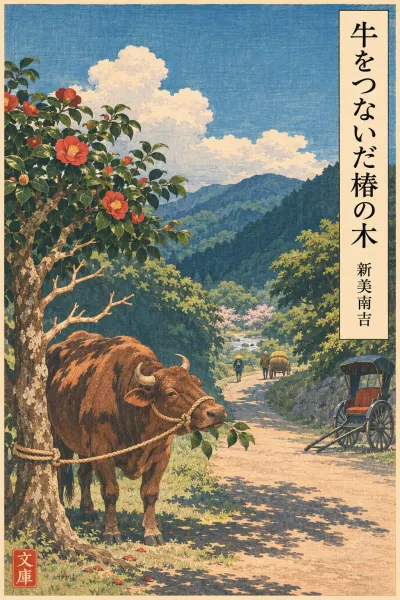
山の中の道のそばに、わかい椿の木がありました。Beside a road in the mountains, there stood a young camellia tree.
ある日、牛をひくリスケさんが、その木に牛をつなぎました。One day Risuke, who drove an ox, tied his ox to that tree.
友だちのカイゾウさんも、そこに車をおきました。His friend Kaizō left his cart there too.
カイゾウさんは、人をのせる車をひく仕事をしていました。Kaizō earned his living pulling a cart that carried people.
二人は山の中へ水を飲みに行きました。The two of them went into the mountains to drink some water.
そこには、つめたくてきれいな水が出ていました。There, cold, clear water was flowing out.
でも、道から少しとおいです。But it was a little way off from the road.
二人がもどると、自転車の男の人が立っていました。When the two came back, a man with a bicycle was standing there.
このへんの山を持っている地主でした。He was the landowner who owned the mountains round about.
地主はとてもおこっていました。The landowner was very angry indeed.
「この牛はだれのだ。椿のはっぱをぜんぶ食べたぞ。」"Whose ox is this? It's eaten every last leaf off the camellia!"
見ると、椿の木には、はっぱが一つもありませんでした。When they looked, there was not a single leaf left on the camellia tree.
リスケさんはかおを赤くして、あやまりました。Risuke turned red in the face and apologised.
でも、地主は子どもをしかるように、リスケさんを大きなこえでしかりました。But the landowner scolded Risuke in a loud voice, as if he were scolding a child.
カイゾウさんもいっしょにあやまりました。Kaizō apologised along with him.
地主はやっと自転車にのって、帰りました。At last the landowner got on his bicycle and went home.
カイゾウさんは思いました。Kaizō thought to himself.
「あの水が道の近くにあったら、いいのに。」"If only that water were close to the road."
カイゾウさんは、年をとったお母さんと二人で住んでいました。Kaizō lived alone with his elderly mother.
夕飯のあとで、カイゾウさんは話しました。After supper, Kaizō talked it over with her.
「あの道のそばに井戸があったら、いいなあ。」"It sure would be nice to have a well beside that road."
「そうだね。あの道は大ぜいの人が通るから、みんなうれしいよ。」"That's true. Lots of folks travel that road, so everyone would be glad of it."
井戸を作るには、お金がたくさんいります。To build a well, you need a great deal of money.
カイゾウさんの家にはお金がありません。Kaizō's household had no money.
でも、リスケさんは山の仕事でお金持ちになっていました。Risuke, though, had become rich from his work in the mountains.
その夜、カイゾウさんはリスケさんの家へ行きました。That night, Kaizō went to Risuke's house.
「あの道に井戸を作りたいんだ。お金を出してくれないか。」"I want to build a well on that road. Won't you put up the money for it?"
リスケさんは、しばらく何も答えませんでした。For a while, Risuke gave no answer at all.
それから、こう答えました。Then he answered like this.
「ぼくだけが飲むなら出すよ。でも、ほかの人も飲む井戸に、どうしてぼくがお金を出すんだ。」"If I were the only one drinking from it, I'd pay. But why should I put money into a well that other people drink from too?"
カイゾウさんは、帰る道で考えました。On his way home, Kaizō thought it over.
「人にたのんではだめだ。じぶんの力でやろう。」"It's no good asking other people. I'll do it on my own."
カイゾウさんは、椿の木に小さいはこをかけました。Kaizō hung a small box on the camellia tree.
はこには「ここに井戸を作ります。お金を少し入れてください。」と書いてありました。On the box was written: "A well will be built here. Please put in a little money."
カイゾウさんは、山の上から見ていました。Kaizō watched from up on the hill.
おばあさんが来ましたが、字が読めませんでした。An old woman came along, but she could not read the writing.
おじいさんは字を読んで、「なるほど。」と話しました。An old man read the writing and said, "I see."
でも、たばこをすって、そのまま行きました。But he just had a smoke and went on his way.
はこの中には、何も入っていませんでした。There was nothing at all inside the box.
つぎの日、カイゾウさんはいつもの店で休んでいました。The next day, Kaizō was resting at the usual shop.
車をひく友だちも、そこでおきゃくを待ちます。His friends who pulled carts waited there for customers too.
みんなは、いつも店のおかしを買って食べます。They always bought the shop's sweets and ate them.
カイゾウさんもそうでした。So did Kaizō.
でも、その日は食べませんでした。But that day, he did not eat any.
「どうした。どこか悪いのか。」"What's up? Are you feeling poorly?"
「今日は、はがいたいんだ。」"My tooth aches today."
友だちは、おかしを上になげて、口でとってあそびました。His friends played a game, tossing sweets into the air and catching them in their mouths.
カイゾウさんは、それがいちばん上手でした。Kaizō was the best of them all at it.
本当はやりたかったのですが、やりませんでした。He really wanted to join in, but he did not.
はがいたいのは、うそでした。The toothache was a lie.
おかしのお金を使わないで、井戸のお金にするときめたのです。He had made up his mind not to spend his money on sweets, but to put it toward the well instead.
二年がすぎました。Two years went by.
お金はだいたいできました。He had saved nearly all the money.
でも、地主は「あそこに井戸はだめだ。」と答えました。But the landowner answered, "No well there."
カイゾウさんは、また地主の家へ行きました。Kaizō went to the landowner's house once more.
地主は重い病気でねていました。The landowner lay in bed, seriously ill.
「わたしが死んでも、井戸はだめだ。」"Even if I die, there'll be no well."
帰る前に、地主のむすこが話しました。Before Kaizō left, the landowner's son spoke to him.
「父が死んだら、わたしが井戸を作らせてあげますよ。」"When my father dies, I'll let you build your well."
カイゾウさんはうれしくなりました。Kaizō felt happy.
夜、お母さんに話しました。That night, he told his mother about it.
「あの人はもうすぐ死ぬから、だいじょうぶだ。」"That man's going to die soon, so it'll be all right."
お母さんは答えました。His mother answered.
「人が死ぬのを待つのは、悪い心だよ。」"Waiting for someone to die is a wicked thing to have in your heart."
カイゾウさんは、はずかしくなりました。Kaizō felt ashamed.
つぎの朝、カイゾウさんはまた地主の家へ行って、あやまりました。The next morning, Kaizō went to the landowner's house again and apologised.
「わたしは悪い心になりました。すみません。井戸はもういいです。ほかのところをさがします。どうぞ死なないでください。」"I let a wicked thought into my heart. I'm sorry. Never mind about the well. I'll look for some other place. Please, don't die."
地主は、長い間カイゾウさんのかおを見ていました。For a long time, the landowner gazed at Kaizō's face.
それから話しました。Then he spoke.
「あなたはりっぱな人だ。わたしは、じぶんのことだけ考えて生きてきた。でも、あなたを見て、考えがかわったよ。あそこに井戸を作りなさい。お金が足りなかったら、わたしが出そう。」"You are a fine man. All my life I have thought only of myself. But seeing you has changed my mind. Build your well there. If the money is not enough, I shall make up the rest."
春の昼、新しい井戸ができました。One spring afternoon, the new well was finished.
椿の木には、また新しいはっぱがついていました。The camellia tree had new leaves on it once again.
その日、カイゾウさんはへいたいの服を着ていました。That day, Kaizō was wearing a soldier's uniform.
日本は外国とせんそうをしていたのです。Japan was at war with a foreign country.
井戸のそばで、学校から帰る子どもが二人、水を飲んでいました。Beside the well, two children on their way home from school were drinking the water.
カイゾウさんは、それを見てわらいました。Kaizō watched them and smiled.
カイゾウさんも一ぱい飲みました。Kaizō drank a cupful too.
つめたくて、おいしい水でした。It was cold, delicious water.
「小さな仕事だが、人のやくに立つことができた。」"It's only a small job, but I've been able to do something useful for others."
カイゾウさんは、心の中でそう思いました。That is what Kaizō thought in his heart.
そして、何も話さないで、町の方へ歩いて行きました。Then, without saying a word, he walked off toward the town.
カイゾウさんは、せんそうから帰って来ませんでした。Kaizō never came back from the war.
でも、椿の木のそばの井戸は、今もあります。But the well beside the camellia tree is still there today.
道を歩いてつかれた人は、そこで水を飲みます。People who grow tired walking the road drink water there.
そして、また元気に歩いて行くのです。And then they walk on again, full of strength.
Vocabulary
| Word | Meaning | JLPT |
|---|---|---|
| 椿つばき | camellia (tree)An evergreen tree with glossy leaves, common in Japan. | — |
| つなぎましたつなぐ | to tie up, to tether (an animal)dictionary form: つなぐAlso means 'to connect' or 'to hold' (手をつなぐ, to hold hands). | N3 |
| 地主じぬし | landowner地 (land) + 主 (master, owner). | N1 |
| あやまりましたあやまる | to apologisedictionary form: あやまるWritten 謝る in kanji. | N1 |
| しかりましたしかる | to scolddictionary form: しかるWritten 叱る; used for scolding someone below you, like a child. | N3 |
| 井戸いど | well (for water)The kanji 井 shows a well frame seen from above. | N2 |
| いりますいる | to be neededdictionary form: いるWritten 要る; a godan verb (いります, いらない), unlike いる 'to exist'. | N2 |
| しばらくしばらく | for a while | N4 |
| たのんでたのむ | to ask (someone for a favour), to rely ondictionary form: たのむWritten 頼む. | N5 |
| うそうそ | a lieうそをつく = to tell a lie. | N4 |
| すぎましたすぎる | (time) to passdictionary form: すぎるWritten 過ぎる; also 'to go past' a place. | N4 |
| はずかしくはずかしい | ashamed, embarrasseddictionary form: はずかしい | N4 |
| りっぱなりっぱ | fine, admirable, splendiddictionary form: りっぱA na-adjective, written 立派. | N5 |
| やくに立つやくにたつ | to be useful, to be of helpdictionary form: 役に立つ人のやくに立つ = to be useful to other people. | N4 |
Grammar
〜たら、いいのに N4 if only ...; I wish ...
A たら-conditional followed by いいのに expresses a wish about something that is not true now. The のに adds a feeling of regret.
あの水が道の近くにあったら、いいのに。
If only that water were close to the road.
〜ように (like, as if) N4 as if ..., in the way that ...
A plain-form verb + ように compares one action to another. Here the landowner scolds a grown man the way one scolds a child.
地主は子どもをしかるように、リスケさんを大きなこえでしかりました。
The landowner scolded Risuke in a loud voice, as if he were scolding a child.
〜には (purpose) N3 in order to ..., to ...
Dictionary form + には states a goal, and the rest of the sentence says what is needed for it. It is often followed by words like いる or ひつようだ.
井戸を作るには、お金がたくさんいります。
To build a well, you need a great deal of money.
〜てくれないか N4 won't you ... (for me)?
て-form + くれないか is a casual, mostly male way to ask someone to do something for the speaker. The negative question makes the request softer.
お金を出してくれないか。
Won't you put up the money for it?
〜てはだめだ N4 it's no good ...; you must not ...
て-form + は + だめだ says that an action is useless or not allowed. Here Kaizō decides that asking others will not work.
人にたのんではだめだ。
It's no good asking other people.
〜させてあげる N3 to let someone do ... (as a favour)
The causative form (作らせる, 'let build') + てあげる means the speaker kindly allows someone to do something. The son is offering Kaizō permission as a favour.
父が死んだら、わたしが井戸を作らせてあげますよ。
When my father dies, I'll let you build your well.