Part 1 of 6 · JLPT N2
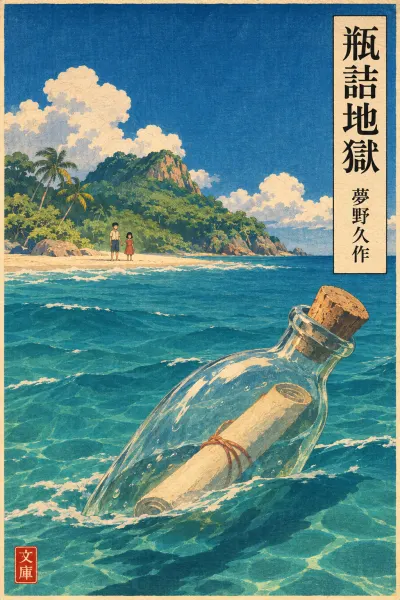
瓶詰地獄(◇第一の瓶の内容) Binzumejigoku, part 1: A Letter Before the Rescue Ship
In this part
A village office sends a marine research institute three sealed beer bottles that washed ashore long ago, noting that they hold notebook pages rather than official postcards. The letter from the first bottle, written by two people stranded on an island, says that a rescue ship has finally arrived, and that people who seem to be their parents are aboard. Instead of rejoicing, they announce that they will leap from a cliff to the sharks as punishment for a terrible sin they refuse to describe.
AI translation · independently checked
拝呈 時下益々御清栄、奉慶賀候。Respectfully submitted. We offer our congratulations on your continued and ever-increasing prosperity at this season.
陳者、予てより御通達の、潮流研究用と覚しき、赤封蝋附きの麦酒瓶、拾得次第届告仕る様、島民一般に申渡置候処、此程、本島南岸に、別小包の如き、樹脂封蝋附きの麦酒瓶が三個漂着致し居るを発見、届出申候。To proceed: in accordance with your notice of some time past, the islanders at large had been instructed to report at once upon finding any beer bottle sealed with red wax, such as are understood to be used for the study of ocean currents. We hereby report that three beer bottles sealed with resin, as in the separate parcel, have lately been discovered washed ashore on the southern coast of this island.
右は何れも約半里、乃至、一里余を隔てたる個所に、或は砂に埋もれ、又は岩の隙間に固く挟まれ居りたるものにて、よほど以前に漂着致したるものらしく、中味も、御高示の如き、官製端書とは相見えず、雑記帳の破片様のものらしく候為め、御下命の如き漂着の時日等の記入は不可能と被為存候。The aforesaid were found at places lying from about half a ri to somewhat over one ri apart, either buried in the sand or wedged tight in crevices of the rocks, and they appear to have drifted ashore a considerable time ago. Moreover, their contents do not seem to be the government-issued postcards described in your instructions, but rather what appear to be leaves torn from a notebook. We therefore deem it impossible to record the date of arrival and other particulars as you have directed.
然れ共、尚何かの御参考と存じ、三個とも封瓶のまま、村費にて御送附申上候間、何卒御落手相願度、此段得貴意候 敬具Nevertheless, believing they may yet serve you as some reference, we are forwarding all three, still sealed, at the expense of the village, and humbly request that you kindly acknowledge their receipt. We beg to inform you of the above. Yours respectfully,
月 日Month ___, Day ___
××島村役場㊞Village Office of ×× Island (seal)
海洋研究所 御中To the Marine Research Institute
ああ………この離れ島に、救いの舟がとうとう来ました。Ah……… at long last a ship of rescue has come to this lonely island.
大きな二本のエントツの舟から、ボートが二艘、荒浪の上におろされました。From the great ship with two funnels, two boats have been lowered onto the rough waves.
舟の上から、それを見送っている人々の中にまじって、私たちのお父さまや、お母さまと思われる、なつかしいお姿が見えます。Among the people on the ship who are watching the boats go, I can see dear, familiar figures that seem to be our father and our mother.
そうして……おお……私たちの方に向って、白いハンカチを振って下さるのが、ここからよくわかります。And…… oh…… from here I can clearly see them waving white handkerchiefs toward us.
お父さまや、お母さまたちはきっと、私たちが一番はじめに出した、ビール瓶の手紙を御覧になって、助けに来て下すったに違いありませぬ。Father and Mother must surely have read the letter in the beer bottle that we sent out the very first time, and have come to save us.
大きな船から真白い煙が出て、今助けに行くぞ……というように、高い高い笛の音が聞こえて来ました。Pure white smoke rose from the great ship, and a high, high whistle sounded, as if to say, "We are coming to save you now……"
その音が、この小さな島の中の、禽鳥や昆虫を一時に飛び立たせて、遠い海中に消えて行きました。That sound sent the birds and insects of this little island flying up all at once, and then faded away over the distant sea.
けれども、それは、私たち二人にとって、最後の審判の日の箛よりも怖ろしい響で御座いました。Yet to the two of us it was a sound more terrible than the trumpet of the Day of Judgement.
私たちの前で天と地が裂けて、神様のお眼の光りと、地獄の火焔が一時に閃めき出たように思われました。It seemed to us as though heaven and earth were rent asunder before us, and the light of God's eyes and the flames of Hell flashed forth at one and the same moment.
ああ。Ah.
手が慄えて、心が倉皇て書かれませぬ。My hands tremble and my heart is in such turmoil that I cannot write.
涙で眼が見えなくなります。My eyes are blinded with tears.
私たち二人は、今から、あの大きな船の真正面に在る高い崖の上に登って、お父様や、お母様や、救いに来て下さる水夫さん達によく見えるように、シッカリと抱き合ったまま、深い淵の中に身を投げて死にます。Now we two shall climb to the top of the high cliff that stands directly facing that great ship, and there, holding each other tightly so that Father and Mother and the sailors coming to rescue us can see us well, we shall throw ourselves into the deep water and die.
そうしたら、いつも、あそこに泳いでいるフカが、間もなく、私たちを喰べてしまってくれるでしょう。Then the sharks that are always swimming there will soon devour us.
そうして、あとには、この手紙を詰めたビール瓶が一本浮いているのを、ボートに乗っている人々が見つけて、拾い上げて下さるでしょう。And afterwards the people in the boats will find a single beer bottle with this letter in it floating there, and will pick it up.
ああ。Ah.
お父様。Father.
お母様。Mother.
すみません。Forgive us.
すみません、すみません、すみません。Forgive us, forgive us, forgive us.
私たちは初めから、あなた方の愛子でなかったと思って諦らめて下さいませ。Please resign yourselves, and think that we were never your beloved children from the very beginning.
又、せっかく、遠い故郷から、私たち二人を、わざわざ助けに来て下すった皆様の御親切に対しても、こんなことをする私たち二人はホントにホントに済みません。And to all of you who have so kindly come all this way from our distant homeland expressly to save us two, we who do such a thing are truly, truly sorry.
どうぞどうぞお赦し下さい。We beg you, we beg you, forgive us.
そうして、お父様と、お母様に懐かれて、人間の世界へ帰る、喜びの時が来ると同時に、死んで行かねばならぬ、不倖な私たちの運命を、お矜恤下さいませ。And have pity on our unhappy fate: that at the very moment when the joyful time comes to be held in the arms of Father and Mother and return to the world of men, we must go to our deaths.
私たちは、こうして私たちの肉体と霊魂を罰せねば、犯した罪の報償が出来ないのです。Unless we punish our bodies and our souls in this way, we cannot atone for the sin we have committed.
この離れ島の中で、私たち二人が犯した、それはそれは恐ろしい悖戻の報責なのです。It is the retribution for a terrible, terrible wickedness that we two committed on this lonely island.
どうぞ、これより以上に懺悔することを、おゆるし下さい。Please spare us from confessing anything more than this.
私たち二人はフカの餌食になる価打しか無い、狂妄だったのですから……。For we two were wretched fools, worth nothing more than to become food for the sharks……
ああ。Ah.
さようなら。Farewell.
神様からも人間からも救われ得ぬWho can be saved neither by God nor by man,
哀しき二人よりfrom the two sorrowful ones
お父様To Father,
お母様Mother,
皆々様and all of you
Vocabulary
| Word | Meaning | JLPT |
|---|---|---|
| 漂着ひょうちゃく | drifting ashore, washing up漂 = drift, 着 = arrive. Often used as 漂着する. | — |
| 封蝋ふうろう | sealing waxHere it seals the mouth of each bottle. | — |
| 拾得しゅうとく | finding (a lost or stray object)Formal legal and official word; everyday Japanese uses 拾う. | — |
| 役場やくば | town or village officeThe local government office of a small town or village. | N1 |
| 離れ島はなれじま | remote, isolated islandRendaku: しま becomes じま. Also written 離島 (りとう). | — |
| 荒浪あらなみ | rough waves, heavy seasdictionary form: 荒波Usually written 荒波 today. | — |
| なつかしいなつかしい | dear, fondly remembereddictionary form: 懐かしいDescribes warm longing for something familiar from the past. | N2 |
| 審判しんぱん | judgement最後の審判 is the Last Judgement. In sport, 審判 means a referee. | N3 |
| 淵ふち | deep pool, deep waterNot the same word as 縁 (ふち, edge), although the reading is the same. | — |
| フカふか | sharkdictionary form: 鱶Older and regional word for サメ, especially a large shark. | — |
| 諦らめてあきらめる | to resign oneself, to give updictionary form: 諦めるOlder okurigana. The modern spelling is 諦めて. | N3 |
| 罪つみ | sin, crime罪を犯す means to commit a sin or crime. | N3 |
| 懺悔ざんげ | confession, repentanceUsed for religious confession of sins. | — |
| 餌食えじき | prey, food (for an animal)Also used figuratively, as in a victim (〜の餌食になる). | — |
Grammar
〜次第 N2 as soon as ~
A noun of action or a verb stem + 次第 means 'immediately upon ~'. Here 拾得次第 means the islanders were to report the bottles as soon as they found them.
赤封蝋附きの麦酒瓶、拾得次第届告仕る様
that, upon finding any beer bottle sealed with red wax, they should report it at once
〜に違いない(違いありませぬ) N3 must surely be ~
This pattern expresses strong certainty. ありませぬ is an old-fashioned polite negative, equal to ありません.
助けに来て下すったに違いありませぬ
they must surely have come to save us
〜ように (purpose) N4 so that ~
A potential or non-volitional verb + ように expresses a goal. The children want to be clearly seen when they die.
救いに来て下さる水夫さん達によく見えるように
so that the sailors coming to rescue us can see us well
〜てしまう N4 to do completely; (something final or irreversible)
This pattern stresses completion. Combined with てくれる, it presents being completely devoured as something the sharks will do for them.
私たちを喰べてしまってくれるでしょう
will devour us completely
〜ねばならぬ N2 must ~
This is the literary form of 〜なければならない. ねば is the classical conditional negative, and ぬ is the old negative ending.
死んで行かねばならぬ、不倖な私たちの運命を
our unhappy fate, that we must go to our deaths
〜得ぬ(えぬ) N2 cannot ~
A verb stem + 得る means 'can ~', and 得ぬ is its literary negative. Here the passive stem 救われ is used, giving 'cannot be saved'.
神様からも人間からも救われ得ぬ
who can be saved neither by God nor by man