 N3 · easy
Simplified retelling · JLPT N3
張紅倫 Chōkōrin in easy Japanese (N3)
This is our own simplified retelling of A Boy Named Chō Kōrin, written for N3 learners and checked word by word against the N3 vocabulary list. A few story words and grammar patterns go beyond N3; the notes below give each one's level. It keeps the characters, events and ending of the original. When it feels easy, move on to the original text.
The story in brief
During the Russo-Japanese War, a Japanese major falls into a dry well near Hōten. A Chinese farmer and his son Kōrin rescue him and shelter and nurse him until the father warns him to flee, and the major gives the boy his watch. Ten years later, a young Chinese pen seller appears at the major's company in Japan carrying that same watch. He denies being Kōrin, but the next day a letter reveals that he lied to protect the major.
AI translation · independently checked
むかし、中国で日本とロシアの戦争がありました。Long ago, there was a war in China between Japan and Russia.
ある寒い夜、日本のしょうさが、はたけの中を歩いていました。One cold night, a Japanese major was walking through the fields.
見はりのへいたいの様子を見るためです。It was to see how the soldiers on lookout duty were doing.
空には小さなほしが一つ、光っていました。In the sky, a single small star was shining.
すると急に、足の下に何もなくなりました。Then, all of a sudden, there was nothing beneath his feet.
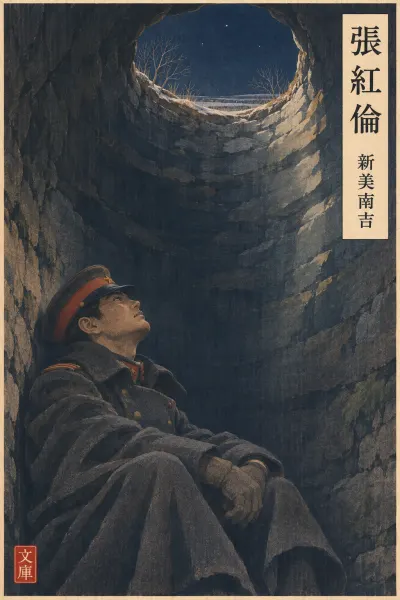
しょうさは、ふかいあなに落ちてしまいました。The major had fallen into a deep hole.
それは、水のない古いいどでした。It was an old well with no water in it.
大きな声で呼びたいと思いました。He wanted to call out in a loud voice.
でも、声はとどかないかもしれません。But his voice might not reach anyone.
ロシアのへいたいに聞こえたら、殺されてしまいます。And if the Russian soldiers heard him, they would kill him.
しょうさは、だまって座りました。The major sat down without a word.
「朝になったら、だれかが見つけてくれるだろう。」"When morning comes, someone will surely find me."
いどの中は思ったよりあたたかくて、しょうさは眠ってしまいました。It was warmer inside the well than he had expected, and the major fell asleep.
目が覚めると、もう朝でした。When he woke up, it was already morning.
しかし、だれも来ません。But nobody came.
ここにいどがあることを、だれも知らないようです。It seemed that no one knew there was a well here.
昼になりました。Noon came.
おなかがすいて、のどもかわきました。He was hungry, and his throat was dry too.
しょうさは何回も大きな声で呼びましたが、返事はありません。The major called out loudly again and again, but there was no answer.
外に出ようとして何回もとびましたが、だめでした。He jumped again and again, trying to get out, but it was no use.
しょうさは疲れて、いどのそこに座ってしまいました。The major grew tired and sank down at the bottom of the well.
夜になりました。Night came.
昨日のほしが、同じ所でさびしく光っています。Yesterday's star was shining lonely in the same place.
「死ぬのはこわくない。でも、こんな所で死ぬのは残念だ。死ぬなら、戦って死にたい。」"I'm not afraid of dying. But dying in a place like this would be a shame. If I must die, I want to die fighting."
しょうさは疲れて、また眠ってしまいました。Worn out, the major fell asleep again.
どのくらいたったでしょう。How much time had passed?
人の声が聞こえてきました。He heard someone's voice.
「しっかりしてください。」"Hold on, please!"
中国の言葉です。It was Chinese.
しょうさは中国の言葉が少し分かりました。The major understood a little Chinese.
びっくりして、目を開けました。Startled, he opened his eyes.
「気がつきましたか。助けてあげます。」"Are you awake? We will help you."
男の人が、しょうさの体になわを付けました。A man tied a rope around the major's body.
そして、先に上って、なわを引いて、しょうさを外に出してくれました。Then he climbed up first, pulled on the rope, and brought the major out.
昼の光が目に入りました。The daylight shone into his eyes.
「ああ、よかった。」そう思いましたが、しょうさはまた気をうしなってしまいました。"Ah, thank goodness," he thought, but then the major fainted again.
しょうさがつれて行かれたのは、中国ののう家の小さな家でした。The place where the major was taken was the small house of a Chinese farming family.
お父さんと、コウリンというむすこが、二人だけで住んでいました。A father and his son, Kōrin, lived there, just the two of them.
貧しい家でした。It was a poor home.
コウリンは十三、四さいの男の子でした。Kōrin was a boy of thirteen or fourteen.
しょうさのそばで世話をしてくれました。He stayed by the major's side and looked after him.
大きなちゃわんに水を入れて持ってきて、うれしそうに話しました。He brought a big bowl filled with water and talked happily.
「はたけの道で、人の声が聞こえたんです。さがしたら、いどの中にあなたがいました。それで、お父さんと二人で、なわを持って行ったんです。」"I heard a voice on the path by the fields. When I looked, there you were, inside the well. So my father and I went there together with a rope."
しょうさは水を飲みながら、何回も「ありがとう」と言いました。As he drank the water, the major said "thank you" over and over.
しょうさは、日本にいる自分の子どものことを話しました。The major told him about his own child back in Japan.
コウリンと同じぐらいの年です。The child was about the same age as Kōrin.
コウリンはとても喜びました。Kōrin was very pleased.
「わたしも日本へ行って、あなたの子どもと友だちになりたいです。」"I want to go to Japan too, and become friends with your child."
遠くからは、戦争の音がずっと聞こえていました。From far away, the sounds of the war could be heard the whole time.
四、五日たった夕方、戦争の音が止まりました。One evening, four or five days later, the sounds of the war stopped.
はたけからお父さんが帰ってきて、急いで言いました。The father came back from the fields and spoke in a hurry.
「むらの人たちが、あなたをロシアのへいたいに売ると言っています。今晩、捕まえに来るそうです。早く逃げてください。」"The people in the village are saying they will sell you to the Russian soldiers. I hear they are coming to catch you tonight. Please, run away quickly."
しょうさは、もう歩けるようになっていました。By now the major was able to walk.
二人にていねいにお礼を言って、家を出ました。He thanked the two of them politely and left the house.
後ろを見ると、コウリンが入口からさびしそうにこちらを見ていました。When he looked back, Kōrin was standing in the doorway, watching him sadly.
しょうさはもどって、自分の大きな時計をコウリンに渡しました。The major went back and handed Kōrin his own large watch.
そして、暗いはたけの中を走って行きました。Then he ran off across the dark fields.
戦争が済んで、しょうさは日本へ帰り、町の会社で働き始めました。When the war was over, the major returned to Japan and began working at a company in town.
コウリンたちに何回も手紙を送りましたが、返事は一度も来ませんでした。He sent Kōrin and his father many letters, but not a single reply ever came.
十年がたちました。Ten years went by.
ある日の午後、会社に若い中国の男の人が来ました。One afternoon, a young Chinese man came to the company.
「万年ひつ、いかが。」"Fountain pen, you want?"
受付の人は、うるさそうに「いらないよ」と言いました。The receptionist said, looking annoyed, "We don't need any."
そのとき、おくからしょうさが出てきて、一本買いました。Just then, the major came out from the back and bought one.
男は、しょうさをじっと見ていました。The man kept staring at the major.
お金をもらうと、男はポケットから時計を出して、時間を見ました。When he was paid, the man took a watch out of his pocket and checked the time.
しょうさはびっくりしました。The major was astonished.
それは、十年前にコウリンにあげた時計でした。It was the watch he had given Kōrin ten years before.
「きみは、コウリンじゃないか。いどの中のわたしを助けてくれただろう。」"You're Kōrin, aren't you? You saved me when I was down in that well, didn't you?"
男は首をふりました。The man shook his head.
「わたし、コウリンちがう。あなたのようなりっぱな人、あなに落ちない。」"Me, not Kōrin. Fine man like you, not fall in hole."
「じゃあ、この時計はどうしたんだ。」"Then where did you get this watch?"
「買った。」"Bought it."
「そうか。よく似た時計があるものだな。呼び止めて、すまなかった。」"I see. Fancy there being a watch so much like it. Sorry for stopping you."
男は頭を下げて、出て行きました。The man bowed his head and went out.
次の日、しょうさに名前のない手紙が来ました。The next day, a letter with no name on it came for the major.
読みにくい中国の言葉で、こう書いてありました。It was written in Chinese that was hard to read, and it said this:
「わたしはコウリンです。あなたに会えて、夢のようでした。わたしを忘れないでいてくださって、ありがとうございます。"I am Kōrin. Meeting you was like a dream. Thank you most sincerely for not forgetting me.
お父さんは去年死にました。わたしはあなたと話したかったです。でも、中国の人があなたを助けたことが分かったら、今の日本では、あなたが困るでしょう。My father passed away last year. I wished to speak with you. However, in Japan as it is now, if it became known that a Chinese man had saved you, I fear it would cause you trouble.
だから、うそを言いました。わたしは明日、中国へ帰ります。どうぞお元気で。」That is why I told you a lie. Tomorrow I return to China. Please take good care of yourself."
Vocabulary
| Word | Meaning | JLPT |
|---|---|---|
| しょうさしょうさ | major (military rank)dictionary form: 少佐Written in hiragana here for children. The kanji 少 + 佐 mean 'junior field officer'. | — |
| 見はりみはり | lookout, guard dutydictionary form: 見張りFrom 見張る, 'to keep watch'. | — |
| いどいど | well (for water)dictionary form: 井戸The kanji 井 is shaped like a well frame seen from above. | N2 |
| とどかないとどく | to reach (a person or place)dictionary form: 届くAlso used when letters or packages 'arrive'. | N3 |
| 返事へんじ | answer, replyUsed for both a spoken response and a reply to a letter. | N4 |
| 残念ざんねん | regrettable, a shame | N4 |
| 気をうしなってきをうしなう | to faint, lose consciousnessdictionary form: 気を失うThe opposite is 気がつく, 'to come to'. | — |
| 貧しいまずしい | poor, needyMore written in style than お金がない. | N3 |
| 世話せわ | care, looking after someoneUsually appears as 世話をする. お世話になりました is a common phrase of thanks. | N4 |
| 捕まえつかまえる | to catch, capturedictionary form: 捕まえる | N4 |
| 逃げてにげる | to run away, escapedictionary form: 逃げる | N4 |
| 受付うけつけ | reception desk; receptionistHere it means the person working at the front desk. | N4 |
| 首をふりましたくびをふる | to shake one's head (to say no)dictionary form: 首を振る | — |
| 似たにる | to resemble, look likedictionary form: 似るUsually used as 似ている or 似た + noun, 'similar ~'. | N4 |
Grammar
〜てしまう N4 to end up doing; to do completely (often with regret)
This pattern shows that something happened completely, often by accident or with an unhappy result. The major did not mean to fall. The story uses it again and again for things that happen against his will, such as falling asleep and fainting.
しょうさは、ふかいあなに落ちてしまいました。
The major had fallen into a deep hole.
〜(よ)うとする N3 to try to do; to attempt
Volitional form + とする describes an attempt to do something. Here the attempt fails, as the following だめでした makes clear.
外に出ようとして何回もとびましたが、だめでした。
He jumped again and again, trying to get out, but it was no use.
〜そうです (hearsay) N4 I hear that; they say that
Plain form + そうです reports information heard from someone else. The father is passing on what the villagers said. Do not confuse it with stem + そう, which means 'looks like'.
今晩、捕まえに来るそうです。
I hear they are coming to catch you tonight.
〜ようになる N4 to come to be able to; to reach the point where
This pattern shows a change from one state to another over time. Attached to the potential form 歩ける, it means the major had recovered enough to walk again.
しょうさは、もう歩けるようになっていました。
By now the major was able to walk.
〜ものだ (exclamation) N2 expresses surprise or strong feeling about something
Here ものだ (ものだな in casual male speech) does not express a rule. It shows the major's mild amazement that such a similar watch could exist, and it gently signals that he does not quite believe the man.
よく似た時計があるものだな。
Fancy there being a watch so much like it.
〜にくい N4 hard to do
Verb stem + にくい makes an adjective meaning 'difficult to ~'. 読みにくい describes the letter's writing as hard to read. The opposite is 〜やすい.
読みにくい中国の言葉で、こう書いてありました。
It was written in Chinese that was hard to read, and it said this: