 N4 · easy
Simplified retelling · JLPT N4
張紅倫 Chōkōrin in easy Japanese (N4)
This is our own simplified retelling of A Boy Named Chō Kōrin, written for N4 learners and checked word by word against the N4 vocabulary list. A few story words and grammar patterns go beyond N4; the notes below give each one's level. It keeps the characters, events and ending of the original. When it feels easy, move on to the N3 version or the original text.
The story in brief
During the war between Japan and Russia, a Japanese soldier named Aoki falls into a dry well at night. A Chinese boy, Kōrin, and his father pull him out and take him in, but when the villagers plan to sell him to the Russians, Aoki escapes and gives Kōrin his watch. Ten years later Kōrin comes to Aoki's office selling fountain pens, denies who he is, and then sends a letter explaining that he lied to protect Aoki's good name.
AI translation · independently checked
むかし、日本とロシアのせんそうがありました。Long ago, there was a war between Japan and Russia.
ある、とてもさむい夜のことです。This happened one very cold night.
日本のへいたいの青木さんは、はたけの中を歩いていました。Aoki, a Japanese soldier, was walking through the fields.
空には小さなほしが一つ、ひかっていました。In the sky, one small star was shining.
そこはくらくて、足もとがよく見えませんでした。It was dark there, and he could not see well where he was stepping.
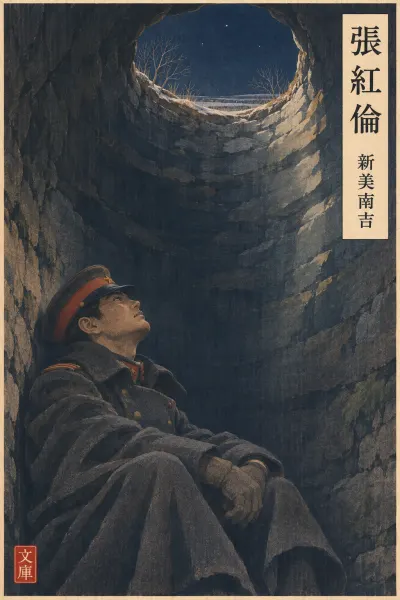
青木さんは、ふかいいどの中におちました。Aoki fell into a deep well.
水のない、古いいどでした。It was an old well with no water in it.
青木さんは、大きなこえで人をよびたいと思いました。Aoki wanted to call out for help in a loud voice.
でも、ロシアのへいたいに聞こえたら、あぶないです。But if the Russian soldiers heard him, he would be in danger.
それで、しずかにすわって、朝を待ちました。So he sat quietly and waited for morning.
いどの中は少しあたたかかったので、青木さんはねむりました。It was a little warm inside the well, so Aoki fell asleep.
朝になりました。Morning came.
でも、だれも来ません。But nobody came.
昼になると、おなかがすいて、のどもかわきました。When noon came, he was hungry, and his throat was dry too.
青木さんは大きなこえで「だれかいませんか」とよびました。Aoki called out in a loud voice, "Is anyone there?"
でも、へんじはありません。But there was no answer.
上に登りたいと思いましたが、できませんでした。He wanted to climb up, but he could not.
また夜になりました。Night came again.
きのうのほしが、同じところでさびしくひかっています。Yesterday's star was shining lonely in the same place.
「わたしはここで死ぬかもしれない。死ぬなら、せんそうで死にたい」"I may die here. If I have to die, I want to die in battle."
青木さんはそう思いました。That is what Aoki thought.
そして、つかれて、ねむりました。Then, worn out, he fell asleep.
しばらくして、だれかのこえが聞こえました。After a while, he heard someone's voice.
「しっかりしてください」"Hold on! Wake up!"
それは中国のことばでした。It was the Chinese language.
青木さんは、中国のことばが少しわかります。Aoki understood a little Chinese.
びっくりして、目を開けました。Startled, he opened his eyes.
そばに男の人が立っていました。A man was standing beside him.
男の人は、青木さんの体になわをつけて、いどの外へ出してくれました。The man tied a rope around Aoki's body and pulled him out of the well.
青木さんは「よかった」と思いました。Aoki thought, "Thank goodness."
でも、とてもつかれていたので、またねむりました。But he was so tired that he fell asleep again.
青木さんが起きると、そこは中国の小さな家でした。When Aoki woke up, he was in a small Chinese house.
お金のない、はたけではたらく家です。It was the house of a poor family who worked in the fields.
コウリンという十三か十四の男の子と、そのお父さんが住んでいました。A boy of thirteen or fourteen called Kōrin lived there with his father.
コウリンは水を持ってきて、話しました。Kōrin brought him some water and told him what had happened.
「はたけの道を歩いていたら、人のこえが聞こえました。さがすと、いどの中にあなたがいました。それで、お父さんといっしょに、なわで出しました」"I was walking along the path through the fields when I heard someone's voice. I looked around, and there you were in the well. So my father and I pulled you out with a rope."
青木さんは水を飲みながら、心の中でお礼をいいました。As he drank the water, Aoki thanked him in his heart.
コウリンは、日本のことをたくさん聞きました。Kōrin asked him many things about Japan.
青木さんが、日本にはコウリンと同じぐらいの年のむすこがいると話すと、コウリンはとてもよろこびました。When Aoki told him that he had a son in Japan about the same age as Kōrin, Kōrin was very happy.
「わたしも日本へ行って、その子と友だちになりたいです」"I want to go to Japan too, and be friends with that boy."
外では、とおくで、せんそうの大きな音が聞こえていました。Outside, the great noise of the war could be heard far away.
四、五日たちました。Four or five days passed.
ある夕方、音が止まりました。One evening, the noise stopped.
空が赤く、とてもさびしい夕方でした。The sky was red; it was a very lonely evening.
はたけから帰ったお父さんが、いいました。The father came back from the fields and said:
「たいへんです。むらの人たちが、あなたをロシアのへいたいに売るといっています。今夜、あなたをつかまえに来ます。早くにげてください」"This is terrible. The people of the village are saying they will sell you to the Russian soldiers. They are coming to catch you tonight. Please run away, quickly."
青木さんは、もう歩けました。Aoki could already walk.
お礼をいって、家を出ました。He thanked them and left the house.
うしろを見ると、コウリンがとのところから、さびしそうに見ていました。When he looked back, Kōrin was watching him sadly from the door.
青木さんはもどって、自分の大きな時計をコウリンにあげました。Aoki went back and gave Kōrin his own large watch.
そして、くらいはたけの中を走って行きました。Then he ran off through the dark fields.
せんそうのあと、青木さんは日本に帰りました。After the war, Aoki went home to Japan.
へいたいをやめて、町の会社ではたらきました。He left the army and worked for a company in the city.
コウリンたちに、たくさん手紙を送りました。He sent many letters to Kōrin and his father.
でも、へんじは一度も来ませんでした。But not once did an answer come.
十年たちました。Ten years passed.
青木さんは会社で大切な仕事をする人になりました。Aoki became a man who did important work at the company.
むすこも大人になりました。His son grew up, too.
「コウリンも、りっぱな大人になったと思う」"I think Kōrin has become a fine man as well."
青木さんは、よくそういいました。Aoki often said so.
ある日の午後、わかい中国の男が会社に来ました。One afternoon, a young Chinese man came to the company.
青い服を着て、かばんを持っていました。He was wearing blue clothes and carrying a bag.
「まんねんひつ、いかが」"Fountain pen, you want?"
入口にいた男は「いらない」といいました。The man at the entrance said, "We don't need any."
そこへ青木さんが来て、「まんねんひつを買いましょう」といいました。Just then Aoki came and said, "I'll buy a fountain pen."
青木さんがまんねんひつを見ているあいだ、男は青木さんのほうを、じっと見ていました。While Aoki was looking at the fountain pens, the man stared hard at him.
青木さんは一つえらんで、お金をはらいました。Aoki chose one and paid for it.
男は頭を下げました。The man bowed his head.
そして、帰る前に、ポケットから時計を出して、時間を見ました。Then, before leaving, he took a watch out of his pocket and looked at the time.
青木さんは、その時計を見て、いいました。When Aoki saw the watch, he said:
「ちょっと待ってください。その時計を見せてください」"Wait a moment. Please show me that watch."
それは、十年前、コウリンにあげた時計でした。It was the watch he had given Kōrin ten years before.
「あなたはコウリンですね」"You're Kōrin, aren't you?"
男はびっくりしました。The man was startled.
でも、すぐに答えました。But he answered at once.
「わたし、コウリン、ちがう」"Me, not Kōrin."
「いいえ、コウリンですね。いどにおちたわたしを、出してくれましたね。わかれる前に、この時計をあげました」"No, you are Kōrin. You pulled me out when I fell into the well, didn't you? And before we parted, I gave you this watch."
「わたし、ちがう。あなたのようなりっぱな人、いどにおちない」"Not me. Fine man like you, not fall in well."
「では、この時計はどうしたのですか」"Then how did you get this watch?"
「買った」"Bought it."
「そうですか。よくにた時計ですね。すみません、待たせて」"I see. It looks very much like mine. I'm sorry to have kept you waiting."
男はもう一度頭を下げて、出て行きました。The man bowed once more and went out.
つぎの日、青木さんに名前のない手紙が来ました。The next day, a letter with no name on it came for Aoki.
中国のことばで、こう書いてありました。It was written in Chinese, and this is what it said:
「わたしはコウリンです。十年たって、またあなたに会えて、ゆめのようでした。わたしをわすれないでいてくれて、うれしかったです。"I am Kōrin. To meet you again after ten years was like a dream. I was truly happy that you had not forgotten me.
わたしのお父さんは去年死にました。わたしは、あなたと話したかったです。でも、日本のへいたいだったあなたが、中国の子どもにいどから出してもらったことがわかったら、今の日本では、あなたの名前によくないと思いました。My father passed away last year. I wished very much to speak with you. However, I thought that if people learned that you, once a Japanese soldier, had been pulled out of a well by a Chinese child, it would harm your good name in Japan as it is today.
だから、うそをつきました。わたしは明日、中国へ帰ります。お元気で」That is why I told a lie. Tomorrow I return to China. Please take good care of yourself."
Vocabulary
| Word | Meaning | JLPT |
|---|---|---|
| せんそうせんそう | wardictionary form: 戦争せんそうで死ぬ = to die in battle/in the war. | N4 |
| へいたいへいたい | soldierdictionary form: 兵隊へいたいをやめる = to leave the army. | N2 |
| はたけはたけ | field (for vegetables or grain, not rice)dictionary form: 畑The kanji 畑 combines 火 'fire' and 田 'field'. | N3 |
| いどいど | well (for water)dictionary form: 井戸Key word in the story. | N2 |
| かわきましたかわく | to be thirsty (のどがかわく, lit. 'the throat gets dry')dictionary form: 渇くPairs with おなかがすく 'to be hungry'. | N2 |
| しっかりしてくださいしっかりする | to pull oneself together; hold on!dictionary form: しっかりするSaid to someone weak or fainting. | — |
| なわなわ | ropedictionary form: 縄 | N3 |
| つかまえつかまえる | to catch, to capturedictionary form: 捕まえる〜に来る after the stem: つかまえに来る 'come to catch'. | N4 |
| にげてにげる | to run away, to escapedictionary form: 逃げる | N4 |
| りっぱなりっぱ | fine, admirable, respectabledictionary form: 立派な-adjective. | N5 |
| まんねんひつまんねんひつ | fountain pendictionary form: 万年筆Literally 'ten-thousand-year brush'. | N5 |
| じっとじっと | fixedly, intently (looking without moving)じっと見る = to stare at. | N3 |
| にたにる | to resemble, to look likedictionary form: 似るUsually used in the た or ている form: よくにた時計 'a watch that looks very similar'. | N4 |
| うそをつきましたうそをつく | to tell a liedictionary form: 嘘をつくJapanese uses つく, not いう, with うそ. | — |
Grammar
〜てくれる N4 someone does something for me / for the person we sympathise with
The giver is the subject and the action benefits the speaker or the main character. Here the man pulls Aoki out, and the story shows Aoki's gratitude through くれる.
いどの外へ出してくれました
he pulled him out of the well (for him)
〜てもらう N4 to have someone do something for you
The receiver is the subject and the doer is marked with に. Here Aoki is the one who received help, and the Chinese child is the one who helped.
中国の子どもにいどから出してもらったこと
the fact that he was pulled out of the well by a Chinese child
〜たら N4 if / when (something happens)
Attach ら to the past form to set a condition. If the condition happens, the result follows: here, being heard would put Aoki in danger.
ロシアのへいたいに聞こえたら、あぶないです。
If the Russian soldiers heard him, it would be dangerous.
〜かもしれない N4 might, may
Shows that something is possible but not certain. Aoki fears he may die in the well.
わたしはここで死ぬかもしれない。
I may die here.
〜と (when / then) N4 when A happens, B (is found / follows)
Dictionary form + と links two events: right after the first, the second happens or is discovered. In a story it often introduces a surprise.
青木さんが起きると、そこは中国の小さな家でした。
When Aoki woke up, he was in a small Chinese house.
〜てある N4 something has been done (and the result remains)
Te-form of a transitive verb + ある describes a state left by someone's action. 書いてある means 'is written', focusing on what the letter says.
中国のことばで、こう書いてありました。
It was written in Chinese, and this is what it said: