 N4 · easy
Simplified retelling · JLPT N4
二人の兄弟 Futari no Kyōdai in easy Japanese (N4)
This is our own simplified retelling of Two Brothers and the Hackberry Tree, written for N4 learners and checked word by word against the N4 vocabulary list. A few story words and grammar patterns go beyond N4; the notes below give each one's level. It keeps the characters, events and ending of the original. When it feels easy, move on to the original text.
The story in brief
Two brothers wait for the hackberry fruit to ripen. The impatient younger brother goes too early and the patient older brother goes too late, but when they go at the moment the old man tells them is right, they gather plenty of fruit, and a jay gives them a feather as a reward. Later the old man makes them fishing tackle, but they catch nothing: one is too slow and the other too hasty, and the old man laughs gently and says tools alone will not catch fish.
AI translation · independently checked
一 えのきのみOne: Hackberry Fruit
もうすぐ、えのきのみがおちる時でした。It was almost time for the hackberry fruit to fall.
二人の兄弟は、それをひろうのを楽しみにしていました。The two brothers were looking forward to gathering it.
みがまだ青い時から、「早く赤くなれ。」と言って、待っていました。Ever since the fruit was still green, they had been waiting and saying, "Hurry up and turn red!"
兄弟の家では、おじいさんが一人はたらいていました。At the brothers' home, there was an old man who worked for the family.
まじめで、やさしい人です。He was an honest and gentle person.
山で木を切ったり、やさいを作ったりします。He cut wood in the mountains and grew vegetables, among other things.
何でもよく知っていました。He knew a great deal about everything.
おじいさんは二人に言いました。The old man said to the two of them,
「まだみはしぶくて、食べられません。もう少し待ちなさい。」"The fruit is still bitter, and you can't eat it yet. Wait a little longer."
弟は気がみじかい子供でした。The younger brother was an impatient child.
おじいさんが止めても聞かないで、走って行きました。Even though the old man tried to stop him, he would not listen and ran off.
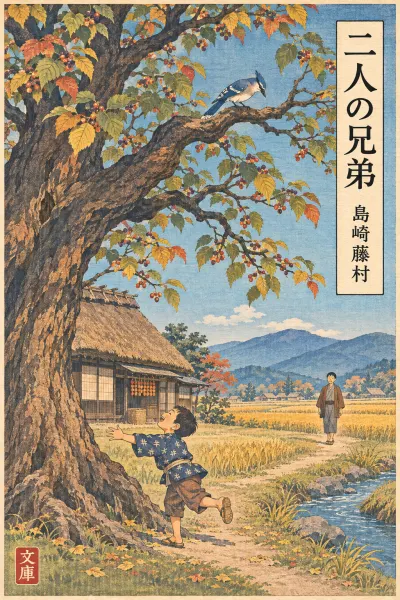
すると、高いえだの上で、一羽のかけすが大きなこえでなきました。Then, high up on a branch, a jay cried out in a loud voice.
「早すぎた。早すぎた。」"Too early! Too early!"
弟は、えだのみをおとそうと思って、いしをなげました。Wanting to knock the fruit off the branches, the younger brother threw stones.
みはたくさんおちてきました。Lots of fruit came falling down.
でも、どれもまだ青くて、食べられませんでした。But every single one was still green, and he could not eat any of them.
次に、兄が出かけました。Next, the older brother set out.
兄は弟とちがって、気が長い子供でした。Unlike his younger brother, the older brother was a patient child.
「だいじょうぶ。もう赤くなっているだろう。」と安心して、ゆっくり出かけました。"It's all right. They must have turned red by now," he thought, feeling quite at ease, and he set out slowly.
すると、かけすがまた大きなこえでなきました。Then the jay cried out again in a loud voice.
「おそすぎた。おそすぎた。」"Too late! Too late!"
兄は木の下をいっしょうけんめいさがしました。The older brother searched very hard under the tree.
でも、赤いみは一つもありませんでした。But there was not a single red fruit.
ほかの子供たちが、みんなひろってしまったのです。The other children had picked them all up.
二人がこの話をすると、おじいさんは言いました。When the two of them told him what had happened, the old man said,
「一人は早すぎて、一人はおそすぎました。ちょうどいい時を知らなければ、いいみはひろえません。私がその時を教えてあげましょう。」"One of you was too early, and one of you was too late. Unless you know the right moment, you cannot gather good fruit. I will tell you when that moment comes."
ある朝、風がふいて、えだがゆれていました。One morning, the wind was blowing and the branches were swaying.
おじいさんは言いました。The old man said,
「さあ、早くひろいに行きなさい。ちょうどいい時が来ましたよ。」"Now, hurry and go gather the fruit. The right moment has come."
二人が急いで行くと、かけすがなきました。When the two of them hurried there, the jay cried out.
「ちょうどいい。ちょうどいい。」"Just right! Just right!"
木の下には、小さな丸い赤いみが、あちらにもこちらにも、いっぱいおちていました。Under the tree, lots of small, round red fruit lay fallen here and there.
二人は木のまわりをまわって、たくさんひろいました。The two of them walked around and around the tree and gathered a great many.
とても楽しかったです。It was great fun.
かけすはそれを見て言いました。The jay watched them and said,
「この木の下には、いいみがたくさんありますね。たくさんひろいなさい。私もごほうびをあげましょう。」そして、青い色が入った小さなはねを、高いえだからおとしました。"There is plenty of good fruit under this tree, isn't there? Gather as much as you like. I will give you a reward too." And it dropped a small feather with blue in it from a high branch.
二人はみだけではなく、かけすのうつくしいはねもひろいました。The two of them picked up not only the fruit but also the jay's beautiful feather.
そして、「ちょうどいい時」もおぼえて、家に帰りました。And having learned about "the right moment" too, they went home.
二 つりの話Two: A Fishing Story
ある日、おじいさんが「つりのどうぐを作ってあげましょう。」と言いました。One day, the old man said, "I will make you some fishing tackle."
二人は「おじいさんでも、それはむずかしいだろう。」と思いました。The two of them thought, "Even for the old man, that must be hard."
近くには、つりざおを売る店がなかったからです。That was because there was no shop nearby that sold fishing rods.
おじいさんは、どこからかはりを見つけてきました。The old man found some hooks somewhere and brought them back.
それから、ほそいたけを切って、つりざおを二本作りました。Then he cut thin bamboo and made two fishing rods.
「次はいとです。」"Next comes the line."
おじいさんは、くりの木に住むくりむしから、白いいとをとりました。The old man took white thread from chestnut caterpillars that live in chestnut trees.
そのいとをすにつけて、長くひきました。He soaked the thread in vinegar and stretched it out long.
いとは日にかわいて、かたくなりました。The thread dried in the sun and became hard.
子供が強くひいても切れない、じょうぶないとになりました。It became a strong line that would not break even when a child pulled it hard.
「さあ、どうぐができましたよ。」"There, your tackle is ready."
二人は大よろこびで、つりざおを持って小川へ行きました。Overjoyed, the two of them took their fishing rods and went to the little stream.
かじかがいそうないしの間を見つけて、木のかげにすわって、つりをしました。They found a spot among the stones where sculpins seemed likely to be, sat in the shade of a tree, and fished.
半日あそんで帰ると、ちょうどおじいさんも、木をたくさん持って山から帰ってきたところでした。When they came home after playing for half the day, the old man was just coming back from the mountains too, carrying a lot of wood.
「つれましたか。」とおじいさんが聞きました。"Did you catch anything?" the old man asked.
二人は「いいえ。」とざんねんそうに答えました。"No," the two of them answered, looking disappointed.
魚は一ぴきもつれませんでした。They had not caught a single fish.
兄はゆっくりしすぎて、はりのえさを、みんなかじかに食べられてしまいました。The older brother had been far too slow, and the sculpins had eaten all the bait off his hook.
弟は待つことができなくて、水の中に手を入れて、大きく動かしました。The younger brother could not wait, so he put his hand into the water and swished it about wildly.
かじかはびっくりして、いしの下ににげてしまいました。The sculpins were startled and fled under the stones.
おじいさんは話を聞いて、やさしいこえでわらいました。The old man listened to their story and laughed in a gentle voice.
そして、こう言いました。Then he said this:
「一人は気が長すぎて、一人は気がみじかすぎました。どうぐだけでは、魚はつれませんよ。」"One of you was too patient, and one of you was too impatient. Tools alone won't catch you any fish."
Vocabulary
| Word | Meaning | JLPT |
|---|---|---|
| えのきえのき | hackberry treedictionary form: 榎A large tree often planted in old Japanese villages; its small berries ripen to red-brown in autumn. | — |
| ひろうひろう | to pick up, to gather (from the ground)dictionary form: 拾う | N4 |
| 楽しみにしていましたたのしみにする | to look forward todictionary form: 楽しみにする | — |
| しぶくてしぶい | bitter, astringent (of unripe fruit)dictionary form: 渋いDescribes the mouth-puckering taste of unripe fruit or strong tea. | N1 |
| 気がみじかいきがみじかい | impatient, short-tempereddictionary form: 気が短いOpposite: 気が長い (patient, easygoing). | — |
| かけすかけす | jay (bird)dictionary form: 懸巣Known for its loud call and blue-patterned wing feathers. | — |
| おとそうおとす | to drop, to knock downdictionary form: 落とすTransitive partner of 落ちる (to fall). | N4 |
| 安心あんしん | feeling at ease, relief | N4 |
| いっしょうけんめいいっしょうけんめい | with all one's effort, very harddictionary form: 一生懸命 | N4 |
| ごほうびごほうび | reward, prizedictionary form: ご褒美 | — |
| つりざおつりざお | fishing roddictionary form: 釣り竿釣り (fishing) + 竿 (pole); さお becomes ざお in the compound. | — |
| はりはり | (fish)hook; also needledictionary form: 針 | N3 |
| じょうぶなじょうぶ | strong, sturdydictionary form: 丈夫 | N5 |
| えさえさ | bait; animal fooddictionary form: 餌 | N3 |
Grammar
〜すぎる N4 too much, excessively
Attached to an adjective stem (早い → 早すぎる) or a verb stem, it means 'too ~'. The jay's cries and the old man's lessons are all built on this pattern.
「早すぎた。早すぎた。」
"Too early! Too early!"
〜(よ)うと思う N4 to intend to, to think of doing
The volitional form of a verb (おとす → おとそう) plus と思う shows what someone means to do. Here it explains why the boy threw stones.
弟は、えだのみをおとそうと思って、いしをなげました。
Wanting to knock the fruit off the branches, the younger brother threw stones.
〜とちがって N3 unlike ~
Noun + とちがって contrasts the subject with someone or something else. It sets up the older brother as the opposite of the younger one.
兄は弟とちがって、気が長い子供でした。
Unlike his younger brother, the older brother was a patient child.
〜なければ〜ない N4 unless ~, you cannot ~
The negative conditional なければ ('if you don't') followed by a negative result states a necessary condition. Knowing the right moment is required to gather good fruit.
ちょうどいい時を知らなければ、いいみはひろえません。
Unless you know the right moment, you cannot gather good fruit.
〜たところ N4 had just done ~ / was just at the point of ~
Past verb + ところ marks the moment right after an action. Here it shows the old man was arriving home at the very same time as the boys.
ちょうどおじいさんも、木をたくさん持って山から帰ってきたところでした。
The old man was just coming back from the mountains too, carrying a lot of wood.
passive + 〜てしまう N4 had something unfortunate done to one
The passive 食べられる with に marking the doer shows that the brother was affected by the fish's action, and てしまう adds regret that it was all gone.
はりのえさを、みんなかじかに食べられてしまいました。
The sculpins had eaten all the bait off his hook.