 N5 · easy
Simplified retelling · JLPT N5
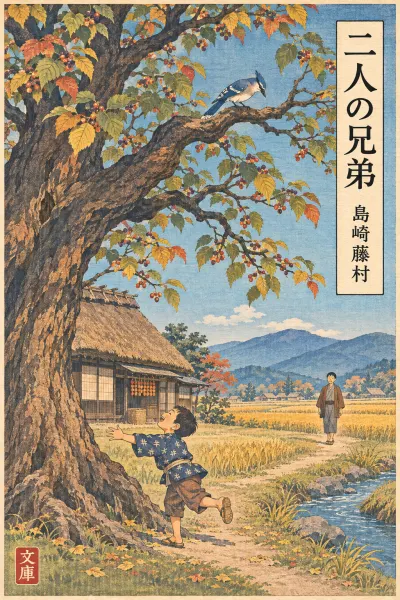
二人の兄弟 Futari no Kyōdai in easy Japanese (N5)
This is our own simplified retelling of Two Brothers and the Hackberry Tree, written for N5 learners and checked word by word against the N5 vocabulary list. A few story words and grammar patterns go beyond N5; the notes below give each one's level. It keeps the characters, events and ending of the original. When it feels easy, move on to the N4 version or the original text.
The story in brief
Two brothers wait for the hackberry fruit to turn red. The impatient younger brother goes too early and the slow older brother goes too late, but when they follow the old man's advice they gather plenty of red fruit, and a jay gives them a blue feather. Later the old man makes them fishing rods, but they catch nothing, because one is too slow and the other cannot wait.
AI translation · independently checked
えのきの みが あかく なる きせつに なりました。The season came when the hackberry fruit turns red.
二人の きょうだいは、みを ひろうのを とても たのしみに していました。The two brothers were very much looking forward to picking up the fruit.
まだ あおい ころから、「はやく あかく なって。」と いって、まって いました。Even while the fruit was still green, they waited, saying, "Hurry up and turn red!"
いえには、はたらく おじいさんが いました。There was an old man who worked at their house.
やさしくて、何でも よく 知って いる 人です。He was a kind man who knew a great deal about everything.
おじいさんは 二人に いいました。The old man said to the two boys:
「まだ おいしく ありません。もう 少し まって ください。」"They don't taste good yet. Please wait a little longer."
おとうとは まつのが きらいな 子どもでした。The younger brother was a child who hated waiting.
おじいさんの 話を 聞かないで、すぐに 木の 下へ 行きました。Without listening to the old man, he went straight to the foot of the tree.
木の 上で、かけすが 大きい こえで なきました。Up in the tree, a jay cried in a loud voice.
「はやい!はやい!」"Too early! Too early!"
おとうとは 木に 小さい ものを たくさん なげました。The younger brother threw lots of small things at the tree.
みが たくさん おちて 来ました。Lots of fruit came falling down.
でも、みんな まだ あおくて、食べられませんでした。But they were all still green, and he couldn't eat them.
それから、あにが 行きました。After that, the older brother went.
あには いつも ゆっくりな 子どもでした。The older brother was always a slow child.
「大丈夫。もう あかいです。」と いって、ゆっくり 出かけました。"It's all right. They're red by now," he said, and he set off slowly.
かけすが また なきました。The jay cried again.
「おそい!おそい!」"Too late! Too late!"
あには 木の 下を よく 見ました。The older brother looked carefully under the tree.
でも、あかい みは 一つも ありませんでした。But there was not a single red fruit.
ほかの 子どもたちが ぜんぶ ひろいました。The other children had picked them all up.
二人は おじいさんに 話しました。The two boys told the old man what had happened.
おじいさんは いいました。The old man said:
「一人は とても はやかったです。一人は とても おそかったです。ちょうど いい 時間を 知らないと、いい みは ひろえません。私が その 時間を おしえます。」"One of you was much too early. One of you was much too late. If you don't know just the right time, you can't pick up good fruit. I will tell you when that time comes."
ある あさ、かぜが ふいて いました。One morning, the wind was blowing.
おじいさんが いいました。The old man said:
「さあ、はやく 行って ください。ちょうど いい 時間です。」二人が 木の 下へ 行くと、かけすが なきました。"Now then, off you go, quickly. It's just the right time." When the two boys went to the foot of the tree, the jay cried out.
「ちょうど いい!ちょうど いい!」"Just right! Just right!"
木の 下には、あかくて 小さい まるい みが、たくさん おちて いました。Under the tree, lots of small, round red fruits had fallen.
二人は 木の まわりを 歩いて、たくさん ひろいました。The two boys walked around the tree and picked up a great many.
とても たのしかったです。It was great fun.
かけすは いいました。The jay said:
「たくさん ひろって ください。これは 私からです。」そして、あおい 小さな はねが 一つ おちて 来ました。"Please pick up lots of them. This is from me." And a single small blue feather came falling down.
二人は みと はねを もって かえりました。The two boys went home carrying the fruit and the feather.
そして「ちょうど いい 時間」も おぼえました。And they had also learned about "just the right time."
ある あさ、おじいさんが 二人に つりの ものを つくりました。One morning, the old man made fishing gear for the two boys.
この 町には、つりの ものを うる 小さい 店も ありません。In this town there is not even a little shop that sells fishing gear.
おじいさんは どこかから はりを もって 来ました。The old man brought fishhooks from somewhere.
ほそい たけを きって、二本 つくりました。He cut thin bamboo and made two rods.
それから、木に いる むしから 白い いとを 取りました。Then he took white thread from an insect that lived in a tree.
いとを 長く ひくと、とても 丈夫に なりました。When he drew the thread out long, it became very strong.
二人が つよく ひいても、大丈夫でした。Even when the two boys pulled hard, it held.
二人は とても よろこんで、小川へ 行きました。The two boys were overjoyed and went to the little stream.
川の そばの 木の 下に すわって、つりを しました。They sat under a tree beside the stream and fished.
かじかを 取りたかったです。They wanted to catch sculpins.
夕方、二人は いえへ かえりました。In the evening, the two boys went home.
おじいさんも 山から 木を たくさん もって かえって 来ました。The old man also came back from the mountains carrying lots of wood.
「さかなは 取れましたか。」二人は 「いいえ。」と こたえました。"Did you catch any fish?" The two boys answered, "No."
一ぴきも 取れませんでした。They hadn't caught a single one.
あには とても ゆっくり まって いました。The older brother waited without any hurry at all.
はりの 上の 食べものは、ぜんぶ かじかが 食べました。The sculpins had eaten all the bait on his hook.
おとうとは まつのが いやでした。The younger brother didn't like waiting.
水の 中に てを 入れて、あそびました。He put his hands in the water and played.
かじかは みんな どこかへ 行きました。The sculpins all swam off somewhere.
おじいさんは 二人の 話を 聞いて、大きい こえで やさしく いいました。The old man listened to the two boys' story and spoke to them in a loud but kind voice.
「一人は とても ゆっくりでした。一人は とても はやかったです。つりの ものだけでは、さかなは 取れませんよ。」"One of you was much too slow. One of you was much too quick. Fishing gear alone won't catch you any fish, you know."
Vocabulary
| Word | Meaning | JLPT |
|---|---|---|
| えのきえのき | hackberry (a large tree with small round fruit)dictionary form: 榎The fruit turns red-brown when ripe and is sweet. | — |
| きせつきせつ | seasondictionary form: 季節〜の きせつに なる = it becomes the season of ~. | N4 |
| ひろうひろう | to pick up (from the ground)dictionary form: 拾う | N4 |
| たのしみたのしみ | something to look forward todictionary form: 楽しみ〜を たのしみに する = to look forward to ~. | N4 |
| かけすかけす | jay (a bird)dictionary form: 懸巣A noisy bird with bright blue feathers on its wings. | — |
| なきましたなく | to cry, call (of birds and animals)dictionary form: 鳴くWritten 鳴く; different from 泣く 'to cry (tears)'. | N5 |
| なげましたなげる | to throwdictionary form: 投げる | N4 |
| おちておちる | to fall, dropdictionary form: 落ちるおちて 来る = to come falling down (toward the speaker/scene). | N4 |
| ちょうどちょうど | exactly, justちょうど いい = just right. | N5 |
| おぼえましたおぼえる | to learn, rememberdictionary form: 覚える | N5 |
| つりつり | fishingdictionary form: 釣りつりを する = to go fishing. | N3 |
| はりはり | fishhook (here); needledictionary form: 針In fishing, つりばり is the full word for a hook. | N3 |
| 丈夫じょうぶ | strong, sturdyCompare 大丈夫 'all right, OK'. | N5 |
| 小川おがわ | small stream, brook小 + 川; かわ becomes がわ (rendaku). | — |
Grammar
い-adjective (〜く) + なる N5 to become ~
Change the final い of an い-adjective to く and add なる to show a change of state. あかい becomes あかく なる, 'turn red'.
えのきの みが あかく なる きせつに なりました。
The season came when the hackberry fruit turns red.
〜ないで N4 without doing ~
The negative form plus で links to the next action, meaning the first action was not done. Here he goes to the tree without listening.
おじいさんの 話を 聞かないで、すぐに 木の 下へ 行きました。
Without listening to the old man, he went straight to the foot of the tree.
Potential form (〜える / 〜られる) N4 can do ~
Group 1 verbs change the final -u to -eru (ひろう → ひろえる), and group 2 verbs add られる (食べる → 食べられる). In the negative they mean 'cannot'.
ちょうど いい 時間を 知らないと、いい みは ひろえません。
If you don't know just the right time, you can't pick up good fruit.
Verb (dictionary form) + と N4 when ~ (then something happens)
After a dictionary-form verb, と shows that the second event happens when the first occurs, or follows naturally from it. Here, when the two boys went to the tree, the jay cried out.
二人が 木の 下へ 行くと、かけすが なきました。
When the two boys went to the foot of the tree, the jay cried out.
〜ても N4 even if / even when ~
The て-form plus も means the result stays the same despite the action. However hard they pulled, the thread did not break.
二人が つよく ひいても、大丈夫でした。
Even when the two boys pulled hard, it held.