 N4 · easy
Simplified retelling · JLPT N4
花のき村と盗人たち Hana Noki Mura to Nusubitotachi in easy Japanese (N4)
This is our own simplified retelling of Five Thieves Come to Hananoki Village, written for N4 learners and checked word by word against the N4 vocabulary list. A few story words and grammar patterns go beyond N4; the notes below give each one's level. It keeps the characters, events and ending of the original. When it feels easy, move on to the N3 version or the original text.
The story in brief
Five thieves, a chief and four brand-new apprentices, come to Hananoki Village, but the apprentices keep slipping back into their old trades. A little boy leaves his calf with the chief, and the trust moves him to tears; when the boy never returns, the thieves bring the calf to the village official, and the chief confesses everything. The apprentices go their separate ways as honest men, and the villagers believe the boy was really the stone Jizō by the bridge.
AI translation · independently checked
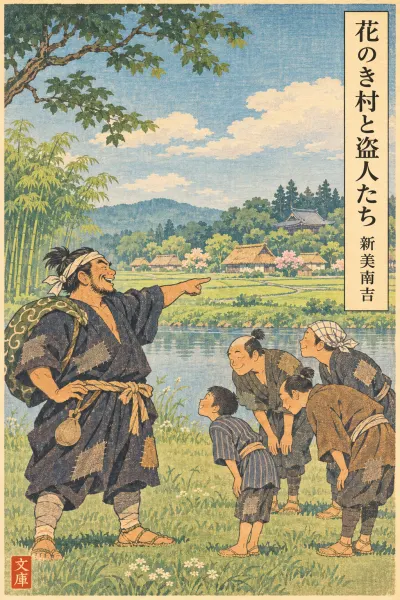
むかし、花のきむらに、五人のどろぼうが来ました。Long ago, five thieves came to Hananoki Village.
かしらと、四人の弟子です。There was a chief and his four apprentices.
弟子たちは、きのうどろぼうになったばかりでした。The apprentices had only become thieves the day before.
かしらは川のそばで、「わたしはここで待っている。おまえたちは、むらの中を見て来い。お金がありそうな家を、よくしらべるんだぞ。」といいました。By the river, the chief said, "I'll wait here. You lot go and have a look around the village. Check carefully for houses that look like they've got money, you hear?"
四人はむらに入りました。The four went into the village.
でも、みんな前の仕事をわすれることができません。But none of them could forget their old work.
なべを作っていた男は、こわれたなべを見て、どろぼうだということをわすれました。The man who used to make pots saw a broken pot and forgot that he was a thief.
そして、おくさんに仕事の話をしました。Then he talked to the lady of the house about his trade.
かぎを作っていた男は、「このむらのかぎは、よわいかぎばかりです。だめです。」といいました。The man who used to make locks said, "The locks in this village are all weak ones. They're no good."
かしらは、「それなら、ぬすみやすいじゃないか。」としかりました。"Well then, that makes them easy to rob, doesn't it?" the chief scolded.
いちばん若い弟子は、ふえをふきながら帰って来ました。The youngest apprentice came back playing a flute.
おじいさんのきれいなふえを聞いたことや、おてらのおまつりで、あまいお茶を飲んだことを話しました。He told how he had heard an old man play a beautiful flute, and how he had drunk sweet tea at the temple festival.
大工のむすこは、金持ちの家を見ましたが、家の木がすばらしくて、長い間見ていただけでした。The carpenter's son had seen a rich man's house, but the wood of the house was so splendid that he had only stood looking at it for a long time.
かしらは、「もう一度行って来い。」と、みんなをしかりました。"Go back out there again!" the chief scolded them all.
かしらが一人で休んでいると、七つぐらいのかわいい男の子が、子牛をつれて来ました。While the chief was resting alone, a sweet little boy of about seven came along leading a calf.
小さいわらじをはいていました。He was wearing small straw sandals.
「この牛、持っていてね。」男の子は子牛をかしらにわたして、ほかの子どもたちのところへ走って行きました。"Hold this calf for me, will you?" The boy handed the calf to the chief and ran off to where the other children were.
かしらはわらいました。The chief laughed.
「弟子たちに、もう子牛をぬすんだと話せるぞ。」でも、わらっていると、なみだが出て、止まりませんでした。"Now I can tell my apprentices I've already stolen a calf!" But as he laughed, tears came, and they would not stop.
かしらはうれしかったのです。The chief was happy, you see.
かしらは、いつもみんなにつめたい目で見られて来ました。All his life, the chief had been looked at with cold eyes by everyone.
かしらが通ると、人はまどをしめました。When he passed by, people shut their windows.
いけの魚も、にげて行きました。Even the fish in the ponds swam away.
だれも、かしらをいい人だと思ってくれませんでした。No one had ever thought of him as a good man.
でも、あの男の子は、どろぼうのじぶんに子牛をたのんでくれました。But that little boy had trusted his calf to him, a thief.
子牛も、いやがらないで、しずかにそばに立っています。And the calf, too, did not seem to mind, but stood quietly by his side.
かしらは、子どものときのような、きれいな心になりました。The chief's heart became as pure as it had been when he was a child.
夕方になって、月が出ました。Evening came, and the moon rose.
でも、男の子は帰って来ませんでした。But the boy did not come back.
そこへ、弟子たちが帰って来ました。Just then, the apprentices returned.
「かしら、もう子牛をぬすんだんですね。」「いや、ちがう。この子牛は、あの子にわたすのだ。」かしらがわけを話すと、弟子たちもかしらの気持ちがわかりました。"Chief, you've already stolen a calf, haven't you?" "No, that's not it. This calf goes back to that boy." When the chief explained why, the apprentices understood how he felt, too.
五人は、夜のむらで男の子をさがしました。The five of them searched the village at night for the boy.
でも、見つかりません。But they could not find him.
むらの人も、「こんな子牛は見たことがない。」といいました。The villagers, too, said, "I've never seen a calf like that."
「あとは、やくにんの家に行くしかありません。」どろぼうには、こわい所です。"The only thing left is to go to the official's house." For thieves, that is a frightening place.
でもかしらは、「じゃ、行こう。」といいました。But the chief said, "All right, then, let's go."
やくにんは、やさしいおじいさんでした。The official was a kind old man.
「物をわたしに来る人が、どろぼうのはずはない。どろぼうかと思って、すまなかった。」おじいさんは子牛をあずかって、五人におさけを出しました。"Folk who come to hand something over to me can't very well be thieves. I'm sorry I took you for thieves." The old man took the calf into his keeping and served the five of them sake.
みんなで楽しく話しました。They all talked together happily.
かしらの目から、また、なみだが出ました。Once again, tears fell from the chief's eyes.
家を出てから、かしらは立ち止まりました。After they had left the house, the chief stopped in his tracks.
「わすれ物がある。」かしらは、もう一度家に入って、「わたしたちは、ほんとうはどろぼうです。」と話しました。"I've forgotten something." The chief went back into the house once more and said, "The truth is, we're thieves."
「あなたが、わたしたちをいい人だと思ってくれたから、もう、うそはつけません。」かしらは、悪いことをぜんぶ話しました。"You thought we were good people, so I can't go on lying any more." The chief told him all the bad things he had done.
「でも、この四人は、まだ何も悪いことをしていません。この四人だけは、ゆるしてください。」"But these four haven't done anything bad yet. Please, at least forgive these four."
次の朝、四人の弟子は、一人ずつちがう道を歩いて行きました。The next morning, the four apprentices each set off alone down a different road.
かしらはさいごに、「もう、どろぼうになってはいけない。」といいました。Last of all, the chief told them, "Don't you ever become thieves again."
四人は、そのことばを大切にしようと思いました。The four resolved to treasure those words.
いちばん若い弟子は、川のそばでふえを見つけて、ふきながら行きました。The youngest apprentice found a flute by the river and went on his way playing it.
あの男の子は、だれだったのでしょう。Now, who could that little boy have been?
むらの人はさがしましたが、わかりませんでした。The villagers searched, but they could not find out.
そして、「はしのそばのおじぞうさんだろう。」と考えました。And so they decided, "It must have been the Jizō by the bridge."
その日、おじぞうさんの足の前に、新しい小さいわらじがあったからです。That was because, on that day, a pair of small new straw sandals had been found at the Jizō's feet.
むらの人がみんなやさしい人だったから、おじぞうさんが、むらに悪いことが起こらないようにしてくれたのかもしれません。Perhaps, because the villagers were all kind people, Jizō had made sure that nothing bad would happen to the village.
Vocabulary
| Word | Meaning | JLPT |
|---|---|---|
| どろぼうどろぼう | thief, burglardictionary form: 泥棒Also written 泥棒. The older literary word is 盗人 (ぬすびと), as in the title. | N4 |
| かしらかしら | chief, boss, leader of a gangdictionary form: 頭Old-fashioned word for the head of a group. The same kanji also means 'head' (あたま). | N5 |
| 弟子でし | apprentice, pupil, follower | — |
| しらべるしらべる | to check, to look into, to investigatedictionary form: 調べる | N4 |
| しかりましたしかる | to scolddictionary form: 叱るUsed for a superior telling off someone below them, such as a parent, teacher or boss. | N3 |
| ぬすみやすいぬすむ | to steal (here: easy to steal from)dictionary form: 盗む盗む + やすい. The noun ぬすびと (thief) comes from the same verb. | N4 |
| わらじわらじ | straw sandalsdictionary form: 草鞋Traditional woven sandals tied on with cords. Footwear is 'worn' with はく. | — |
| なみだなみだ | tearsdictionary form: 涙なみだが出る means 'tears come / to cry'. | N3 |
| たのんでたのむ | to ask; here, to entrust something to someonedictionary form: 頼む | N5 |
| やくにんやくにん | official, government officerdictionary form: 役人In the Edo period, the person responsible for village affairs and keeping order. | N2 |
| あずかってあずかる | to take into one's keeping, to look after something for someonedictionary form: 預かるCompare 預ける (あずける), 'to leave something with someone'. | N2 |
| ゆるしてゆるす | to forgive, to let offdictionary form: 許す | N3 |
| おじぞうさんじぞう | Jizō, a Buddhist protector of children and travellersdictionary form: 地蔵Small stone statues of Jizō stand beside roads and bridges all over Japan. People often leave him offerings such as straw sandals, and お〜さん is an affectionate way to say his name. | — |
Grammar
〜たばかり N4 have just done
Past tense of a verb + ばかり shows that something happened only a very short time ago. Here it stresses how new the apprentices are to stealing.
弟子たちは、きのうどろぼうになったばかりでした。
The apprentices had only become thieves the day before.
〜やすい N4 easy to do
Attach やすい to the verb stem (ぬすむ → ぬすみ) and it means 'easy to do'. The chief turns the locksmith's complaint about weak locks into good news for thieves.
それなら、ぬすみやすいじゃないか。
Well then, that makes them easy to rob, doesn't it?
〜ながら N4 while doing
Verb stem + ながら links two actions done by the same person at the same time. The main action comes last (帰って来ました).
いちばん若い弟子は、ふえをふきながら帰って来ました。
The youngest apprentice came back playing a flute.
〜しかない N3 there is no choice but to
Dictionary form + しかない (here the polite しかありません) means 'have no choice but to', i.e. this is the only option left. あとは adds the sense of 'what remains'.
あとは、やくにんの家に行くしかありません。
The only thing left is to go to the official's house.
〜はずはない N3 cannot possibly be
Noun + の + はずはない states a strong conclusion that something cannot be true. The official reasons that people bringing him something cannot be thieves.
物をわたしに来る人が、どろぼうのはずはない。
Folk who come to hand something over to me can't very well be thieves.
〜ないようにする N3 to make sure something does not happen
Negative form + ようにする means acting so that something will not happen. With てくれた it is done as a favour, and かもしれません softens the whole sentence to 'perhaps'.
おじぞうさんが、むらに悪いことが起こらないようにしてくれたのかもしれません。
Perhaps Jizō had made sure that nothing bad would happen to the village.