 N5 · easy
Simplified retelling · JLPT N5
花のき村と盗人たち Hana Noki Mura to Nusubitotachi in easy Japanese (N5)
This is our own simplified retelling of Five Thieves Come to Hananoki Village, written for N5 learners and checked word by word against the N5 vocabulary list. A few story words and grammar patterns go beyond N5; the notes below give each one's level. It keeps the characters, events and ending of the original. When it feels easy, move on to the N4 version or the original text.
The story in brief
Five thieves come to Hananoki Village, but a little boy trusts the chief with his calf and never returns, and the chief's heart is changed. The thieves search for the boy, and the chief confesses everything to the kind old village official and asks him to let the apprentices go. The next morning the apprentices leave in different directions. The villagers later decide that the boy was really the stone Jizō by the bridge.
AI translation · independently checked
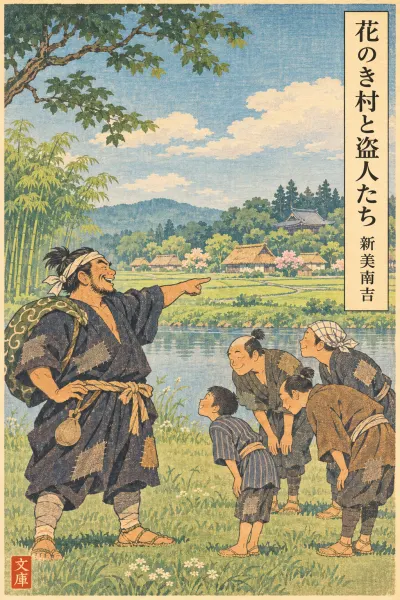
はなのきむらに、五人の ぬすびとが 来ました。Five thieves came to Hananoki Village.
かしらと、四人の でしです。They were a chief and his four apprentices.
でしたちは、きのう ぬすびとに なったばかりでした。The apprentices had only become thieves the day before.
かしらは 川の そばで たばこを すって、まちました。The chief smoked by the river and waited.
でしたちは、むらに 入りました。The apprentices went into the village.
お金が ある いえを 見に 行きました。They went to look for houses that had money.
でしたちが 一人ずつ 来ました。One by one, the apprentices came back.
でも、みんな 前の しごとの ものだけ 見て 来ました。But every one of them had looked only at things to do with his old trade.
いちばん わかい でしは、ふえの じょうずな おじいさんの 話を しました。The youngest apprentice talked about an old man who played the flute well.
かしらは「もう一ど 行きなさい。」と 言いました。"Go again," said the chief.
かしらが 一人で 休んで いると、七つぐらいの かわいい 男の子が 来ました。While the chief was resting by himself, a sweet little boy of about seven came along.
小さい わらじを はいて、こうしと いっしょでした。He was wearing small straw sandals, and he had a calf with him.
「この こうしを もって いてね。」"Hold this calf for me, okay?"
男の子は かしらに こうしを わたしました。The boy handed the calf to the chief.
そして、ほかの 子どもたちの ほうへ はしって 行きました。Then he ran off toward the other children.
かしらは はじめ、「もう こうしを 一ぴき とったぞ。」と 言いました。At first the chief said, "Ha! I've already got myself a calf!"
でも、だんだん なみだが 出て 来ました。But little by little, tears came to his eyes.
前は、だれも かしらを しんじませんでした。Before this, nobody had ever trusted the chief.
かしらが 来ると、人は まどを しめました。When the chief came by, people shut their windows.
いけの さかなも 下へ 行きました。Even the fish in the ponds went down to the bottom.
でも、この 男の子は かしらを しんじました。But this little boy trusted the chief.
こうしも しずかに かしらの そばに たって います。The calf, too, is standing quietly at the chief's side.
かしらは はじめて いい 人に なりました。For the first time, the chief had become a good man.
ゆうがたに なりました。Evening came.
でも、男の子は 来ませんでした。But the boy did not come back.
でしたちが 来ました。The apprentices came back.
「お金の ある いえを たくさん 見て 来ました。」"We went and looked at lots of houses with money."
でも、かしらは 言いました。But the chief said:
「この こうしを 男の子に わたしたい。みんなで さがして ください。」"I want to give this calf back to the boy. All of you, go and look for him."
でしたちは かしらの 話を 聞いて、よく わかりました。The apprentices listened to the chief and understood him well.
五人は よる おそくまで むらの 中を さがしました。The five of them searched the village until late at night.
でも、男の子は いませんでした。But the boy was nowhere to be found.
むらの 人も「この こうしは しりません。」と 言いました。The villagers, too, said, "We don't know this calf."
かしらは、むらの やくにんの いえへ 行きました。The chief went to the house of the village official.
やくにんは めがねを かけた おじいさんでした。The official was an old man who wore glasses.
「ぬすびとは 人の ものを わたしに 来ません。あなたたちは いい 人です。」"Thieves don't come round to hand over other people's things. You folk are good people, you are."
おじいさんは 五人に のみものを 出しました。The old man brought out drinks for the five of them.
六人は たのしく 話しました。The six of them talked happily together.
かしらは また なみだが 出ました。Once again, tears came to the chief's eyes.
五人は もんを 出ました。The five went out through the gate.
でも、かしらは もう一ど いえに 入りました。But the chief went back into the house once more.
「わたしたちは ぬすびとです。わたしが かしらです。」"We are thieves. I am their chief."
かしらは 前の わるい しごとを ぜんぶ 話しました。The chief told him about all the bad things he had done before.
「でも、でしたちは まだ 何も して いません。どうぞ、この 四人は いいと 言って ください。」"But my apprentices haven't done anything yet. Please, say these four can go."
つぎの あさ、四人の でしは 一人ずつ ちがう ほうへ 行きました。The next morning, the four apprentices each went off in a different direction.
かしらは「もう ぬすびとに なっては いけない。」と 言いました。The chief had told them, "Don't you ever become thieves again."
四人は この ことばを 大せつに しました。The four held those words dear.
いちばん わかい でしは、川の そばで ふえを とって、ふきながら 行きました。The youngest apprentice took out his flute by the river and went on his way playing it.
あの 男の子は だれだったのでしょう。Now, who could that little boy have been?
むらの 人は さがしましたが、わかりませんでした。The villagers looked for him, but they could not find out.
はしの そばに、小さい じぞうさんが あります。Beside the bridge there stands a small Jizō.
その あさ、じぞうさんの あしの 前に、あたらしい 小さい わらじが ありました。That morning, in front of the Jizō's feet, there was a pair of small, new straw sandals.
それで、むらの 人は「あの 子は じぞうさんだった。」と 言いました。And so the villagers said, "That child was the Jizō."
むらの 人が みんな いい 人だったから、じぞうさんが ぬすびとを いい 人に したのでしょう。Perhaps it was because the people of the village were all good people that the Jizō turned the thieves into good men.
Vocabulary
| Word | Meaning | JLPT |
|---|---|---|
| ぬすびとぬすびと | thiefdictionary form: 盗人Old-fashioned word. Today people usually say どろぼう. | — |
| かしらかしら | chief, boss (of a gang)dictionary form: 頭Literally 'head'. Here it means the leader of a group. | N5 |
| でしでし | apprentice, pupildictionary form: 弟子 | — |
| こうしこうし | calfdictionary form: 子牛子 (child) + 牛 (cow). | — |
| わらじわらじ | straw sandalsdictionary form: 草鞋Traditional woven-straw footwear. The verb for wearing them is はく. | — |
| わたしましたわたす | to hand over, to givedictionary form: 渡す | N5 |
| なみだなみだ | tearsdictionary form: 涙なみだが出る = tears come out, to cry. | N3 |
| しんじませんでしたしんじる | to trust, to believedictionary form: 信じる | N3 |
| さがしてさがす | to look for, to searchdictionary form: 探す | N4 |
| やくにんやくにん | official, village officerdictionary form: 役人 | N2 |
| ふえふえ | flutedictionary form: 笛To play a flute is ふえをふく ('blow'). | N3 |
| じぞうさんじぞう | Jizō, a stone statue of a Buddhist guardiandictionary form: 地蔵Jizō protects children and travellers. These statues often stand by roads and bridges. さん adds warmth. | — |
| 大せつにたいせつ | precious; 〜を大切にする = to treasure, to valuedictionary form: 大切 | N5 |
Grammar
〜たばかり N4 have just done
The past form of a verb + ばかり shows that something happened only a short time ago. Here it stresses that the apprentices are brand-new thieves.
でしたちは、きのう ぬすびとに なったばかりでした。
The apprentices had only become thieves the day before.
〜に 行く N5 go (in order) to do
The ます-stem of a verb (見) + に + 行く shows the purpose of going.
お金が ある いえを 見に 行きました。
They went to look for houses that had money.
〜と (when / whenever) N4 when A happens, B happens
The plain form + と links a cause or trigger to the result that always follows. Every time the chief came, people shut their windows.
かしらが 来ると、人は まどを しめました。
When the chief came by, people shut their windows.
〜たい N5 want to do
The ます-stem + たい expresses the speaker's own wish. It works like an い-adjective.
この こうしを 男の子に わたしたい。
I want to give this calf back to the boy.
〜ては いけない N4 must not do
The て-form + は + いけない forbids an action. The chief uses the plain form, so it sounds like a firm order.
もう ぬすびとに なっては いけない。
Don't you ever become thieves again.
〜ながら N4 while doing
The ます-stem + ながら shows that two actions happen at the same time. Here the apprentice walks and plays the flute together.
川の そばで ふえを とって、ふきながら 行きました。
He took out his flute by the river and went on his way playing it.