Part 1 of 6 · JLPT N2
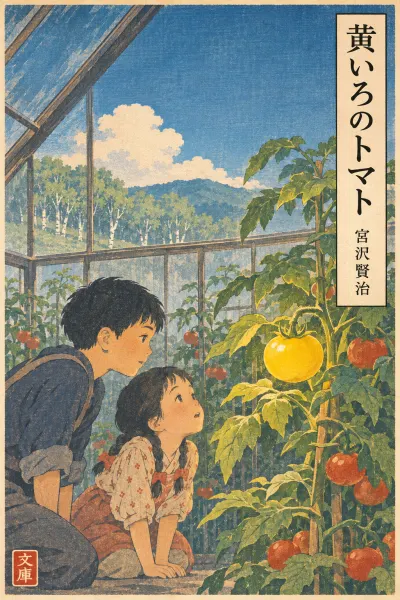
黄いろのトマト Kiiro no Tomato, part 1: A Stuffed Hummingbird Begins to Speak
In this part
As a child, the narrator Kyusute slips into his town museum early one morning, and a stuffed hummingbird behind the glass suddenly speaks to him. It laments that the good boy Pemperu and his sweet sister Neri met a pitiful fate, then tells how the two children lived happily all alone, milling wheat and harvesting cabbages while the bird came to watch and teased Neri. When the narrator asks whether there were no grown-ups, the bird says there were none and repeats its sorrow.
AI translation · independently checked
博物局十六等官Sixteenth-Grade Official of the Museum Bureau
キュステ誌Recorded by Kyusute
私の町の博物館の、大きなガラスの戸棚には、剥製ですが、四疋の蜂雀がいます。In the big glass cabinet of the museum in my town there are four hummingbirds, though they are stuffed.
生きてたときはミィミィとなき蝶のように花の蜜をたべるあの小さなかあいらしい蜂雀です。They are those tiny, lovely hummingbirds that, when they were alive, cried "mee, mee" and fed on the nectar of flowers just like butterflies.
わたくしはその四疋の中でいちばん上の枝にとまって、羽を両方ひろげかけ、まっ青なそらにいまにもとび立ちそうなのを、ことにすきでした。Of the four, I was especially fond of the one perched on the highest branch, with both wings half spread, looking as if at any moment it might fly up into the deep blue sky.
それは眼が赤くてつるつるした緑青いろの胸をもち、そのりんと張った胸には波形のうつくしい紋もありました。It had red eyes and a smooth, glossy breast the colour of verdigris, and on that proudly puffed-out breast there was also a beautiful wavy pattern.
小さいときのことですが、ある朝早く、私は学校に行く前にこっそり一寸ガラスの前に立ちましたら、その蜂雀が、銀の針の様なほそいきれいな声で、にわかに私に言いました。This was when I was small. Early one morning, before going to school, I slipped in quietly and stood in front of the glass for a moment, and all of a sudden that hummingbird spoke to me in a fine, pretty voice like a silver needle.
「お早う。ペムペルという子はほんとうにいい子だったのにかあいそうなことをした。」"Good morning. That boy called Pemperu was such a good boy, and yet a pitiful thing happened to him."
その時窓にはまだ厚い茶いろのカーテンが引いてありましたので室の中はちょうどビール瓶のかけらをのぞいたようでした。At that hour the thick brown curtains were still drawn across the windows, so the room looked just as if you were peering through a piece of a broken beer bottle.
ですから私も挨拶しました。So I said good morning too.
「お早う。蜂雀。ペムペルという人がどうしたっての。」"Good morning, Hummingbird. What happened to this person called Pemperu?"
蜂雀がガラスの向うで又云いました。The hummingbird spoke again from the other side of the glass.
「ええお早うよ。妹のネリという子もほんとうにかあいらしいいい子だったのにかあいそうだなあ。」"Yes, good morning to you. His little sister, a girl called Neri, was such a sweet, good girl too, and yet how pitiful it was."
「どうしたていうの話しておくれ。」"What happened? Please tell me."
すると蜂雀はちょっと口あいてわらうようにしてまた云いました。Then the hummingbird opened its beak a little, as though it were smiling, and spoke again.
「話してあげるからおまえは鞄を床におろしてその上にお座り。」"I'll tell you, so put your satchel down on the floor and sit on it."
私は本の入ったかばんの上に座るのは一寸困りましたけれどもどうしてもそのお話を聞きたかったのでとうとうその通りしました。I didn't much like sitting on a satchel full of books, but I wanted so badly to hear the story that in the end I did as I was told.
すると蜂雀は話しました。Then the hummingbird told its story.
「ペムペルとネリは毎日お父さんやお母さんたちの働くそばで遊んでいたよ〔以下原稿一枚?なし〕"Every day Pemperu and Neri used to play near where their father and mother and the others worked. [From here on, one manuscript page (?) is missing.]
その時僕もThen I, too,
『さようなら。さようなら。』と云ってペムペルのうちのきれいな木や花の間からまっすぐにおうちにかえった。said, 'Goodbye, goodbye,' and went straight home from among the lovely trees and flowers at Pemperu's place.
それから勿論小麦も搗いた。And then, of course, they pounded wheat as well.
二人で小麦を粉にするときは僕はいつでも見に行った。Whenever the two of them were making the wheat into flour, I always went to watch.
小麦を粉にする日ならペムペルはちぢれた髪からみじかい浅黄のチョッキから木綿のだぶだぶずぼんまで粉ですっかり白くなりながら赤いガラスの水車場でことことやっているだろう。On a day for making flour, Pemperu would be clattering away in the red glass mill house, turning completely white with flour, from his curly hair and his short pale-blue waistcoat right down to his baggy cotton trousers.
ネリはその粉を四百グレンぐらいずつ木綿の袋につめ込んだりつかれてぼんやり戸口によりかかりはたけをながめていたりする。Neri would pack the flour into cotton bags, about four hundred grains at a time, or else, tired out, lean dreamily against the doorway and gaze at the fields.
そのときぼくはネリちゃん。Then I would say, 'Neri dear,'
あなたはむぐらはすきですかとからかったりして飛んだのだ。'do you like moles?' and tease her like that, and off I'd fly.
それからもちろんキャベジも植えた。And then, of course, they planted cabbages too.
二人がキャベジを穫るときは僕はいつでも見に行った。Whenever the two of them were harvesting the cabbages, I always went to watch.
ペムペルがキャベジの太い根を截ってそれをはたけにころがすと、ネリは両手でそれをもって水いろに塗られた一輪車に入れるのだ。Pemperu would cut through the thick root of a cabbage and roll it onto the field, and Neri would pick it up in both hands and put it into a wheelbarrow painted pale blue.
そして二人は車を押して黄色のガラスの納屋にキャベジを運んだのだ。And then the two of them would push the barrow and carry the cabbages to the yellow glass barn.
青いキャベジがころがってるのはそれはずいぶん立派だよ。Oh, it's a splendid sight, I tell you, green cabbages rolling about.
そして二人はたった二人だけずいぶんたのしくくらしていた。」And so the two of them lived very happily, just the two of them all alone."
「おとなはそこらに居なかったの。」わたしはふと思い付いてそうたずねました。"Weren't there any grown-ups around?" I asked, the thought suddenly occurring to me.
「おとなはすこしもそこらあたりに居なかった。なぜならペムペルとネリの兄妹の二人はたった二人だけずいぶん愉快にくらしてたから。"There were no grown-ups anywhere around there at all. Because Pemperu and Neri, the brother and sister, lived very merrily, just the two of them all alone.
けれどほんとうにかあいそうだ。But it really is pitiful.
ペムペルという子は全くいい子だったのにかあいそうなことをした。That boy called Pemperu was truly a good boy, and yet a pitiful thing happened to him.
ネリという子は全くかあいらしい女の子だったのにかあいそうなことをした。」That girl called Neri was truly a sweet little girl, and yet a pitiful thing happened to her."
Vocabulary
| Word | Meaning | JLPT |
|---|---|---|
| 剥製はくせい | stuffed (animal), taxidermy specimen | — |
| 蜂雀はちすずめ | hummingbirdLiterally 'bee sparrow'; the usual modern word is ハチドリ. | — |
| 戸棚とだな | cabinet, cupboard with doors | N2 |
| かあいらしいかわいらしい | lovely, sweet, charmingdictionary form: かわいらしいかあい〜 is an old colloquial spelling of かわい〜; likewise かあいそう = かわいそう. | N3 |
| 緑青ろくしょう | verdigris (the blue-green rust on copper)Used here as a colour word: 緑青いろ. | — |
| りんとりんと | proudly, smartly, firmly (of posture)りんと張った胸: a chest thrust out with dignity. | — |
| にわかににわかに | suddenly, all at onceLiterary; 急に in everyday speech. | — |
| かあいそうかわいそう | pitiful, poor (thing)dictionary form: かわいそうかわいそうなことをした: 'a pitiful thing happened', expressing regret over someone's misfortune. | N3 |
| 搗いたつく | to pound (grain) in a mortardictionary form: 搗くSame verb as 餅を搗く 'pound rice cakes'. | — |
| 浅黄あさぎ | pale blue, light greenish blueDespite the kanji 黄, it means a pale blue (also written 浅葱). | — |
| 水車場すいしゃば | water mill, mill house | — |
| むぐらむぐら | mole (animal)Dialect/old form of もぐら. | — |
| 截ってきる | to cut offdictionary form: 截るRare kanji for きる; today 切る. | — |
| 納屋なや | barn, shed | — |
Grammar
いまにも〜そうな N4 looking as if about to ~ at any moment
The verb stem + そう describes how something looks. いまにも strengthens it to 'any second now'.
まっ青なそらにいまにもとび立ちそうなのを、ことにすきでした
I was especially fond of the one that looked as if it might fly up into the deep blue sky at any moment
〜のに N4 even though, and yet
のに links two facts that clash, often with a note of regret. Here a good boy did not deserve his fate.
ペムペルという子はほんとうにいい子だったのにかあいそうなことをした。
That boy called Pemperu was such a good boy, and yet a pitiful thing happened to him.
〜ておくれ N2 please do ~ (for me)
〜ておくれ: 'please do ~ (for me)'. おくれ is the verb くれる in its imperative form くれ with the prefix お, attached to the te-form. It makes a gentle, affectionate request, is somewhat old-fashioned, and is typically said to someone close or of lower standing, such as a child.
どうしたていうの話しておくれ。
What happened? Please tell me.
〜ながら N4 while ~ing
ながら joins two actions done at the same time by the same person. Pemperu turns white with flour as he works.
粉ですっかり白くなりながら赤いガラスの水車場でことことやっているだろう
he'd be clattering away in the red glass mill house, turning completely white with flour
〜たり〜たりする N5 do things like ~ and ~
This lists typical actions as examples, not a complete sequence. Here it describes Neri's habits on milling days.
木綿の袋につめ込んだりつかれてぼんやり戸口によりかかりはたけをながめていたりする
she would pack it into cotton bags, or lean tiredly against the doorway gazing at the fields