Part 2 of 6 · JLPT N2
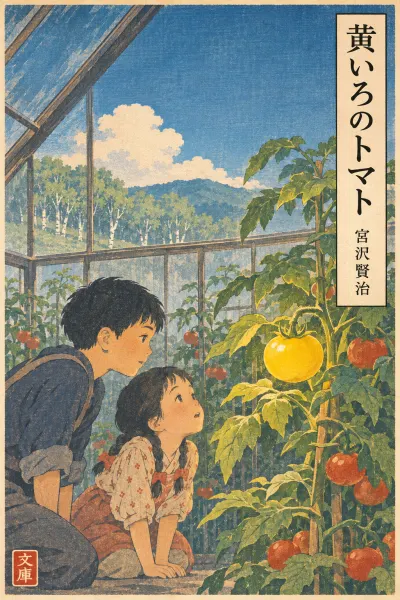
黄いろのトマト Kiiro no Tomato, part 2: A Silent Bird and a Kindly Guard
In this part
The hummingbird suddenly stops its story and will not say another word, and the boy, unable to bear it, pleads with it and finally bursts into tears in front of the glass case. The old museum guard finds him, tells him not to cry so hard before opening time, and laughs when he hears the reason. He scolds the hummingbird for its old trick, assures the boy it will talk, and tells him to wipe away his tears.
AI translation · independently checked
蜂雀は俄かにだまってしまいました。The hummingbird suddenly fell silent.
私はもう全く気が気でありませんでした。I was beside myself with worry.
蜂雀はいよいよだまってガラスの向うでしんとしています。The hummingbird fell more silent than ever, perfectly still on the other side of the glass.
私もしばらくは耐えて膝を両手で抱えてじっとしていましたけれどもあんまり蜂雀がいつまでもだまっているもんですからそれにそのだまりようと云ったらたとえ一ぺん死んだ人が二度とお墓から出て来ようたって口なんか聞くもんかと云うように見えましたのでとうとう私は居たたまらなくなりました。For a while I held back too, hugging my knees in both arms and keeping still. But the hummingbird stayed silent for so long, and the way it kept silent looked as if to say, "Even if a man who had died came back out of his grave, do you think I would speak to him?" In the end I could not bear it any longer.
私は立ってガラスの前に歩いて行って両手をガラスにかけて中の蜂雀に云いました。I stood up, walked to the front of the glass, put both hands on it, and spoke to the hummingbird inside.
「ね、蜂雀、そのペムペルとネリちゃんとがそれから一体どうなったの、どうしたって云うの、ね、蜂雀、話してお呉れ。」"Say, hummingbird, what happened to Pemperu and Neri after that? What became of them? Come on, hummingbird, tell me."
けれども蜂雀はやっぱりじっとその細いくちばしを尖らしたまま向うの四十雀の方を見たっきり二度と私に答えようともしませんでした。But the hummingbird stayed just as still, its thin beak pointed, staring only at the great tit over on the other side, and never again so much as tried to answer me.
「ね、蜂雀、談してお呉れ。だめだい半分ぐらい云っておいていけないったら蜂雀"Say, hummingbird, tell me. It's no good telling me only about half and then leaving it there. You mustn't, hummingbird!
ね。Please.
談してお呉れ。Tell me.
そら、さっきの続きをさ。Come on, the rest of what you were saying.
どうして話して呉れないの。」Why won't you tell me?"
ガラスは私の息ですっかり曇りました。My breath fogged up the glass completely.
四羽の美しい蜂雀さえまるでぼんやり見えたのです。Even the four beautiful hummingbirds looked quite blurry.
私はとうとう泣きだしました。At last I began to cry.
なぜって第一あの美しい蜂雀がたった今まできれいな銀の糸のような声で私と話をしていたのに俄かに硬く死んだようになってその眼もすっかり黒い硝子玉か何かになってしまいいつまでたっても四十雀ばかり見ているのです。Why? Well, first of all, that beautiful hummingbird had been talking with me only a moment before, in a lovely voice like a thread of silver, and now all of a sudden it had gone stiff as if it were dead, its eyes had turned into nothing but black glass beads or some such thing, and it just kept staring at the great tit, on and on.
おまけに一体それさえほんとうに見ているのかただ眼がそっちへ向いてるように見えるのか少しもわからないのでしょう。What was more, I could not tell at all whether it was really looking even at that, or whether its eyes only seemed to be turned that way.
それにまたあんなかあいらしい日に焼けたペムペルとネリの兄妹が何か大へんかあいそうな目になったというのですものどうして泣かないでいられましょう。And on top of that, it had said that Pemperu and Neri, that sweet, sunburnt brother and sister, had met with something truly pitiful. How could I keep from crying?
もう私はその為ならば一週間でも泣けたのです。For their sake, I could have cried for a whole week.
すると俄かに私の右の肩が重くなりました。Then suddenly my right shoulder felt heavy.
そして何だか暖いのです。And somehow it was warm.
びっくりして振りかえって見ましたらあの番人のおじいさんが心配そうに白い眉を寄せて私の肩に手を置いて立っているのです。Startled, I turned around, and there stood the old guard, his white eyebrows knitted with worry and his hand resting on my shoulder.
その番人のおじいさんが云いました。The old guard spoke.
「どうしてそんなに泣いて居るの。おなかでも痛いのかい。朝早くから鳥のガラスの前に来てそんなにひどく泣くもんでない。」"Now, why are you crying so? Got a tummy ache, have you? It won't do to come to the bird case first thing in the morning and cry your heart out like that."
けれども私はどうしてもまだ泣きやむことができませんでした。But no matter how I tried, I still could not stop crying.
おじいさんは又云いました。The old man spoke again.
「そんなに高く泣いちゃいけない。"You mustn't cry so loud.
まだ入口を開けるに一時間半も間があるのにおまえだけそっと入れてやったのだ。There's a good hour and a half yet before we open the doors, and I let you in on the quiet, just you.
それにそんなに高く泣いて表の方へ聞えたらみんな私に故障を云って来るんでないか。If you cry so loud and they hear it out front, won't everyone come to me with complaints?
そんなに泣いていけないよ。You mustn't cry like that, now.
どうしてそんなに泣いてんだ。」Whatever are you crying so for?"
私はやっと云いました。At last I managed to say,
「だって蜂雀がもう私に話さないんだもの。」"Because the hummingbird won't talk to me any more."
するとじいさんは高く笑いました。At that the old man laughed out loud.
「ああ、蜂雀が又おまえに何か話したね。そして俄かに黙り込んだね。そいつはいけない。この蜂雀はよくその術をやって人をからかうんだ。よろしい。私が叱ってやろう。」"Ah, so the hummingbird's been telling you something again, has it? And then all of a sudden it clammed up, eh? Well, that's no good. This hummingbird often plays that trick to tease folk. Very well. I'll give it a scolding."
番人のおじいさんはガラスの前に進みました。The old guard stepped up to the glass.
「おい。蜂雀。今日で何度目だと思う。手帳へつけるよ。つけるよ。あんまりいけなけあ仕方ないから館長様へ申し上げてアイスランドへ送っちまうよ。"Now then, hummingbird. How many times does that make today, d'you think? I'll write it in my notebook. I will, mind. If you're too naughty, there's nothing for it but to report you to the Director, sir, and have you shipped off to Iceland.
ええおい。Hear me?
さあ坊ちゃん。There now, young master.
きっとこいつは談します。He'll talk, you'll see.
早く涙をおふきなさい。Quick, wipe those tears away.
まるで顔中ぐじゃぐじゃだ。Your face is all a soggy mess.
そらええああすっかりさっぱりした。There, that's it, ah, all nice and clean again.
Vocabulary
| Word | Meaning | JLPT |
|---|---|---|
| 俄かににわか | suddenly, all at oncedictionary form: 俄かLiterary; used several times in this passage. Close to 急に. | N2 |
| 気が気でありませんでしたきがきでない | to be beside oneself with worrydictionary form: 気が気でないSet phrase; usually 気が気でない. Here it appears in the polite form. | — |
| 居たたまらなくいたたまれない | unable to bear it any longerdictionary form: 居たたまれない居たたまらない is an older variant of 居たたまれない. | — |
| 耐えてこらえる | to hold back, to enduredictionary form: 耐える耐える is usually read たえる; the reading こらえる is normally written 堪える. | N1 |
| 尖らしたとがらす | to make pointed, to stick out (a beak or lips)dictionary form: 尖らす | — |
| 曇りましたくもる | to fog up, to become cloudydictionary form: 曇る | N5 |
| 番人ばんにん | guard, watchman番 means 'watch, turn', as in 交番. | — |
| 眉を寄せてまゆをよせる | to knit one's brows, to frowndictionary form: 眉を寄せる | — |
| 故障こしょう | complaint, objectionOlder usage. Today 故障 normally means 'breakdown' of a machine. | N4 |
| 術じゅつ | trick, technique | — |
| からかうからかう | to tease, to make fun of | N2 |
| 叱ってしかる | to scolddictionary form: 叱る | N3 |
| 館長かんちょう | director (of a museum or library)館 means 'building, hall', as in 図書館. | — |
Grammar
〜もんか N2 as if I would…! (strong denial)
もんか is the casual form of ものか. Added to a plain verb, it gives an emphatic 'never'. Here it describes the bird's silence as stubborn refusal.
口なんか聞くもんかと云うように見えました
it looked as if to say, "Do you think I'd speak?"
〜たまま N4 while still in the state of…
まま after a past-tense verb means that a state continues unchanged. The bird's beak stays pointed the whole time.
細いくちばしを尖らしたまま
with its thin beak still pointed
〜っきり N2 only…, and nothing else
っきり is a colloquial form of きり. After a past verb, it means the action happened and nothing followed. The bird just kept looking and did nothing more.
向うの四十雀の方を見たっきり
just staring at the great tit across the way
〜ようともしない N2 not even try to…
The volitional form plus ともしない (と + も + しない) means someone does not even try to do something. It stresses the bird's total refusal.
二度と私に答えようともしませんでした
made no attempt to answer me again
〜ないでいられましょう N2 how could one keep from…?
The negative form plus いられる means 'to be able to stay without doing'. With どうして and the polite volitional ましょう, it becomes a rhetorical question: it was impossible not to cry.
どうして泣かないでいられましょう
How could I keep from crying?
〜ちゃいけない N4 must not…
ちゃ is a contraction of ては, so 泣いちゃいけない equals 泣いてはいけない. It is a casual way of forbidding something.
そんなに高く泣いちゃいけない。
You mustn't cry so loud.