Part 6 of 6 · JLPT N2
黄いろのトマト Kiiro no Tomato, part 6: Laughed Away from the Circus Gate
In this part
Pemperu takes four yellow tomatoes from the orchard and offers two at the circus gate as payment. The doorman shouts at the children, throws the tomatoes, and hits Neri, and the crowd laughs as the two run home in tears. The hummingbird falls silent again, and the young narrator leaves the room crying for the brother and sister.
AI translation · independently checked
それからとうとうあの果樹園にはいったのだ。And then at last he went into that orchard.
ガラスのお家が月のあかりで大へんなつかしく光っていた。The glass houses were shining in the moonlight, oh, so dear and familiar.
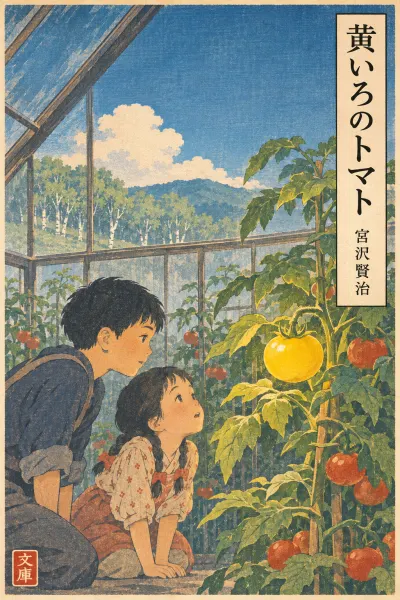
ペムペルは一寸立ちどまってそれを見たけれども、又走ってもうまっ黒に見えているトマトの木から、あの黄いろの実のなるトマトの木から、黄いろのトマトの実を四つとった。Pemperu stopped for a moment and looked at them, but then he ran on, and from the tomato plants that already looked pitch black, from the plants that grew those yellow fruits, he picked four yellow tomatoes.
それからまるで風のよう、あらしのように汗と動悸で燃えながら、さっきの草場にとって返した。Then, like the wind, like a storm, burning with sweat and his pounding heart, he raced back to the grassy patch from before.
僕も全く疲れていた。I was completely worn out too.
ネリはちらちらこっちの方を見てばかりいた。Neri kept glancing over this way, again and again.
けれどもペムペルは、But Pemperu
『さあ、いいよ。入ろう。』'There, it's all right now. Let's go in.'
とネリに云った。said to Neri.
ネリは悦んで飛びあがり、二人は手をつないで木戸口に来たんだ。Neri jumped up for joy, and the two of them came to the gate holding hands.
ペムペルはだまって二つのトマトを出したんだ。Without a word, Pemperu held out two of the tomatoes.
番人は『ええ、いらっしゃい。』と言いながら、トマトを受けとり、それから変な顔をした。The doorman said, 'Yes, come right in,' and took the tomatoes, and then a strange look came over his face.
しばらくそれを見つめていた。For a while he stared at them.
それから俄かに顔が歪んでどなり出した。Then all of a sudden his face twisted and he started bellowing.
『何だ。この餓鬼め。人をばかにしやがるな。トマト二つで、この大入の中へ汝たちを押し込んでやってたまるか。失せやがれ、畜生。』'What's this? You little brats! Making a fool of me, are you? You think I'm going to shove the likes of you into a packed house like this for two tomatoes? Not on your life! Clear off, damn you!'
そしてトマトを投げつけた。And he threw the tomatoes at them.
あの黄のトマトをなげつけたんだ。He threw those yellow tomatoes right at them.
その一つはひどくネリの耳にあたり、ネリはわっと泣き出し、みんなはどっと笑ったんだ。One of them hit Neri hard on the ear, and Neri burst into tears, and everyone roared with laughter.
ペムペルはすばやくネリをさらうように抱いて、そこを遁げ出した。Pemperu quickly snatched Neri up in his arms and ran away from there.
みんなの笑い声が波のように聞えた。The sound of everyone's laughter came to them like waves.
まっくらな丘の間まで遁げて来たとき、ペムペルも俄かに高く泣き出した。When they had run as far as the pitch-dark hills, Pemperu too suddenly began to cry out loud.
ああいうかなしいことを、お前はきっと知らないよ。I'm sure you've never known anything as sad as that.
それから二人はだまってだまってときどきしくりあげながら、ひるの象について来たみちを戻った。Then the two of them, silent, so silent, sobbing now and then, went back along the road they had come by following the elephant that afternoon.
それからペムペルは、にぎりこぶしを握りながら、ネリは時々唾をのみながら、樺の木の生えたまっ黒な小山を越えて、二人はおうちに帰ったんだ。And then, Pemperu clenching his fists and Neri swallowing hard every now and then, the two of them crossed the pitch-black hills covered with birch trees and went home.
ああかあいそうだよ。Oh, it's so sad.
ほんとうにかあいそうだ。It's really, really sad.
わかったかい。Do you understand?
じゃさよなら、私はもうはなせない。Well then, goodbye. I can't talk any more.
じいさんを呼んで来ちゃいけないよ。And don't you go fetching the old man.
さよなら。」Goodbye."
斯う云ってしまうと蜂雀の細い嘴は、また尖ってじっと閉じてしまい、その眼は向うの四十雀をだまって見ていたのです。When it had said this, the hummingbird's thin beak grew pointed again and shut tight, and its eyes stared silently at the great tit across the room.
私も大へんかなしくなってI too felt terribly sad, and
「じゃ蜂雀。さようなら。僕又来るよ。けれどお前が何か云いたかったら云ってお呉れ。さよなら、ありがとうよ。蜂雀、ありがとうよ。」"Well then, hummingbird. Goodbye. I'll come again. But if there's anything you want to say, please tell me. Goodbye, and thank you. Thank you, hummingbird."
と云いながら、鞄をそっと取りあげて、その茶いろガラスのかけらの中のような室を、しずかに廊下へ出たのです。saying this, I gently picked up my satchel and quietly left that room, which was like the inside of a piece of brown glass, and went out into the corridor.
そして俄かにあんまりの明るさと、あの兄妹のかあいそうなのとに、眼がチクチクッと痛み、涙がぼろぼろこぼれたのです。And suddenly, because of the glaring brightness and because of how sorry I felt for that brother and sister, my eyes stung and prickled, and tears came pouring down.
私のまだまるで小さかったときのことです。This happened when I was still very small.
Vocabulary
| Word | Meaning | JLPT |
|---|---|---|
| 果樹園かじゅえん | orchard, fruit farm果 fruit + 樹 tree + 園 garden. | — |
| 動悸どうき | pounding heart, palpitationsOften in 動悸がする. | — |
| とって返したとってかえす | to turn straight back, hurry backdictionary form: 取って返すStresses going back at once without stopping. | — |
| 木戸口きどぐち | entrance gate (of a show or tent)木戸 was the gate where admission was taken at shows; 木戸銭 is the entrance fee. | — |
| 番人ばんにん | doorman, gatekeeper番 means watch or guard duty. | — |
| 餓鬼がき | brat, little kid (insulting)Originally a hungry ghost in Buddhism. With め added, it becomes a strong insult. | — |
| 大入おおいり | packed house, full audiencedictionary form: 大入りTheatre and show word for a sell-out crowd. | — |
| 失せやがれうせる | to get lost, clear offdictionary form: 失せるRude when used as a command: 失せろ! | — |
| 遁げ出したにげだす | to run away, fleedictionary form: 逃げ出す遁 is an old kanji for 逃. | N1 |
| しくりあげしゃくりあげる | to sob, catch one's breath while cryingdictionary form: しゃくり上げるしくりあげる is a regional or colloquial variant. | — |
| 樺かば | birchAlso 白樺 (しらかば), white birch. | — |
| 嘴くちばし | beak, bill | N1 |
| 尖ってとがる | to become pointed, sharpdictionary form: 尖る | N2 |
| 四十雀しじゅうから | great tit (small songbird)Irregular reading. This is another stuffed bird in the room. | — |
Grammar
〜てばかりいる N3 do nothing but ~, keep on ~ing
て-form + ばかりいる shows that someone does one thing over and over and nothing else. Here Neri can't stop glancing over.
ネリはちらちらこっちの方を見てばかりいた。
Neri kept glancing over this way, again and again.
〜てたまるか N1 no way I'll ~, as if I'd ever ~
て-form + たまるか is an angry rhetorical question that firmly rejects an idea ('as if I would ...!'). The doorman means he will never let the children in for two tomatoes.
トマト二つで、この大入の中へ汝たちを押し込んでやってたまるか。
You think I'm going to shove the likes of you into a packed house like this for two tomatoes?
〜やがる N1 (contemptuous verb ending)
やがる attaches to the verb stem and adds scorn for the person doing the action. It is very rude and shows how coarse the doorman is.
人をばかにしやがるな。
Making a fool of me, are you?
まるで〜のよう(に) N4 just like ~, as if ~
まるで strengthens a comparison made with ように. Here it compares Pemperu's running to the wind and a storm.
それからまるで風のよう、あらしのように汗と動悸で燃えながら、さっきの草場にとって返した。
Then, like the wind, like a storm, burning with sweat and his pounding heart, he raced back to the grassy patch from before.
〜ちゃいけない N4 must not ~
ちゃ is the spoken contraction of ては, so 〜ちゃいけない = 〜てはいけない. The hummingbird uses it to forbid something in a casual, familiar way.
じいさんを呼んで来ちゃいけないよ。
And don't you go fetching the old man.