 N5 · easy
Simplified retelling · JLPT N5
黄いろのトマト Kiiro no Tomato in easy Japanese (N5)
This is our own simplified retelling of The Tomato That Shone Like Gold, written for N5 learners and checked word by word against the N5 vocabulary list. A few story words and grammar patterns go beyond N5; the notes below give each one's level. It keeps the characters, events and ending of the original. When it feels easy, move on to the N4 version or the original text.
The story in brief
As a child, the narrator visits the town museum one morning, and a stuffed hummingbird in a glass case begins to tell the story of Pemperu and his little sister Neri, who lived in a glass house and worked in a field. The children followed a procession to a big town where a lovely sound came from a building, and Pemperu tried to pay the entrance with yellow tomatoes, which he had called gold. The doorman threw a tomato back at Neri while everyone laughed, and the two children walked home in silence and tears.
AI translation · independently checked
わたしの まちの はくぶつかんに、ガラスの 大きな はこが あります。In the museum in my town, there is a big glass case.
その 中に、小さな はちすずめが 四つ います。Inside it are four little hummingbirds.
生きて いません。They are not alive.
でも、わたしは あかい 目の はちすずめが 大すきでした。But I loved the hummingbird with the red eyes.
わたしが 小さい 子どもだった 年の 話です。This is a story from the year when I was a small child.
ある 日の あさ、学校へ 行く 前に、はくぶつかんへ 行きました。One morning, before going to school, I went to the museum.
すると、はちすずめが 小さな こえで 話しました。And then the hummingbird spoke in a tiny voice.
「ペムペルは 本当に いい 男の子でした。いもうとの ネリも かわいい 女の子でした。でも、かわいそうでした。」"Pemperu was a really good boy. His little sister Neri was a sweet girl, too. But it was so sad for them."
「どうしたの。話して ください。」"What happened? Please tell me."
「かばんの 上に すわって、聞いて ください。」"Sit down on your satchel and listen."
はちすずめは 話しました。The hummingbird told its story.
「ペムペルと ネリは ガラスの いえに すんで いました。二人は 毎日 はたけで はたらいて、たのしく あそびました。でも、かわいそうでした。」"Pemperu and Neri lived in a glass house. Every day the two of them worked in the field and played happily. But it was so sad for them."
はちすずめは もう 話しません。The hummingbird said no more.
わたしは まって いましたが、とりは 何も いいません。I waited, but the bird said nothing at all.
わたしは なきました。I cried.
おじいさんが 来ました。An old man came along.
「どうして ないて いますか。おなかが いたいですか。」"Now then, why are you crying? Got a tummy ache, have you?"
「はちすずめが もう 話しません。」"The hummingbird won't talk any more."
おじいさんは わらいました。The old man laughed.
「この とりは よく こう します。おい、はちすずめ、話しなさい。」そして、おじいさんは となりの へやへ 行きました。"This bird does that quite often. Here now, hummingbird, go on and talk." And the old man went off into the next room.
はちすずめは また 話しました。The hummingbird spoke again.
「すみません。つかれて いました。」"I'm sorry. I was tired."
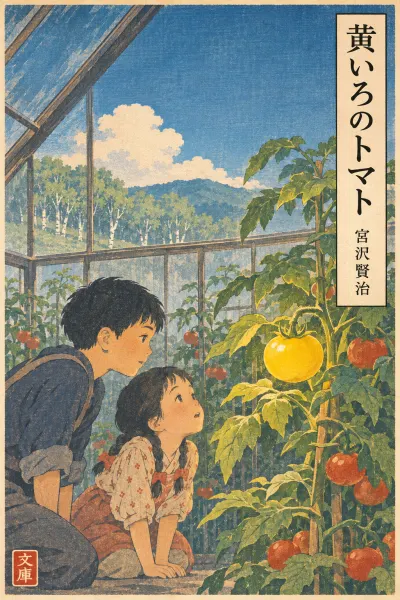
「二人は はたけに トマトを 十本 作って いました。一本の トマトは きいろくて、とても きれいでした。"The two of them were growing ten tomato plants in their field. One of the tomato plants was yellow, and very beautiful.
『にいさん、あの トマトは どうして きれいなの。』'Brother, why is that tomato so pretty?'
『金だよ。』'It's gold, you know.'
二人は その トマトを 取りませんでした。The two of them did not pick that tomato.
ある 日の 午後、とおい 所から いい おとが しました。One afternoon, a lovely sound came from far away.
二人は てを とって、はしりました。The two of them took each other's hands and ran.
小さな 山を 二つ 上って、川を 三つ わたりました。They climbed two little hills and crossed three rivers.
大きな みちに 出ました。They came out onto a big road.
あかい シャツの 人たちが 来ました。People in red shirts came along.
その 後ろから、白くて 大きな 物が 来ました。Behind them came something big and white.
下に 大きな 足が 四本 ありました。Underneath it were four big legs.
二人は ついて 行きました。The two of them followed along.
よるに なりました。Night came.
大きな まちに 着きました。They arrived at a big town.
白くて 大きな 建物が あって、おもしろい 絵が たくさん ありました。There was a big white building, with lots of funny pictures on it.
いい おとは その 中から 出て いました。The lovely sound was coming from inside it.
みんなは 入りぐちで お金を わたして、入ります。Everyone handed over money at the entrance and went in.
でも、二人は お金が ありません。But the two of them had no money.
『ネリ、ここで まって いて。』'Neri, wait here.'
ペムペルは いえまで はしって、きいろい トマトを 四つ 取りました。Pemperu ran all the way home and picked four yellow tomatoes.
そして、また はしって 来ました。Then he came running back again.
ペムペルは 入りぐちの 男の人に トマトを 二つ 出しました。Pemperu held out two tomatoes to the man at the entrance.
男の人は 大きな こえで いいました。The man said in a loud voice:
『何だ。トマトでは 入れない。かえれ。』'What's this? You can't get in with tomatoes. Clear off!'
男の人は トマトを ネリの みみに 強く 返しました。The man threw a tomato back hard, and it hit Neri on the ear.
ネリは なきました。Neri cried.
みんなは 大きな こえで わらいました。Everyone laughed loudly.
ペムペルは ネリを だいて、はしりました。Pemperu held Neri in his arms and ran.
そして、ペムペルも なきました。And then Pemperu cried too.
二人は 何も いわないで、くらい みちを あるいて、いえに かえりました。Without saying a word, the two of them walked along the dark road and went home.
本当に かわいそうです。It's really so sad.
もう 話せません。」I can't talk any more."
はちすずめは もう 何も いいませんでした。The hummingbird said nothing more at all.
「はちすずめ、また 来るよ。」"Hummingbird, I'll come again."
わたしは かばんを 持って、しずかに ろうかへ 出ました。I picked up my satchel and went quietly out into the corridor.
外は とても あかるくて、目が いたく なりました。Outside it was so bright that my eyes hurt.
わたしは また なきました。I cried again.
Vocabulary
| Word | Meaning | JLPT |
|---|---|---|
| はくぶつかんはくぶつかん | museumdictionary form: 博物館館 (かん) means a large building, as in 図書館 (library). | N3 |
| はちすずめはちすずめ | hummingbirddictionary form: 蜂雀Literally 'bee sparrow'; an older word. Today it is usually ハチドリ. | — |
| かわいそうかわいそう | sad; pitiful; poor (someone)Used when you feel sorry for someone. The bird's repeated refrain. | N3 |
| はたけはたけ | field (for vegetables)dictionary form: 畑A dry field; a rice paddy is 田 (た). | N3 |
| きいろくてきいろい | yellowdictionary form: 黄色いい-adjective; 〜くて joins it to the next adjective. | N5 |
| わたりましたわたる | to cross (a river, road)dictionary form: 渡るThe place crossed takes を: 川をわたる. | N5 |
| ついてついていく | to follow; to go along afterdictionary form: ついて行くFrom 付く (to stick to) + 行く. | — |
| 着きましたつく | to arrivedictionary form: 着くThe destination takes に: まちに着く. | N5 |
| 入りぐちいりぐち | entrancedictionary form: 入り口入る + 口 (mouth/opening). The exit is 出口 (でぐち). | N5 |
| わたしてわたす | to hand overdictionary form: 渡すTransitive partner of 渡る. | N5 |
| 返しましたかえす | to give back; to throw backdictionary form: 返すCompare かえる (to go home). | N5 |
| だいてだく | to hold in one's arms; to hugdictionary form: 抱く | N3 |
| ろうかろうか | corridor; hallwaydictionary form: 廊下 | N5 |
| あかるくてあかるい | brightdictionary form: 明るいOpposite: くらい (dark), as in sentence 52. | N5 |
Grammar
〜る 前に N5 before doing ~
The dictionary form of a verb plus 前に means 'before doing it'. The verb stays in dictionary form even when the sentence is in the past.
学校へ 行く 前に、はくぶつかんへ 行きました。
Before going to school, I went to the museum.
〜て いました N5 was doing; had been (a state)
The て-form plus いました describes an ongoing action or a continuing state in the past. With すむ it means 'lived (there)'.
ペムペルと ネリは ガラスの いえに すんで いました。
Pemperu and Neri lived in a glass house.
〜が (but) N5 but; although
が at the end of a clause joins two contrasting ideas, like 'but'. Here it is attached to a polite verb.
わたしは まって いましたが、とりは 何も いいません。
I waited, but the bird said nothing at all.
〜なさい N4 do ~ (gentle command)
The verb stem plus なさい is a soft order, often used by an older person to a child or an animal. 話す becomes 話しなさい.
おい、はちすずめ、話しなさい。
Here now, hummingbird, go on and talk.
〜ないで N4 without doing ~
The ない-form plus で means doing the next action without doing this one. Here the children walk home without saying anything.
二人は 何も いわないで、くらい みちを あるいて、いえに かえりました。
Without saying a word, the two of them walked along the dark road and went home.
〜く なる N5 to become ~
An い-adjective changes its final い to く and adds なる to show a change of state. いたい becomes いたく なりました, 'began to hurt'.
外は とても あかるくて、目が いたく なりました。
Outside it was so bright that my eyes hurt.