 N4 · easy
Simplified retelling · JLPT N4
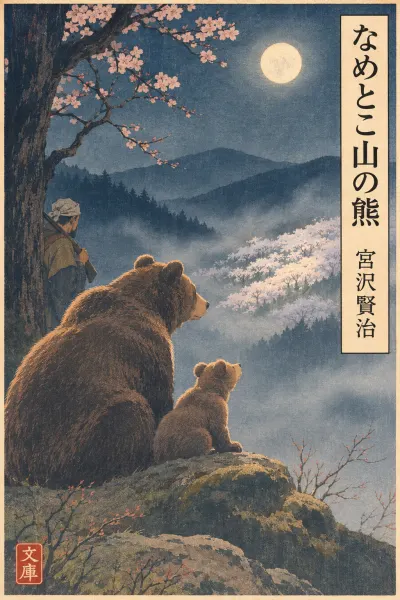
なめとこ山の熊 Nametokoyama no Kuma in easy Japanese (N4)
This is our own simplified retelling of Kojūrō and the Bears of Nametoko, written for N4 learners and checked word by word against the N4 vocabulary list. A few story words and grammar patterns go beyond N4; the notes below give each one's level. It keeps the characters, events and ending of the original. When it feels easy, move on to the N3 version or the original text.
The story in brief
Kojūrō hunts bears on Mount Nametoko because he has no other work, and the bears seem to like him. A bear asks him for two more years of life and keeps its promise by dying at his door. One winter day a great bear kills Kojūrō, and the bears gather in the moonlight around his body as if they are praying.
AI translation · independently checked
なめとこ山は大きな山です。Mount Nametoko is a big mountain.
むかし、この山にはくまがたくさんいました。Long ago, many bears lived on this mountain.
なめとこ山のくまのいは、くすりとして有名でした。The gall of the Nametoko bears was famous as a medicine.
こじゅうろうは、くまをとるりょうしです。Kojūrō is a hunter who catches bears.
体が大きくて、強い男です。He is a big, strong man.
てっぽうを持って、きいろい犬をつれて、山を歩きます。He carries a gun, takes his yellow dog along, and walks through the mountains.
山のくまたちは、こじゅうろうがすきでした。The bears of the mountain liked Kojūrō.
高い木の上から、こじゅうろうが歩くのをおもしろそうに見ていました。From high up in the trees, they watched Kojūrō walking by, looking as if they found it fun.
でも、てっぽうをむけられるのは、すきではありません。But they did not like having his gun pointed at them.
こじゅうろうは、くまをうったあとで、いつもこう言いました。After Kojūrō shot a bear, he always said this:
「くま、おれはおまえがきらいで、ころしたのではないよ。ほかに仕事がないから、りょうしをしているんだ。つぎは、くまに生まれるなよ。」"Bear, I didn't kill you because I hate you. I'm a hunter because I've got no other work. Next time, don't be born a bear."
ある春の夜、こじゅうろうは山で母ぐまと子ぐまを見ました。One spring night, Kojūrō saw a mother bear and her cub on the mountain.
二ひきは月のひかりの中で、むこうのたにを見ていました。The two of them were looking at the valley across from them in the moonlight.
「お母さん、あれはゆきだよ。」"Mother, that's snow over there."
「ゆきじゃないよ。あれは白い花よ。」No, it isn't snow. Those are white flowers.
こじゅうろうは、なぜか心がいっぱいになりました。For some reason, Kojūrō's heart became full.
そして、音を立てないように、そっともどりました。Then, so as not to make a sound, he quietly went back.
こじゅうろうは、町の店へけがわを売りに行きます。Kojūrō goes to a shop in town to sell bear pelts.
店の主人は「もういらないよ」と言います。The shopkeeper says, "I don't need any more."
こじゅうろうの家には、九十さいの母と子どもたちがいます。At Kojūrō's house there are his ninety-year-old mother and his children.
こめを買うお金がひつようです。He needs money to buy rice.
「安くてもいいから、買ってください。」"It's all right if it's cheap, so please buy them."
こじゅうろうは、何度もあたまを下げてたのみました。Kojūrō bowed his head again and again as he begged.
主人は、けがわ二まいを二円で買いました。The shopkeeper bought two pelts for two yen.
とても安いねだんです。It is a very low price.
でも、こじゅうろうはうれしそうにお金をもらいました。But Kojūrō took the money with a happy look.
ある夏、こじゅうろうは木の上のくまにてっぽうをむけました。One summer, Kojūrō pointed his gun at a bear up in a tree.
くまは木からおりて、言いました。The bear came down from the tree and spoke.
「おまえは、何がほしくて、おれをころすんだ。」"What is it you want, that you would kill me?"
「けがわとくまのいがほしいだけだ。ほんとうに気のどくだが、仕方がない。」"I only want your pelt and your gall. I'm truly sorry for you, but it can't be helped."
「あと二年待ってくれ。まだ、する仕事がある。二年たったら、おまえの家の前で死んでいるから。」"Wait two more years. I still have work to do. When two years have passed, I will be lying dead in front of your house."
こじゅうろうは、何も言えませんでした。Kojūrō could not say anything.
くまは、ゆっくり歩いて行きました。The bear slowly walked away.
ちょうど二年後の朝、こじゅうろうが外に出ました。On a morning exactly two years later, Kojūrō went outside.
すると、家の前にあのくまがたおれていました。And there, in front of his house, that bear was lying on the ground.
口からちを出して、死んでいました。It had blood coming out of its mouth, and it was dead.
こじゅうろうは、思わずいのりました。Without thinking, Kojūrō prayed.
一月のある朝、こじゅうろうは母に言いました。One morning in January, Kojūrō said to his mother:
「今日は、水に入るのがいやな気がする。」"Today I have a feeling I don't want to go into the water."
母は、わらうような、なくようなかおをしました。His mother made a face that looked as if she were laughing, and as if she were crying.
子どもたちは「行ってらっしゃい」と言いました。The children said, "Take care, and come home safe."
こじゅうろうは犬といっしょに、ゆきの山をのぼりました。Kojūrō climbed the snowy mountain with his dog.
夏に見つけておいた大きなくまをさがしに行きました。He went to look for a big bear he had found back in the summer.
山の上で休んでいると、犬が急にほえ出しました。While he was resting high on the mountain, his dog suddenly began to bark.
後ろを見ると、あの大きなくまが立って、走ってきました。When he looked behind him, that big bear stood up and came running at him.
こじゅうろうはてっぽうをうちました。Kojūrō fired his gun.
でも、くまはたおれませんでした。But the bear did not fall.
こじゅうろうのあたまの中で、大きな音がしました。A loud noise sounded inside Kojūrō's head.
まわりがまっ青になりました。Everything around him turned deep blue.
とおくで、こえが聞こえました。Far away, he heard a voice.
「ああ、こじゅうろう。おまえをころすつもりはなかった。」"Oh, Kojūrō. I didn't mean to kill you."
「くまたち、ゆるしてくれ。」こじゅうろうは、そう思いました。"Bears, forgive me." That is what Kojūrō thought.
三日目の夜は、月が白く明るい夜でした。The third night was a night when the moon was white and bright.
山の上に、大きな黒いくまがたくさん集まっていました。On top of the mountain, many big black bears had gathered.
まん中の高いところに、こじゅうろうの体がおかれていました。In a high place in the middle, Kojūrō's body had been laid.
くまたちは、ゆきの上であたまを下げて、いのるように、ずっと動きませんでした。The bears bowed their heads on the snow and stayed still for a long time, as if they were praying.
こじゅうろうのかおは、わらっているように見えました。Kojūrō's face looked as if he were smiling.
Vocabulary
| Word | Meaning | JLPT |
|---|---|---|
| くまのいくまのい | bear gall (dried gall bladder used as medicine)dictionary form: 熊の胆い (胆) is an old word for the gall bladder; it was a costly traditional medicine. | — |
| りょうしりょうし | hunterdictionary form: 猟師Another word りょうし (漁師) means fisherman; the kanji tell them apart. | — |
| むけられるむける | to point (something) at; here passive: to have it pointed at youdictionary form: 向けるてっぽうをむける = to aim a gun. | N3 |
| そっとそっと | quietly, gently, without being noticed | N3 |
| けがわけがわ | fur, peltdictionary form: 毛皮毛 (hair) + 皮 (skin); かわ becomes がわ by rendaku. | N2 |
| たのみましたたのむ | to ask, to beg (a favour)dictionary form: 頼む | N5 |
| ねだんねだん | pricedictionary form: 値段 | N4 |
| 気のどくきのどく | sorry for someone, pitifuldictionary form: 気の毒Used for feeling pity for another person, not for apologizing. | N3 |
| 仕方がないしかたがない | it can't be helped, there is no other way | — |
| たおれていましたたおれる | to fall down, to collapse (here, as たおれていました: was lying collapsed)dictionary form: 倒れる | N4 |
| 思わずおもわず | without thinking, in spite of oneself | N3 |
| いのりましたいのる | to praydictionary form: 祈る | N4 |
| ほえ出しましたほえだす | to start barkingdictionary form: 吠え出すVerb stem + 出す = to suddenly begin doing something. | — |
| ゆるしてゆるす | to forgivedictionary form: 許す | N3 |
Grammar
〜そうに N4 looking (adjective), with an air of
The adjective stem おもしろ plus そう means 'seems fun'. With に it becomes an adverb and describes how the bears were watching.
こじゅうろうが歩くのをおもしろそうに見ていました。
They watched Kojūrō walking by, looking as if they found it fun.
〜ないように N4 so as not to ~
A plain negative verb plus ように states a goal the action is meant to reach. Kojūrō moves quietly in order not to make any noise.
音を立てないように、そっともどりました。
So as not to make a sound, he quietly went back.
〜てもいい N4 it's all right even if ~
The て-form of an adjective plus もいい means the speaker accepts that condition. Adding から turns it into a reason for the request that follows.
安くてもいいから、買ってください。
It's all right if it's cheap, so please buy them.
〜ておく N4 to do something in advance
Verb て-form plus おく shows an action done earlier for later use. Kojūrō found the bear in summer and kept it in mind for his winter hunt.
夏に見つけておいた大きなくまをさがしに行きました。
He went to look for a big bear he had found back in the summer.
〜と (discovery) N4 when ~, (I found that) ~
A plain verb plus と, followed by a past-tense clause, shows what the person noticed as a result of the first action. Here, looking back reveals the bear.
後ろを見ると、あの大きなくまが立って、走ってきました。
When he looked behind him, that big bear stood up and came running at him.
〜つもりはない N4 to have no intention of ~
〜つもりはなかった means 'had no intention of ~'. A dictionary-form verb plus つもり expresses intention; with はなかった, the bear says that killing Kojūrō was never its intention.
おまえをころすつもりはなかった。
I didn't mean to kill you.