 N5 · easy
Simplified retelling · JLPT N5
シグナルとシグナレス Shigunaru to Shigunaresu in easy Japanese (N5)
This is our own simplified retelling of A Signal Post in Love, written for N5 learners and checked word by word against the N5 vocabulary list. A few story words and grammar patterns go beyond N5; the notes below give each one's level. It keeps the characters, events and ending of the original. When it feels easy, move on to the N4 version or the original text.
The story in brief
Signal, a big new iron signal post, falls in love with Signaless, a small wooden signal, and they promise to marry. The fussy telegraph pole forbids it, but the kind warehouse helps them, and on a foggy night the two find themselves together among the stars. In the end it was all a dream, and the warehouse stands watching over them.
AI translation · independently checked
あさです。It is morning.
小さな 電車が 東から 来て、とまりました。A little train came from the east and stopped.
そこには シグナレスが たって います。Signaless stands there.
シグナレスは 小さな 木の シグナルです。Signaless is a small wooden signal.
シグナレスは しずかに そらを 見ました。Signaless looked quietly at the sky.
うしろには 大きな シグナルが たって います。Behind her stands a big signal.
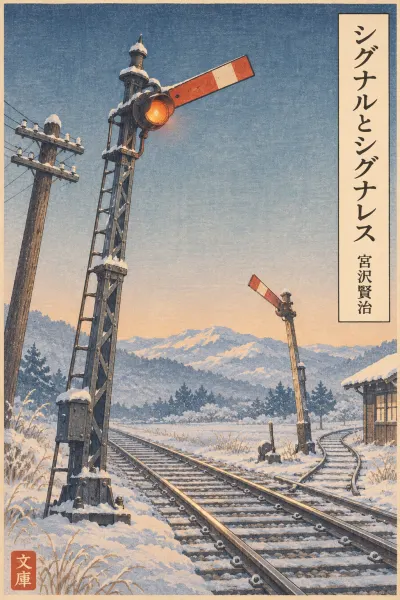
シグナルは あたらしくて、てつで できて います。Signal is new, and he is made of iron.
「きょうは あたたかいですね。」と シグナルが いいました。"It's warm today, isn't it?" said Signal.
「はい。」シグナレスは 小さな こえで こたえました。"Yes." Signaless answered in a small voice.
シグナルの そばの でんしんばしらが いいました。The telegraph pole beside Signal spoke up.
「あの 人と 話しては いけません。」シグナレスは とても こまりました。"You must not talk with that person." Signaless was very troubled.
シグナルは 小さな こえで いいました。Signal spoke in a small voice.
「ぼくは あなたが いちばん たいせつです。ぼくを すきに なって ください。」シグナレスは なにも こたえませんでした。"You are the most precious person to me. Please come to love me." Signaless did not answer at all.
シグナルは 元気が なく なりました。Signal lost all his cheer.
よるに なりました。Night came.
シグナレスが いいました。Signaless spoke.
「わたしも 前から あなたが すきでした。」"I have loved you too, for a long time now."
シグナルは とても 元気に なりました。Signal became very cheerful indeed.
「はるに なったら、けっこんしましょう。」"When spring comes, let's get married."
「でも、わたしは 小さくて、木です。」"But I am small, and I am made of wood."
「それが いいんです。」"That is exactly what is good."
二人は けっこんの やくそくを しました。The two of them promised to marry.
シグナルは そらの まるい ほしを 見せて、「あれが ゆびわです。」と いいました。Signal showed her a round star in the sky and said, "That is the ring."
むこうの くろい そうこが 大きな こえで いいました。The black warehouse over the way spoke in a loud voice.
「よかったね。だれにも 話さないよ。」"Good for you two! I won't breathe a word to anybody."
つぎの あさは かぜが とても つよかったです。The next morning the wind was very strong.
シグナルは かぜの 中で、シグナレスと たくさん 話しました。In the wind, Signal talked a great deal with Signaless.
でも、でんしんばしらは その 話を ほかの でんしんばしらから 聞きました。But the telegraph pole heard about their talk from the other telegraph poles.
「けっこんは いけません。みんな 嫌だと いって います。かいしゃの いちばん 上の 人は わたしの おじさんです。」"Marriage is not allowed. Everyone says they dislike it. The man at the very top of the company is my uncle."
ゆきが ふって きました。Snow began to fall.
シグナレスは 下を 見て、しずかに たって いました。Signaless looked down and stood there quietly.
よる、二人は とおい ほしを 見ました。At night, the two of them looked at the faraway stars.
「あそこへ 二人で 行きたいですね。」「ええ。」二人は ほしに 頼みました。"I'd like to go up there, just the two of us." "Yes." The two of them made a wish to the stars.
そして つかれて ねました。And then, tired out, they fell asleep.
つぎの あさ、そうこが でんしんばしらに いいました。The next morning, the warehouse spoke to the telegraph pole.
「あの 二人を いっしょに して やれよ。」でも、でんしんばしらは なにも いいませんでした。"Come on, let those two be together, will ya?" But the telegraph pole said nothing.
つぎの よるは きりが ありました。The next night there was fog.
二人は となりを 見る ことが できません。The two of them cannot see each other beside them.
そうこが いいました。The warehouse spoke.
「わたしと おなじ ことばを いって ください。」"Say the same words as me, okay?"
「アルファー。」「アルファー。」"Alpha." "Alpha."
「ベーター。」「ベーター。」"Beta." "Beta."
すると、二人は くらい よるの 中に いっしょに たって いました。And then the two of them were standing together in the dark night.
そらは ほしで いっぱいです。The sky is full of stars.
前には きれいな うみが ありました。In front of them lay a beautiful sea.
それから 二人は そらの 上に いました。After that, the two of them were up above the sky.
あおくて しろい きりが とても きれいです。The blue and white fog is very beautiful.
「やっと 二人だけですね。」「ええ。」"At last, it's just the two of us." "Yes."
「そうこは いい 人ですね。」"The warehouse is a good soul, isn't he?"
「そうだよ。」と 大きな こえが しました。"That's right," said a loud voice.
二人は ゆめを 見て いました。The two of them had been dreaming.
きりは もう ありません。The fog is gone now.
そらには ほしが たくさん あります。There are many stars in the sky.
むこうに そうこが たって いました。Over the way stood the warehouse.
二人は また 小さな こえで 「ふう。」と いいました。Once again the two of them said "Phew" in small voices.
Vocabulary
| Word | Meaning | JLPT |
|---|---|---|
| こたえましたこたえる | to answer, to replydictionary form: こたえるUsually written 答える. | N5 |
| でんしんばしらでんしんばしら | telegraph pole電信柱: 電信 (telegraph) + 柱 (pillar); はしら becomes ばしら by rendaku. | — |
| こまりましたこまる | to be troubled, not know what to dodictionary form: こまるUsually written 困る. | N5 |
| たいせつたいせつ | precious, importantA な-adjective, written 大切. | N5 |
| けっこんけっこん | marriage結婚; add する for 'to marry'. | N5 |
| やくそくやくそく | promise約束; やくそくを する = to make a promise. | N4 |
| ゆびわゆびわ | ring (for the finger)指輪: 指 (finger) + 輪 (circle). | N4 |
| そうこそうこ | warehouse, storehouseWritten 倉庫. | N2 |
| 頼みましたたのむ | to ask, to make a request (here: to wish upon)dictionary form: 頼む | N5 |
| つかれてつかれる | to get tireddictionary form: つかれるWritten 疲れる. | N5 |
| きりきり | fog, mistWritten 霧. | N1 |
| やっとやっと | at last, finallyUsed when something comes after a long wait or effort. | N4 |
| ゆめゆめ | dreamゆめを 見る = to have a dream (literally 'see a dream'). | N4 |
Grammar
〜てはいけません N5 must not ~
The て-form of a verb plus は いけません forbids an action. Here the pole tells Signaless she is not allowed to talk with Signal.
あの 人と 話しては いけません。
One must not converse with that person.
〜に なる N5 to become ~
A noun or な-adjective plus に なる shows a change of state. すきに なって ください asks the listener to come to like him; 元気に なりました later shows Signal cheering up.
ぼくを すきに なって ください。
Please come to love me.
〜たら N4 when ~ / once ~
The past form plus ら sets a condition or time: once one thing happens, the next follows. Here it means 'once spring has come'.
はるに なったら、けっこんしましょう。
When spring comes, let's get married.
〜たいです N5 want to ~
The verb stem plus たい expresses the speaker's own wish. 行き + たい = want to go; ね softly invites agreement.
あそこへ 二人で 行きたいですね。
I'd like to go up there, just the two of us.
〜ことが できる N4 can ~, be able to ~
The dictionary form of a verb plus ことが できる expresses ability; the negative できません means 'cannot'. The fog makes it impossible to see each other.
二人は となりを 見る ことが できません。
The two of them cannot see each other beside them.