 N5 · easy
Simplified retelling · JLPT N5
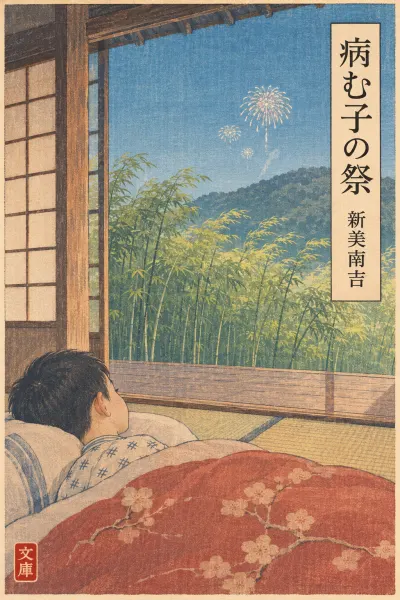
病む子の祭 Yamu Ko no Matsuri in easy Japanese (N5)
This is our own simplified retelling of A Festival for the Child in Bed, written for N5 learners and checked word by word against the N5 vocabulary list. A few story words and grammar patterns go beyond N5; the notes below give each one's level. It keeps the characters, events and ending of the original. When it feels easy, move on to the N4 version or the original text.
The story in brief
On the day of the village festival, little Yoshibō lies ill in bed while his brother and sister go out to enjoy it. After his sister comes home and his mother goes to fetch medicine, he holds the baby chick and listens to the flutes and drums fade away. Blowing into a shell, he says he hears the wind and the flutes and feels light enough to fly away, and cherry petals fall quietly onto him.
AI translation · independently checked
今日は むらの まつりです。Today is the village festival.
子どもたちは きれいな きものを きました。The children put on pretty kimonos.
そとから はなびが 聞こえます。Fireworks can be heard from outside.
いちばん 下の よしぼうは びょうきです。Yoshibō, the youngest, is ill.
ずっと ねて います。He has been lying in bed the whole time.
「しずかに してね。よしぼうが おきますよ」と お母さんが いいました。"Be quiet, now. Yoshibō will wake up," said Mother.
よしぼうは みんなと あそびたいです。Yoshibō wants to play with everyone.
学校にも 行きたいです。He wants to go to school, too.
でも、びょうきですから、外に 出ては いけません。But he is ill, so he must not go outside.
てが とても ほそく なりました。His hands have grown very thin.
すぐ 上の おにいさんの くつに、あなが ありました。There was a hole in the shoe of the brother just above him.
おにいさんは うそを いいました。That brother told a lie.
でも、あとで ほんとうの 話を して、「わるかったです」と いいました。But later he told what really happened and said, "I was wrong."
すると、よしぼうが おきました。Just then, Yoshibō woke up.
「どこへ 行くの?」お母さんは「学校ですよ」と うそを いいました。"Where are you going?" Mother told a lie: "To school, dear."
「ちがうよ。まつりでしょう。ぼくも 行きたい!」"That's not true. It's the festival, isn't it? I want to go too!"
おにいさんは よしぼうの くつを はいて いました。His brother was wearing Yoshibō's shoes.
よしぼうは「いやだ!」と なきました。"No!" cried Yoshibō.
おにいさんは じぶんの くつを はいて、出かけました。His brother put on his own shoes and went out.
「おねえさん、行っちゃ いやだ」とも いいました。"Big Sister, don't go," Yoshibō said as well.
でも、おねえさんも 出かけました。But his sister went out too.
「ぼくも まつりの きものが きたい」と よしぼうは いいました。"I want to wear my festival kimono too," said Yoshibō.
そして きものを きました。And so he put on the kimono.
「お母さん、子どもは 大人に なるの?」"Mother, do children become grown-ups?"
「ええ、なりますよ」"Yes, they do."
「でも、ぼくは 大人に ならないよ」"But I won't become a grown-up."
すこし あとで、おねえさんが かえって きました。A little later, his sister came home.
「なぜか わからないけど、はしって かえって きたの」"I don't know why, but I came running home."
お母さんは いしゃの いえへ、くすりを とりに 行きました。Mother went to the doctor's house to fetch some medicine.
よしぼうは ひよこを もちたいと いいました。Yoshibō said he wanted to hold the baby chick.
友だちの おじさんが おねえさんに くれた ひよこです。It was a chick that a friend's uncle had given to his sister.
まえに おねえさんは「二人の ひよこよ」と いいました。Before, his sister had said, "It's a chick for the two of us."
でも、それは うそでした。But that was a lie.
よしぼうが 大きな こえで いうので、おねえさんは ひよこを わたしました。Because Yoshibō said so in such a loud voice, his sister handed him the chick.
よしぼうは「かるいなあ」と いって、長く 見て いました。"It's so light," said Yoshibō, and he looked at it for a long time.
そして、何も いわないで、かえしました。Then, without saying anything, he gave it back.
ふえや たいこが ちかくまで きました。The flutes and drums came close by.
でも、だんだん 聞こえなく なりました。But little by little they could no longer be heard.
「もう 聞こえないわ」"I can't hear them any more."
「まだ 聞こえるよ」"I can still hear them."
まえに 二人は、かいの 下に はなを かくして あそびました。Once, the two of them had played a game of hiding flowers under a shell.
おねえさんは にわの 木の 下から、かいを もって きました。His sister brought the shell from under the tree in the garden.
はなは もう 小さく なって いました。The flowers had already shrivelled up small.
よしぼうは かいを くちに 入れて、ふきました。Yoshibō put the shell to his mouth and blew.
何も 聞こえません。Nothing can be heard.
「聞こえるよ。かぜや ふえが たくさん 聞こえるよ。おねえさん、ぼく、かるく なったよ。ぼくも とんで 行くよ」"I can hear it. I can hear lots of wind and flutes. Big Sister, I've become light. I'm going to fly away too."
おねえさんは たって、「お母さんを よんで くるわ!」と はしって 行きました。His sister stood up and ran off, saying, "I'll go and call Mother!"
「お母さん……とりも いっしょに とんで 行くの」"Mother... the birds are flying away with me."
「お母さん……ぼく、とおいの……」"Mother... I'm so far away..."
かぜが ふいて、さくらの はなが よしぼうの 上に しずかに ふって きました。The wind blew, and cherry blossoms came falling quietly down onto Yoshibō.
Vocabulary
| Word | Meaning | JLPT |
|---|---|---|
| まつりまつり | festivaldictionary form: 祭りA village shrine festival, with music, a drum and stalls. | N3 |
| はなびはなび | fireworksdictionary form: 花火Literally "flower fire": 花 + 火. | N2 |
| びょうきびょうき | illness; ill, sickdictionary form: 病気 | N5 |
| ねてねる | to lie down; to be in bed; to sleepdictionary form: 寝るねて いる here means "lying in bed". | N5 |
| ほそくほそい | thin, slenderdictionary form: 細いUsed for long thin things like arms or fingers. | N5 |
| あなあな | holedictionary form: 穴 | N3 |
| うそうそ | lie, untruthdictionary form: 嘘"To tell a lie" is うそを いう or うそを つく. | N4 |
| はいてはく | to wear, put on (shoes)dictionary form: 履くUsed for shoes and trousers; きる is for clothes such as kimonos. | N5 |
| ひよこひよこ | baby chick | — |
| わたしましたわたす | to hand over, pass to someonedictionary form: 渡す | N5 |
| かえしましたかえす | to give back, return (something)dictionary form: 返す | N5 |
| ふえふえ | flute; bamboo flute played at festivalsdictionary form: 笛 | N3 |
| たいこたいこ | drum; Japanese festival drumdictionary form: 太鼓 | N2 |
| かいかい | shell; seashelldictionary form: 貝 | N2 |
Grammar
〜たい N5 want to do
Attach たい to the verb stem (あそぶ → あそび) to say what someone wants to do. It changes like an い-adjective, as in Yoshibō's repeated wishes.
よしぼうは みんなと あそびたいです。
Yoshibō wants to play with everyone.
〜ては いけません N5 must not do
The て-form plus は いけません forbids an action. Here Yoshibō's illness means he is not allowed to go outside.
でも、びょうきですから、外に 出ては いけません。
But he is ill, so he must not go outside.
〜く なる N5 to become (adjective)
Change an い-adjective's final い to く and add なる to show a change of state. ほそい becomes ほそく なる, "to grow thin".
てが とても ほそく なりました。
His hands have grown very thin.
〜に 行く N5 go (somewhere) to do something
The verb stem plus に before a motion verb shows the purpose of going. とりに 行く means "go to fetch".
お母さんは いしゃの いえへ、くすりを とりに 行きました。
Mother went to the doctor's house to fetch some medicine.
〜ので N4 because, so
ので follows a plain-form clause to give a reason, often in a softer, more objective tone than から. His loud voice is the reason his sister hands over the chick.
よしぼうが 大きな こえで いうので、おねえさんは ひよこを わたしました。
Because Yoshibō said so in such a loud voice, his sister handed him the chick.
〜ないで N4 without doing
The plain negative plus で describes how an action is done, here without saying anything. 何も with a negative means "nothing at all".
そして、何も いわないで、かえしました。
Then, without saying anything, he gave it back.