 N4 · easy
Simplified retelling · JLPT N4
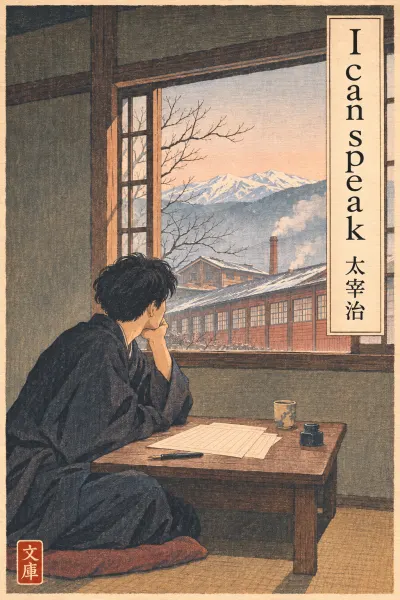
I can speak Aikyansupīku in easy Japanese (N4)
This is our own simplified retelling of A Voice Across the Lane, written for N4 learners and checked word by word against the N4 vocabulary list. A few story words and grammar patterns go beyond N4; the notes below give each one's level. It keeps the characters, events and ending of the original. When it feels easy, move on to the original text.
The story in brief
Unable to write as before, the narrator begins a long story in a rented room on a mountain. When winter comes he moves down to the warmer town of Kōfu, where he loves the singing of the women in a nearby factory. One February night he hears a drunk young man in the lane tell his sister, who is leaning from the factory window, that he can speak English, and the small scene moves him deeply.
AI translation · independently checked
わたしは、前のように歌を作ることができなくなりました。I could no longer make poems the way I once had.
しばらく東京で、何もしないで生活しました。For a while I lived in Tokyo, doing nothing at all.
それから、毎日の生活の小さな声のような文を、少しずつ書き始めました。Then, little by little, I began to write short pieces that were like the small voices of everyday life.
だんだん、じぶんの書きたいものがわかってきました。Gradually I came to understand what it was that I wanted to write.
そして、前から考えていた長い話を書き始めました。And so I began the long story I had been thinking about for some time.
去年の九月、わたしは山の上にある小さな店の、上のへやを借りました。Last September I rented the room upstairs in a small shop on top of a mountain.
そこで少しずつ仕事をすすめました。There I went on with my work, a little at a time.
百ページ近く書きました。I wrote nearly a hundred pages.
もう一度読んでみると、そんなに悪くありませんでした。When I read them through once more, they were not so bad.
わたしは「これが終わるまで、東京へは帰らない」と、一人でじぶんとやくそくしました。"I will not go back to Tokyo until this is finished," I promised myself, alone.
でも、それはよくないやくそくでした。But it was not a good promise.
九月、十月、十一月と、山の上はとてもさむくなりました。September, October, November, and it grew very cold up on the mountain.
さびしい夜がつづきました。Lonely night followed lonely night.
わたしは、どうしようかとたくさん考えました。I thought long and hard about what I should do.
東京へ帰りたかったです。I wanted to go back to Tokyo.
でも、じぶんとのやくそくをわすれることはできませんでした。But I could not forget the promise I had made to myself.
そこで、山の下のこうふという町へ行くことにしました。So I decided to go down to a town at the foot of the mountain, called Kōfu.
こうふは東京よりあたたかいので、冬もだいじょうぶだと思いました。Kōfu is warmer than Tokyo, so I thought I would be all right there even in winter.
こうふの町へ下りると、安心しました。When I came down into the town of Kōfu, I felt at ease.
体のぐあいもよくなりました。My health improved as well.
日がよく入るへやを借りて、つくえの前にすわりました。I rented a room that caught plenty of sun and sat down at my desk.
ここへ来てよかったと思いました。I was glad I had come here.
また少しずつ仕事を始めました。Once again, little by little, I took up my work.
昼になると、わかい女の人たちの歌が聞こえてきます。When noon comes, I hear the singing of young women.
わたしはペンを止めて、その歌を聞きます。I stop my pen and listen to their song.
へやの近くに、工場があるのです。There is a factory near my room, you see.
そこではたらく女の人たちが、仕事をしながら歌っているのです。The women who work there sing as they work.
その中に、一つ、とてもきれいなこえがありました。Among them was one voice that was very beautiful.
そのこえが、みんなの歌を前へすすめていました。It was that voice that carried everyone's song forward.
いいこえだなあ、と思いました。What a lovely voice, I thought.
お礼をつたえたいと思いました。I wanted to tell her my thanks.
工場のかべにのぼって、その人を一度見たいとも思いました。I also thought I would like to climb the factory wall and see her, just once.
手紙を書いて、工場のまどになげようかとも思いました。I even thought of writing a letter and throwing it in at the factory window.
「ここに、さびしい男が一人います。わたしは、あなたの歌で、毎日元気になっています。あなたは知らないでしょう。でも、あなたの歌は、わたしとわたしの仕事を強くしてくれました。心からお礼をつたえたいです。」"Here is a lonely man. Your singing cheers me up every day. You probably don't know it. But your song has made me and my work strong. I want to thank you from the bottom of my heart."
けれども、もしその人がびっくりして、こわくなって、歌わなくなったら困ります。And yet, if she were startled and frightened and stopped singing, that would trouble me.
わたしのお礼で、きれいな歌がかわってしまったら、それはとても悪いことです。If my thanks were to change that beautiful song, it would be a very wrong thing to have done.
わたしは一人で、どうしようかと考えていました。Alone, I kept wondering what to do.
それは、こいだったかもしれません。Perhaps it was love.
二月の、さむくてしずかな夜でした。It was a cold, still night in February.
工場の前のほそい道で、急に、男の大きなこえが聞こえました。Suddenly, in the narrow lane in front of the factory, I heard a man's loud voice.
おさけによった男のこえです。It was the voice of a man who was drunk.
わたしは、よく聞きました。I listened closely.
「わらうなよ。何がおかしいんだ。たまにおさけを飲んだだけだ。僕は、英語が、話せます。"Don't laugh, will ya. What's so funny? I just had a drink for once, that's all. I — can — speak — English.
僕は夜の学校へ行っているんだよ。姉さん、知らないだろう。お母さんにも話さないで、通っているんだ。I'm goin' to night school, y'know. Bet you didn't know that, Sis. I go without even tellin' Ma.
りっぱな人にならなければ、だめだからな。姉さん、何がそんなにおかしいんだ。僕はもうすぐ、せんそうに行くんだ。'Cause if I don't make somethin' of myself, it's no good. Sis, what's so darn funny? I'm goin' off to the war real soon.
その日は、びっくりするなよ。おさけばかり飲む弟だって、みんなと同じようにはたらけるんだ。Don't you go gettin' a shock when that day comes. Even a kid brother who does nothin' but drink can work just like everybody else.
うそだよ。まだきまっていないんだ。でも、ほら、僕は、英語が、話せます。あなたは英語が話せますか。Just kiddin'. Nothin's settled yet. But look, I — can — speak — English. Can you speak English?
はい、話せます。英語っていいなあ。姉さん、僕はいい子だろう。お母さんは、何もわかっていないんだ。」Yes, I can speak. English is great, ain't it. Sis, I'm a good boy, ain't I? Ma don't understand nothin'."
わたしは、まどを少し開けて、下の道を見ました。I opened the window a little and looked down at the lane below.
はじめ、白いうめの花かと思いました。At first I thought it was white plum blossom.
でも、ちがいました。But it was not.
それは、弟の白いコートでした。It was the brother's white coat.
冬なのに、雨の日のうすいコートを着ていました。Though it was winter, he wore a thin raincoat.
弟はさむそうに、工場のかべにせなかをつけて立っていました。He stood with his back against the factory wall, looking cold.
その上の工場のまどから、一人の女の人が体を出して、よった弟を見ていました。From the factory window above him, a woman was leaning out, watching her drunken brother.
月が出ていましたが、二人のかおは、はっきり見えませんでした。The moon was out, but I could not see their faces clearly.
姉のかおは、まるくて白くて、わらっているようでした。The sister's face was round and pale, and she seemed to be smiling.
弟のかおは黒くて、まだ子どものようでした。The brother's face was dark, and he still looked like a child.
「僕は話せる」というその英語が、わたしの心に強く入ってきました。Those English words, "I can speak," struck deep into my heart.
心がいたくなるほどでした。It was almost enough to make my heart ache.
「はじめに、ことばがあった」という古いことばを思い出しました。I remembered the old saying, "In the beginning was the Word."
そして、わすれていた歌を思い出したような気がしました。And I felt as though I had remembered a song I had forgotten.
小さな、何でもないけしきでした。It was a small scene, nothing out of the ordinary.
けれども、わたしはわすれることができません。Yet I cannot forget it.
あの夜の女の人が、あのきれいなこえの人かどうか、わたしは知りません。Whether the woman that night was the one with the beautiful voice, I do not know.
たぶん、ちがうでしょうね。Probably not, I suppose.
Vocabulary
| Word | Meaning | JLPT |
|---|---|---|
| 生活せいかつ | life, daily living生活する = to live, get by from day to day. | N4 |
| やくそくやくそく | promisedictionary form: 約束やくそくする = to promise; じぶんとやくそくする = to promise oneself. | N4 |
| ぐあいぐあい | condition, state (of health)dictionary form: 具合体のぐあい = how one's body feels. | N4 |
| 工場こうじょう | factory, millIn the story this is a silk mill where young women work. | N4 |
| お礼おれい | thanks, gratitudeお礼を言う / お礼をつたえる = to express thanks. | N4 |
| 困りますこまる | to be troubled, to be in a fixdictionary form: 困る〜たら困る = it would be a problem if … | N5 |
| こいこい | romantic lovedictionary form: 恋Romantic longing for someone, often one-sided. | N3 |
| よったよう | to get drunkdictionary form: 酔うおさけによう = to get drunk on alcohol; よった男 = a drunk man. | N3 |
| 通ってかよう | to attend regularly, to commutedictionary form: 通う学校へ通う = to go to school regularly. | N4 |
| りっぱりっぱ | fine, respectable, worthydictionary form: 立派りっぱな人になる = to make something of oneself. | N5 |
| せんそうせんそう | wardictionary form: 戦争The story is set in the late 1930s, when Japan was at war with China. | N4 |
| 弟おとうと | younger brotherThe older sister is 姉 (あね), called 姉さん (ねえさん) when speaking to her. | N5 |
| うめうめ | Japanese plum (tree/blossom)dictionary form: 梅Plum trees bloom in late winter, around February, before the cherry blossoms. | N3 |
| けしきけしき | scene, viewdictionary form: 景色Here it means a small scene the narrator saw, not a grand landscape. | N4 |
Grammar
〜ことができなくなる N4 to become unable to do
Dictionary form + ことができる means 'can do'. Its negative できない plus なくなる shows a change: something that was possible before is no longer possible.
わたしは、前のように歌を作ることができなくなりました。
I could no longer make poems the way I once had.
〜ことにする N4 to decide to do
Dictionary form + ことにする expresses the speaker's own decision. Here the narrator chooses to move to Kōfu after thinking it over.
そこで、山の下のこうふという町へ行くことにしました。
So I decided to go down to a town at the foot of the mountain, called Kōfu.
〜てしまったら N4 if (something regrettable) ends up happening
〜てしまう adds a sense of regret or of something that cannot be undone. With 〜たら it means 'if it ended up happening', a result the narrator fears.
わたしのお礼で、きれいな歌がかわってしまったら、それはとても悪いことです。
If my thanks were to change that beautiful song, it would be a very wrong thing to have done.
〜なければ、だめだ N4 must; it's no good unless …
The ない-form changes to 〜なければ ('if not'), and だめだ ('it's no good') follows. It is a casual way of saying 〜なければならない. The final からな gives the reason in rough, masculine speech.
りっぱな人にならなければ、だめだからな。
'Cause if I don't make somethin' of myself, it's no good.
〜かもしれない N4 might, perhaps
It is added to the plain form and shows the speaker is not sure. Here the narrator looks back and admits his feeling may have been love.
それは、こいだったかもしれません。
Perhaps it was love.
〜ほど N3 to the extent that …, so much that …
A plain-form verb + ほど shows how strong a feeling is. Here the English words moved him so much that his heart almost hurt.
心がいたくなるほどでした。
It was almost enough to make my heart ache.