Part 4 of 4 · JLPT N2
葉桜と魔笛 Hazakura to Mateki, part 4: The Truth Behind the Letters
In this part
The younger sister tells the narrator she knows who wrote the last letter, and confesses that she wrote all the earlier love letters to herself out of loneliness, mourning the youth she never lived. As the sisters hold each other, the whistled Battleship March sounds from the garden at six o'clock, and the sister dies peacefully three days later. Now old, the narrator wonders whether their stern father was the whistler, but chooses to believe it was the grace of God.
AI translation · independently checked
待ち待ちて ことし咲きけり 桃の花 白と聞きつつ 花は紅なりI waited and I waited, and this year at last it bloomed, the peach blossom; though I had heard that it was white, the flower is crimson.
僕は勉強しています。I am studying.
すべては、うまくいっています。Everything is going well.
では、また、明日。Until tomorrow, then.
M・T。M.T.
「姉さん、あたし知っているのよ。」妹は、澄んだ声でそう呟き、「ありがとう、姉さん、これ、姉さんが書いたのね。」"Sister, I know about it," my sister murmured in a clear voice. "Thank you, sister. You wrote this, didn't you?"
私は、あまりの恥ずかしさに、その手紙、千々に引き裂いて、自分の髪をくしゃくしゃ引き毮ってしまいたく思いました。I was so ashamed that I wanted to tear the letter into a thousand pieces and pull out my own hair by the handful.
いても立ってもおられぬ、とはあんな思いを指して言うのでしょう。I suppose that is the very feeling people mean when they say they can neither sit still nor stand.
私が書いたのだ。I was the one who wrote it.
妹の苦しみを見かねて、私が、これから毎日、M・Tの筆蹟を真似て、妹の死ぬる日まで、手紙を書き、下手な和歌を、苦心してつくり、それから晩の六時には、こっそり塀の外へ出て、口笛吹こうと思っていたのです。I could not bear to watch my sister suffer, and so I had made up my mind that from then on, every day until the day she died, I would copy M.T.'s handwriting and write her letters, labour over clumsy little poems, and then at six in the evening slip quietly outside the fence and whistle.
恥かしかった。I was so ashamed.
下手な歌みたいなものまで書いて、恥ずかしゅうございました。I had even gone so far as to write something like a clumsy poem, and I was utterly mortified.
身も世も、あらぬ思いで、私は、すぐには返事も、できませんでした。I was so utterly beside myself that I could not answer her right away.
「姉さん、心配なさらなくても、いいのよ。」妹は、不思議にも落ちついて、崇高なくらいに美しく微笑していました。"You don't need to worry, really," my sister said. She was strangely calm, and she was smiling a smile so beautiful it was almost sublime.
「姉さん、あの緑のリボンで結んであった手紙を見たのでしょう? あれは、ウソ。あたし、あんまり淋しいから、おととしの秋から、ひとりであんな手紙書いて、あたしに宛てて投函していたの。"You saw those letters tied with the green ribbon, didn't you? They're not real. I was so lonely that, starting in the autumn before last, I wrote letters like that all by myself and mailed them to myself.
姉さん、ばかにしないでね。青春というものは、ずいぶん大事なものなのよ。あたし、病気になってから、それが、はっきりわかって来たの。Please don't laugh at me. Being young is a terribly precious thing. Ever since I fell ill, I've come to understand that so clearly.
ひとりで、自分あての手紙なんか書いてるなんて、汚い。あさましい。ばかだ。あたしは、ほんとうに男のかたと、大胆に遊べば、よかった。Writing letters to myself, all alone like that—it's sordid. It's pathetic. It's stupid. I should have really gone out and had fun with a man, boldly.
あたしのからだを、しっかり抱いてもらいたかった。姉さん、あたしは今までいちども、恋人どころか、よその男のかたと話してみたこともなかった。I wanted someone to hold me tight. You know, I've never once—never mind a sweetheart—I've never even tried talking to a man outside the family.
姉さんだって、そうなのね。姉さん、あたしたち間違っていた。お悧巧すぎた。ああ、死ぬなんて、いやだ。It's the same for you too, isn't it? We were wrong, both of us. We were far too sensible. Oh, I don't want to die.
あたしの手が、指先が、髪が、可哀そう。死ぬなんて、いやだ。いやだ。」My hands, my fingertips, my hair—I feel so sorry for them. I don't want to die. I don't want to."
私は、かなしいやら、こわいやら、うれしいやら、はずかしいやら、胸が一ぱいになり、わからなくなってしまいまして、妹の痩せた頬に、私の頬をぴったり押しつけ、ただもう涙が出て来て、そっと妹を抱いてあげました。Sad, frightened, glad, ashamed all at once, my heart was so full that I no longer knew what I felt; I pressed my cheek close against my sister's thin cheek, the tears simply kept coming, and I held her gently in my arms.
そのとき、ああ、聞えるのです。And then—oh—I could hear it.
低く幽かに、でも、たしかに、軍艦マアチの口笛でございます。Low and faint, yet unmistakable, it was the Battleship March, whistled.
妹も、耳をすましました。My sister listened too.
ああ、時計を見ると六時なのです。Oh, I looked at the clock, and it was six.
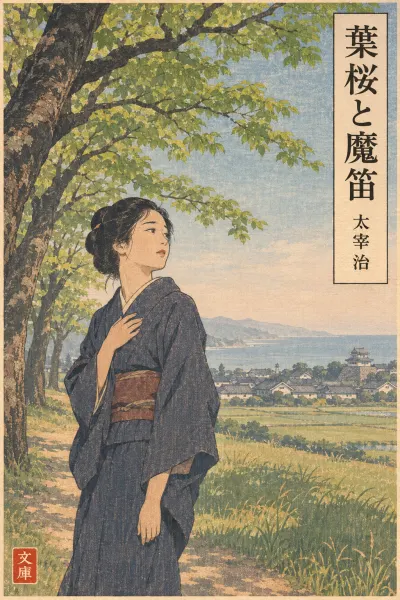
私たち、言い知れぬ恐怖に、強く強く抱き合ったまま、身じろぎもせず、そのお庭の葉桜の奥から聞えて来る不思議なマアチに耳をすまして居りました。Seized by a terror beyond words, we held each other tighter and tighter, and without stirring we listened to that mysterious march drifting out from deep among the leafy cherry trees in the garden.
神さまは、在る。God exists.
きっと、いる。Surely, He is there.
私は、それを信じました。I believed it.
妹は、それから三日目に死にました。My sister died on the third day after that.
医者は、首をかしげておりました。The doctor tilted his head, puzzled.
あまりに静かに、早く息をひきとったからでございましょう。I suppose it was because she breathed her last so very quietly, and so soon.
けれども、私は、そのとき驚かなかった。But I was not surprised at the time.
何もかも神さまの、おぼしめしと信じていました。I believed that everything was the will of God.
いまは、――年とって、もろもろの物慾が出て来て、お恥かしゅうございます。Now—having grown old, and with all sorts of worldly desires coming over me—I am ashamed to say it.
信仰とやらも少し薄らいでまいったのでございましょうか、あの口笛も、ひょっとしたら、父の仕業ではなかったろうかと、なんだかそんな疑いを持つこともございます。Perhaps what one calls faith has faded in me a little, for at times I find myself harbouring the suspicion that the whistling might, after all, have been my father's doing.
学校のおつとめからお帰りになって、隣りのお部屋で、私たちの話を立聞きして、ふびんに思い、厳酷の父としては一世一代の狂言したのではなかろうか、と思うことも、ございますが、まさか、そんなこともないでしょうね。I sometimes think that perhaps he came home from his work at the school, overheard our talk from the next room, felt pity for us, and, stern father that he was, put on the one great performance of his life—but surely nothing like that could be true, could it?
父が在世中なれば、問いただすこともできるのですが、父がなくなって、もう、かれこれ十五年にもなりますものね。If my father were still alive I could ask him, but he passed away some fifteen years ago now, you see.
いや、やっぱり神さまのお恵みでございましょう。No, it must have been the grace of God after all.
私は、そう信じて安心しておりたいのでございますけれども、どうも、年とって来ると、物慾が起り、信仰も薄らいでまいって、いけないと存じます。I would like to believe so and be at peace, but somehow, as one grows old, worldly desires arise and faith fades, and I do think that is a sorry thing.
Vocabulary
| Word | Meaning | JLPT |
|---|---|---|
| 千々にちぢに | into countless piecesLiterary; often 千々に乱れる (to be thrown into turmoil). | — |
| 筆蹟ひっせき | handwritingdictionary form: 筆跡Now usually written 筆跡. | — |
| 苦心くしん | painstaking effort; taking great pains苦心して〜 = to do something with great effort. | N2 |
| 身も世もみもよもない | utterly beside oneself (with shame or grief)dictionary form: 身も世もないIdiom: so overwhelmed that one cares for neither oneself nor the world; here in the older form 身も世もあらぬ. | — |
| 崇高すうこう | sublime; loftyA な-adjective. | — |
| 投函とうかん | posting (a letter)函 means box: dropping a letter into the postbox. | — |
| あさましいあさましい | shameful; pitiful; base | N1 |
| 悧巧りこう | clever; well-behaved and sensibledictionary form: 利口Now usually written 利口; with お, it implies being too good and proper. | N3 |
| 幽かかすか | faint; dimdictionary form: 微かUsually written 微か today. | N1 |
| 身じろぎみじろぎ | a slight movement of the body; stirringUsually used in the negative: 身じろぎもせず = without moving a muscle. | — |
| 息をひきとったいきをひきとる | to breathe one's last; to diedictionary form: 息を引き取るA gentle, respectful way to say someone died. | — |
| おぼしめしおぼしめし | will; intention (of God or a superior)dictionary form: 思し召しHonorific noun for someone's thoughts or wishes. | — |
| 仕業しわざ | doing; deed (often of something suspicious) | — |
| 狂言きょうげん | a staged act; a put-on performanceOriginally a comic stage genre; it also means a hoax or a staged deception. | — |
Grammar
〜かねる (見かねる) N2 cannot bear to; be unable to
Attached to a verb stem, かねる means one cannot bring oneself to do it. 見かねる is a fixed compound: unable to stand by and watch, and so stepping in to help.
妹の苦しみを見かねて
unable to bear watching my sister suffer
〜ゅうございます N1 very polite form of an い-adjective
Before ございます, the い-adjective ending changes its sound: 恥ずかしく becomes 恥ずかしゅう. This is a refined, old-fashioned style used by the elderly narrator.
恥ずかしゅうございました。
I was utterly mortified.
〜ばよかった N4 I should have…; if only I had…
The ば-conditional plus よかった expresses regret for something that was not done. Here the sister regrets never having boldly spent time with men.
あたしは、ほんとうに男のかたと、大胆に遊べば、よかった。
I should have really gone out and had fun with a man, boldly.
〜どころか N2 far from…; let alone…
X どころか Y means that not only is X out of the question, but even the more basic Y never happened. A sweetheart was out of the question; she never even talked with a man.
恋人どころか、よその男のかたと話してみたこともなかった。
never mind a sweetheart, I've never even tried talking to a man outside the family.
〜やら〜やら N2 what with… and…; both… and…
やら lists several feelings or things that are mixed together. It stresses confusion and overwhelm rather than giving a complete list.
かなしいやら、こわいやら、うれしいやら、はずかしいやら、胸が一ぱいになり
sad, frightened, glad, ashamed all at once, my heart was full
〜ではなかろうか N2 might it not be that…; I wonder if…
なかろう is the literary volitional form of ない, and with か it makes a tentative, hesitant guess. Here the narrator voices her suspicion about her father softly.
厳酷の父としては一世一代の狂言したのではなかろうか
perhaps, stern father that he was, he put on the one great performance of his life