Part 5 of 7 · JLPT N3
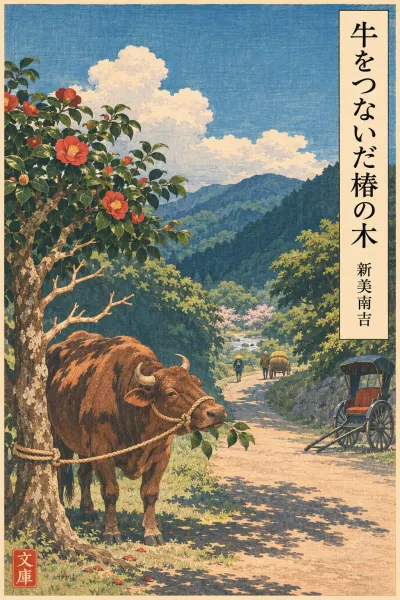
牛をつないだ椿の木 Ushi o Tsunaida Tsubaki no Ki, part 5: Kaizō Gives Up His Sweets
In this part
At the teahouse the other rickshaw pullers play their game of catching sugar candies in their mouths and eat fresh sweet-bean rolls, but Kaizō refuses everything and pretends to have a toothache. In secret he has resolved to save all the money he once spent on sweets so he can dig a well for people below Shinta no Mune. Two years later he has nearly enough, but the landowner in Handa will not give permission, and when Kaizō visits again he finds the old man bedridden with hiccups.
AI translation · independently checked
と、源さんがいいました。So said Gen.
しばらくして源さんは、ガラス壺から金平糖を一掴みとり出すと、そのうちの一つをぽオいと上に投げあげ、口でぱくりと受けとめました。After a while Gen took a handful of sugar candies out of the glass jar, tossed one of them up into the air, and snapped it out of the air with his mouth.
そして、Then he said,
「どうだや、海蔵さ。これをやらんかや。」"How about it, Kaizō? Want to have a go at this?"
といいました。That was what he said.
海蔵さんは、昨日まではよく源さんと、それをやったものでした。Until yesterday, Kaizō had often played this very game with Gen.
二人で競争をやって、受けそこなった数のすくないものが、相手に別の菓子を買わせたりしたものでした。The two of them would have a contest, and whoever missed fewer catches would make the other buy him a different sweet.
そして海蔵さんは、この芸当ではほかのどの人力曳きにも負けませんでした。And at this trick, Kaizō could beat any other rickshaw puller there was.
しかし、きょうは海蔵さんはいいました。But today Kaizō said:
「朝から奥歯がやめやがってな、甘いものはたべられんのだてや。」"My back tooth's been aching since this morning, so I can't eat anything sweet."
「そうかや、そいじゃ、由さ、やろう。」That so? Well then, Yoshi, let's play.
といって、源さんは由さんと、それをはじめました。With that, Gen began the game with Yoshi.
二人は色とりどりの金平糖を、天井に向かって投げあげてはそれを口でとめようとしましたが、うまく口にはいるときもあれば、鼻にあたったり、たばこぼんの灰の中にはいったりすることもありました。The two of them kept tossing the many-coloured candies up toward the ceiling and trying to catch them in their mouths; sometimes a candy went neatly into a mouth, but other times it hit a nose or landed in the ashes of the tobacco tray.
海蔵さんは、じぶんがするなら、ひとつもそらしはしないのだがなあ、と思いながら見ていました。Kaizō watched, thinking, "If it were me, I wouldn't miss a single one."
あまり源さんと由さんが落としてばかりいると、「よし、おれがひとつやって見せてやろかい。」といって出たくなるのでしたが、それをがまんしていました。When Gen and Yoshi kept dropping them like that, he felt like stepping in and saying, "All right, let me show you how it's done," but he held himself back.
これはたいへんつらいことでありました。This was a very hard thing to do.
はやく、お客がくればいいのになあ、と海蔵さんは眼をほそめて明るい道の方を見ていました。"I wish a customer would come along soon," thought Kaizō, narrowing his eyes as he looked out toward the bright road.
しかしお客よりさきに、茶店のおかみさんが、焼きたてのほかほかの大餡巻をつくってあらわれました。But before any customer came, the teahouse mistress appeared carrying big sweet-bean rolls she had just made, piping hot.
人力曳きたちは、大よろこびで、一本ずつとりました。The rickshaw pullers were delighted and each took one.
海蔵さんもがまんできなくなって、手が少しうごきだしましたが、やっとのことでおさえました。Kaizō could hardly bear it either, and his hand began to move a little, but at last he managed to hold it back.
「海蔵さ、どうしたじゃ。一銭もつかわんで、ごっそりためておいて、大きな倉でもたてるつもりかや。」"Kaizō, what's got into you? Not spending a single sen, piling it all up — are you planning to build yourself a big storehouse or something?"
と、源さんがいいました。So said Gen.
海蔵さんは苦しそうに笑って、外へ出てゆきました。Kaizō gave a pained smile and went outside.
そして、溝のふちで、かやつり草を折って、蛙をつっていました。There, at the edge of the ditch, he broke off a stalk of sedge and fished for frogs with it.
海蔵さんの胸の中には、拳骨のように固い決心があったのです。Inside Kaizō's heart there was a resolve as hard as a clenched fist.
今までお菓子につかったお金を、これからは使わずにためておいて、しんたのむねの下に、人々のための井戸を掘ろうというのでありました。From now on he would not spend the money he had always spent on sweets, but would save it up and dig a well for everyone below Shinta no Mune.
海蔵さんは、腹も歯もいたくありませんでした。Kaizō had neither a stomach ache nor a toothache.
のどから手が出るほど、お菓子はたべたかったのでした。He wanted those sweets so badly he could hardly stand it.
しかし、井戸をつくるために、今までの習慣をあらためたのでありました。But he had changed his old habits in order to make the well.
五Five
それから二年たちました。Two years passed after that.
牛が葉をたべてしまった椿にも、花が三つ四つ咲いたじぶんの或る日、海蔵さんは半田の町に住んでいる地主の家へやっていきました。One day, around the time when even the camellia whose leaves the ox had eaten had put out three or four flowers, Kaizō went to the house of the landowner who lived in the town of Handa.
海蔵さんは、もう二タ月ほどまえから、たびたびこの家へ来たのでした。For about two months now, Kaizō had been coming to this house again and again.
井戸を掘るお金はだいたいできたのですが、いざとなって地主が、そこに井戸を掘ることをしょうちしてくれないので、何度も頼みに来たのでした。He had more or less got together the money to dig the well, but when it came to the point, the landowner would not agree to a well being dug there, and so Kaizō had come many times to plead with him.
その地主というのは、牛を椿につないだ利助さんを、さんざん叱ったあの老人だったのです。That landowner was none other than the old man who had given Risuke such a scolding for tying his ox to the camellia.
海蔵さんが門をはいったとき、家の中から、ひえっというひどいしゃっくりの音がきこえて来ました。As Kaizō came in through the gate, he heard a terrible hiccup — "hic!" — from inside the house.
たずねて見ると、一昨日から地主の老人は、しゃっくりがとまらないので、すっかり体がよわって、床についているということでした。When he asked, he was told that since the day before yesterday the old landowner had been unable to stop hiccupping, and had grown so weak that he had taken to his bed.
それで、海蔵さんはお見舞いに枕もとまできました。So Kaizō went right up to his bedside to see how he was.
Vocabulary
| Word | Meaning | JLPT |
|---|---|---|
| 金平糖こんぺいとう | konpeitō, small knobbly sugar candiesFrom Portuguese confeito; the kanji are chosen for sound. | — |
| 芸当げいとう | trick, feat of skill | — |
| 人力曳きじんりきひき | rickshaw puller人力 is short for 人力車, the rickshaw; 曳く means to pull. | — |
| 奥歯おくば | back tooth, molar奥 = the far inside. | — |
| やめやめる | to ache, to hurtdictionary form: 病めるDialect or old usage of 病める, not the common やめる (to stop). Here followed by the rough auxiliary やがる. | — |
| がまんがまん | holding back, enduringdictionary form: 我慢がまんする = to put up with, to resist temptation. | N3 |
| 茶店ちゃみせ | roadside teahouseA small rest stop serving tea and snacks to travellers. | — |
| 大餡巻おおあんまき | big sweet-bean rollA thin pancake wrapped around sweet red-bean paste (餡). | — |
| 拳骨げんこつ | clenched fist | — |
| 決心けっしん | resolve, determination | N3 |
| 習慣しゅうかん | habit, custom | N4 |
| 地主じぬし | landowner | N1 |
| しゃっくりしゃっくり | hiccup(s) | N2 |
| お見舞いみまい | visit to a sick persondictionary form: 見舞いお見舞いに行く/来る = to visit someone who is ill. | N3 |
Grammar
〜たものだ N3 used to (habitually) do
Past tense plus ものだ describes something that was done regularly in the past, often with a nostalgic tone. Here it shows the candy game was Kaizō's usual pastime until now.
海蔵さんは、昨日まではよく源さんと、それをやったものでした。
Until yesterday, Kaizō had often played this very game with Gen.
〜ては N2 do A and then B, over and over
The て-form plus は links two actions that repeat in a cycle. The pullers keep throwing candies up and then trying to catch them.
天井に向かって投げあげてはそれを口でとめようとしましたが
they kept tossing them up toward the ceiling and trying to catch them in their mouths, but
〜ときもあれば〜こともある N3 sometimes A, and sometimes B
The conditional あれば joins two contrasting possibilities. Some throws land in the mouth, while others hit a nose or the ash tray.
うまく口にはいるときもあれば、鼻にあたったり、たばこぼんの灰の中にはいったりすることもありました。
sometimes a candy went neatly into a mouth, but other times it hit a nose or landed in the ashes of the tobacco tray.
〜てばかりいる N3 do nothing but ~, keep ~ing
ばかり after the て-form plus いる stresses that the same action keeps happening, usually with some irritation. Gen and Yoshi keep dropping candies.
あまり源さんと由さんが落としてばかりいると
when Gen and Yoshi kept dropping them like that
〜ばいいのに N3 I wish ~ would happen
The conditional ば plus いいのに expresses a wish that something would happen. Here Kaizō hopes a customer will come and take him away from the temptation.
はやく、お客がくればいいのになあ
I wish a customer would come along soon
〜ずに N3 without doing ~
ず is the literary negative, and ずに means the same as ないで. Kaizō will save the money instead of spending it.
これからは使わずにためておいて
from now on he would not spend it but would save it up