Part 6 of 7 · JLPT N3
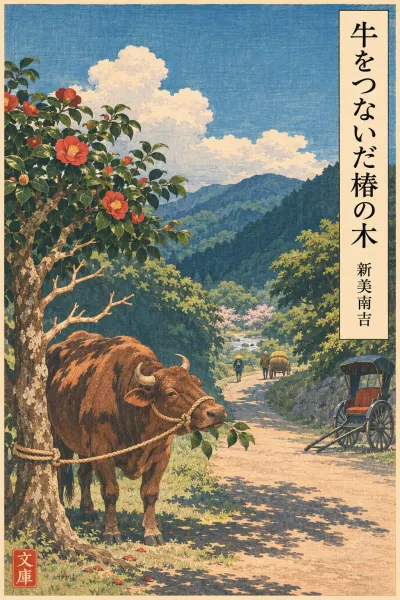
牛をつないだ椿の木 Ushi o Tsunaida Tsubaki no Ki, part 6: A Change of Heart at the Deathbed
In this part
The dying landowner still refuses to let Kaizō dig his well, but the son promises permission once his father is gone, and Kaizō is glad. His mother scolds him for wishing for a man's death. Ashamed, Kaizō returns to apologise and begs the old man not to die, and the moved landowner gives his permission and offers to pay for the well.
AI translation · independently checked
老人は、ふとんを波うたせて、しゃっくりをしていました。The old man lay hiccuping, the quilt heaving up and down like waves.
そして、海蔵さんの顔を見ると、And when he saw Kaizō's face,
「いや、何度お前が頼みにきても、わしは井戸を掘らせん。しゃっくりがもうあと一日つづくと、わしが死ぬそうだが、死んでもそいつは許さぬ。」"No. However many times you come asking, I won't let you dig a well. They say if these hiccups go on even one more day, I'll die, but even if I die, I won't allow it."
と、がんこにいいました。he said stubbornly.
海蔵さんは、こんな死にかかった人と争ってもしかたがないと思って、しゃっくりにきくおまじないは、茶わんに箸を一本のせておいて、ひといきに水をのんでしまうことだと教えてやりました。Kaizō thought there was no use arguing with a man who was dying like this, so he told him the charm that works for hiccups: lay a single chopstick across a teacup and drink the water down in one breath.
門を出ようとすると、老人の息子さんが、海蔵さんのあとを追ってきて、Just as he was about to go out through the gate, the old man's son came hurrying after him
「うちの親父は、がんこでしようがないのですよ。そのうち、私の代になりますから、そしたら私があなたの井戸を掘ることを承知してあげましょう。」"My father's hopelessly stubborn, you know. Sooner or later it'll be my turn to head the house, and when that happens I'll give you my permission to dig your well."
といいました。he said.
海蔵さんは喜びました。Kaizō was delighted.
あの様子では、もうあの老人は、あと二、三日で死ぬに違いない。The way he looked, that old man was sure to die in another two or three days.
そうすれば、あの息子があとをついで、井戸を掘らせてくれる、これはうまいと思いました。Then the son would take his place and let him dig the well. This is a stroke of luck, he thought.
その夜、夕飯のとき、海蔵さんは年とったお母さんに、こう話しました。That night at supper, Kaizō told his aged mother about it.
「あのがんこ者の親父が死ねば、息子が井戸を掘らせてくれるそうだがのオ。だが、ありゃ、もう二、三日で死ぬからええて。」"They say once that stubborn old man dies, his son will let me dig the well. And he'll be dead in two or three days anyway, so that's all right."
すると、お母さんはいいました。At that, his mother said,
「お前は、じぶんの仕事のことばかり考えていて、悪い心になっただな。人の死ぬのを待ちのぞんでいるのは悪いことだぞや。」"You've been thinking of nothing but your own work, and your heart's turned bad. Waiting and hoping for somebody to die is a wicked thing."
海蔵さんは、とむねをつかれたような気がしました。Kaizō felt as if he had been struck to the heart.
お母さんのいうとおりだったのです。His mother was quite right.
次の朝早く、海蔵さんは、また地主の家へ出かけていきました。Early the next morning, Kaizō set off once again for the landowner's house.
門をはいると、昨日より力のない、ひきつるようなしゃっくりの声が聞こえて来ました。As he came in through the gate, he heard the sound of hiccups, weaker than the day before and almost like spasms.
だいぶ地主の体が弱ったことがわかりました。He could tell that the landowner had grown a good deal weaker.
「あんたは、また来ましたね。親父はまだ生きていますよ。」"So you've come again. My father's still alive, you know."
と、出て来た息子さんがいいました。said the son, coming out to meet him.
「いえ、わしは、親父さんが生きておいでのうちに、ぜひおあいしたいので。」"No, it's just that I very much want to see your father while he's still living."
と、海蔵さんはいいました。said Kaizō.
老人はやつれて寝ていました。The old man lay in bed, worn and haggard.
海蔵さんは枕もとに両手をついて、Kaizō knelt by his pillow, placed both hands on the floor, and
「わしは、あやまりに参りました。昨日、わしはここから帰るとき、息子さんから、あなたが死ねば息子さんが井戸を許してくれるときいて、悪い心になりました。"I've come to apologise. Yesterday, as I was leaving here, your son told me that once you died he would allow the well, and my heart turned bad.
もうじき、あなたが死ぬからいいなどと、恐ろしいことを平気で思っていました。つまり、わしはじぶんの井戸のことばかり考えて、あなたの死ぬことを待ちねがうというような、鬼にもひとしい心になりました。I was calmly thinking a terrible thing: that it was fine, since you'd soon be dead. In short, I thought only of my own well, and my heart became no better than a demon's, waiting and wishing for you to die.
そこで、わしは、あやまりに参りました。井戸のことは、もうお願いしません。またどこか、ほかの場所をさがすとします。So I've come to apologise. I won't ask you about the well any more. I'll go and look for some other place instead.
ですから、あなたはどうぞ、死なないで下さい。」So please, please don't die."
と、いいました。he said.
老人は黙ってきいていました。The old man listened in silence.
それから長いあいだ黙って海蔵さんの顔を見上げていました。Then for a long while he lay gazing silently up at Kaizō's face.
「お前さんは、感心なおひとじゃ。」"You are an admirable man."
と、老人はやっと口を切っていいました。the old man said at last, breaking his silence.
「お前さんは、心のええおひとじゃ、わしは長い生涯じぶんの慾ばかりで、ひとのことなどちっとも思わずに生きて来たが、いまはじめてお前さんのりっぱな心にうごかされた。"You are a man with a good heart. All my long life I've lived thinking of nothing but my own greed, without a thought for anyone else, but now, for the first time, I've been moved by your fine heart.
お前さんのような人は、いまどき珍しい。それじゃ、あそこへ井戸を掘らしてあげよう。A man like you is rare these days. Well then, I'll let you dig your well over there.
どんな井戸でも掘りなさい。もし掘って水が出なかったら、どこにでもお前さんの好きなところに掘らしてあげよう。Dig whatever kind of well you like. And if you dig and no water comes up, I'll let you dig anywhere you please.
あのへんは、みな、わしの土地だから。うん、そうして、井戸を掘る費用がたりなかったら、いくらでもわしが出してあげよう。All the land around there is mine, you see. Yes, and if you're short of money for digging the well, I'll pay as much as it takes.
わしは明日にも死ぬかも知れんから、このことを遺言しておいてあげよう。」I may die as soon as tomorrow, so I'll leave this as my last wish, to make sure of it."
Vocabulary
| Word | Meaning | JLPT |
|---|---|---|
| しゃっくりしゃっくり | hiccup(s)しゃっくりをする = to hiccup. | N2 |
| がんこがんこ | stubborn, obstinatedictionary form: 頑固Here used adverbially with に: がんこに言う, to say stubbornly. がんこ者 is a stubborn person. | N1 |
| おまじないおまじない | charm, folk remedy, spellA small ritual believed to bring about an effect, often a home cure. | — |
| 承知しょうち | consent, agreement承知する can mean 'to agree to' or 'to know'. Here it means giving permission. | N4 |
| 待ちのぞんでいるまちのぞむ | to wait eagerly for, to long fordictionary form: 待ち望む待つ (wait) + 望む (hope). Later the same idea appears as 待ちねがう. | N1 |
| 地主じぬし | landowner地 (land) + 主 (master). | N1 |
| ひきつるひきつる | to twitch, to cramp, to go into spasmsdictionary form: 引きつる | — |
| やつれてやつれる | to become haggard, to waste awaydictionary form: やつれるDescribes a face or body worn down by illness or worry. | — |
| 枕もとまくらもと | bedside, beside someone's pillowdictionary form: 枕元 | — |
| ひとしいひとしい | equal to, no different fromdictionary form: 等しいAにひとしいB = a B as bad as A. 鬼にもひとしい心 means a heart no better than a demon's. | N3 |
| 感心かんしん | admirable, praiseworthyAs a な-adjective it praises someone's conduct. 感心する means 'to be impressed'. | N3 |
| 生涯しょうがい | lifetime, one's whole lifeHere used adverbially, meaning 'all through my long life'. | — |
| 慾よく | greed, selfish desiredictionary form: 欲慾 is an older form of the kanji; modern texts write 欲. | — |
| 遺言ゆいごん | will, last wishesUsually read ゆいごん; legal usage also has いごん. 遺言する = to state in one's will. | — |
Grammar
〜ぬ / 〜ん (negative) N2 not (old-fashioned negative)
ぬ is a classical negative ending that replaces ない, and ん is its contracted form. Older speakers, especially in dialect, use them, so 許さぬ means 許さない and 掘らせん means 掘らせない.
死んでもそいつは許さぬ。
Even if I die, I won't allow it.
Verb (ます-stem) + かかる N2 to be about to, to be on the point of
Attached to the stem of a verb of change, かかる shows that the action has begun or is just about to happen. 死にかかった人 is a man who is on the verge of dying.
こんな死にかかった人と争ってもしかたがない
there was no use arguing with a man who was dying like this
〜(よ)うとすると N3 just as (someone) was about to …
The volitional form + とする means 'try to' or 'be about to'. Followed by と, it marks the moment when something else happens.
門を出ようとすると
Just as he was about to go out through the gate
〜に違いない N3 must be, surely
This pattern expresses a strong conviction by the speaker. Here it shows Kaizō's confident and selfish guess that the old man will soon die.
あと二、三日で死ぬに違いない。
He was sure to die in another two or three days.
Causative + てくれる / てあげる N4 to let someone do something (as a favour)
The causative form (掘らせる, or the variant 掘らす) means 'let someone dig'. Adding くれる or あげる shows who grants the favour: the son lets Kaizō dig, and later the old man offers to let him dig.
あの息子があとをついで、井戸を掘らせてくれる
the son would take over and let him dig the well
〜ばかり N4 nothing but, only
ばかり after a noun or phrase means 'nothing but, only'. It stresses that one thing takes up everything, which often sounds critical, as it does here. The mother points out that Kaizō thinks only about his own work.
じぶんの仕事のことばかり考えていて
thinking of nothing but your own work