Part 1 of 7 · JLPT N2
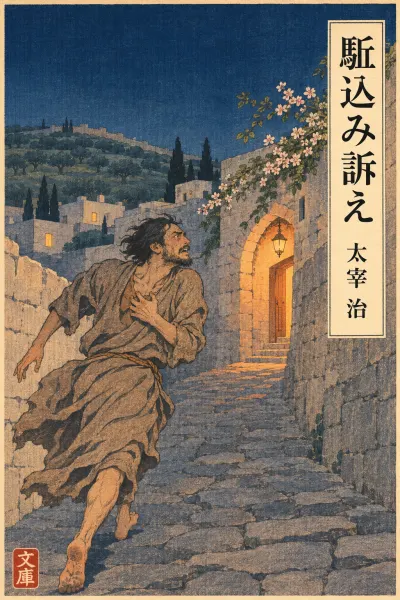
駈込み訴え Kakekomi Uttae, part 1: Rage and Devotion Toward That Man
In this part
A man rushes to an official and offers to lead him to his teacher so that he can be killed. In a torrent of words he complains that he has fed, housed and protected the teacher and his useless disciples without thanks, and that the teacher despises him out of pride. His rage keeps collapsing into admiration, and when he recalls a kind word the teacher once spoke to him by the sea, he ends by confessing that he loves him.
AI translation · independently checked
申し上げます。I have something to report.
申し上げます。I have something to report.
旦那さま。Sir.
あの人は、酷い。That man is cruel.
酷い。Cruel.
はい。Yes.
厭な奴です。He's a loathsome fellow.
悪い人です。He's a wicked man.
ああ。Ah.
我慢ならない。I can't stand it.
生かして置けねえ。I can't let him go on living, damn him.
はい、はい。Yes, yes.
落ちついて申し上げます。I'll calm down and tell you.
あの人を、生かして置いてはなりません。That man must not be allowed to live.
世の中の仇です。He is the enemy of the whole world.
はい、何もかも、すっかり、全部、申し上げます。Yes, I'll tell you everything, all of it, every last thing.
私は、あの人の居所を知っています。I know where that man is.
すぐに御案内申します。I'll take you to him at once.
ずたずたに切りさいなんで、殺して下さい。Hack him to pieces, torment him, and kill him.
あの人は、私の師です。That man is my teacher.
主です。My lord.
けれども私と同じ年です。And yet he is the same age as I am.
三十四であります。Thirty-four.
私は、あの人よりたった二月おそく生れただけなのです。I was born a mere two months after him, that's all.
たいした違いが無い筈だ。There oughtn't to be much difference between us.
人と人との間に、そんなにひどい差別は無い筈だ。Between one man and another there oughtn't to be such a terrible gap.
それなのに私はきょう迄あの人に、どれほど意地悪くこき使われて来たことか。And yet, right up to this day, how spitefully he has worked me to the bone!
どんなに嘲弄されて来たことか。How he has mocked me!
ああ、もう、いやだ。Ah, I've had enough.
堪えられるところ迄は、堪えて来たのだ。I've borne it as far as anyone could bear it.
怒る時に怒らなければ、人間の甲斐がありません。If you don't get angry when it's time to be angry, there's no point in being human.
私は今まであの人を、どんなにこっそり庇ってあげたか。How I have quietly shielded that man all this time!
誰も、ご存じ無いのです。Nobody knows it, sir.
あの人ご自身だって、それに気がついていないのだ。Not even he himself has noticed.
いや、あの人は知っているのだ。No, he does know.
ちゃんと知っています。He knows perfectly well.
知っているからこそ、尚更あの人は私を意地悪く軽蔑するのだ。It's precisely because he knows that he despises me all the more spitefully.
あの人は傲慢だ。He is arrogant.
私から大きに世話を受けているので、それがご自身に口惜しいのだ。He's getting a great deal of looking-after from me, and that galls him.
あの人は、阿呆なくらいに自惚れ屋だ。He's vain to the point of idiocy.
私などから世話を受けている、ということを、何かご自身の、ひどい引目ででもあるかのように思い込んでいなさるのです。He has convinced himself that being looked after by the likes of me is some dreadful shame of his own.
あの人は、なんでもご自身で出来るかのように、ひとから見られたくてたまらないのだ。He's dying to have people see him as someone who can do everything by himself.
ばかな話だ。What nonsense.
世の中はそんなものじゃ無いんだ。The world isn't like that.
この世に暮して行くからには、どうしても誰かに、ぺこぺこ頭を下げなければいけないのだし、そうして歩一歩、苦労して人を抑えてゆくより他に仕様がないのだ。So long as you mean to get by in this world, you simply have to bow and scrape to somebody, and there's nothing for it but to toil along step by step, keeping people in hand.
あの人に一体、何が出来ましょう。What on earth can that man do?
なんにも出来やしないのです。Nothing at all, sir.
私から見れば青二才だ。As I see it, he's a greenhorn.
私がもし居らなかったらあの人は、もう、とうの昔、あの無能でとんまの弟子たちと、どこかの野原でのたれ死していたに違いない。If I hadn't been there, he'd surely have died like a dog in some field long ago, along with those useless, dim-witted disciples of his.
「狐には穴あり、鳥には塒、されども人の子には枕するところ無し」それ、それ、それだ。"The fox hath its hole, and the bird its roost, yet the Son of Man hath no place whereon to lay his head." There, there, that's it exactly.
ちゃんと白状していやがるのだ。He's owning up to it plain as day, the wretch.
ペテロに何が出来ますか。What can Peter do?
ヤコブ、ヨハネ、アンデレ、トマス、痴の集り、ぞろぞろあの人について歩いて、脊筋が寒くなるような、甘ったるいお世辞を申し、天国だなんて馬鹿げたことを夢中で信じて熱狂し、その天国が近づいたなら、あいつらみんな右大臣、左大臣にでもなるつもりなのか、馬鹿な奴らだ。James, John, Andrew, Thomas: a swarm of fools, trailing after him in a pack, spouting sickly flattery that sends a chill down your spine, believing heart and soul in nonsense like a Kingdom of Heaven and working themselves into a frenzy. Do they all expect to become Minister of the Right and Minister of the Left once that Heaven arrives? Idiots, the lot of them.
その日のパンにも困っていて、私がやりくりしてあげないことには、みんな飢え死してしまうだけじゃないのか。They can't even manage their daily bread. Unless I scrape things together for them, won't they all just starve to death?
私はあの人に説教させ、群集からこっそり賽銭を巻き上げ、また、村の物持ちから供物を取り立て、宿舎の世話から日常衣食の購求まで、煩をいとわず、してあげていたのに、あの人はもとより弟子の馬鹿どもまで、私に一言のお礼も言わない。I had him preach, I quietly raked in offerings from the crowds, I squeezed gifts out of the well-off men of the villages, and I took care of everything, sparing no trouble, from finding lodgings to buying our daily food and clothing. And yet neither he nor even those fool disciples ever say one word of thanks to me.
お礼を言わぬどころか、あの人は、私のこんな隠れた日々の苦労をも知らぬ振りして、いつでも大変な贅沢を言い、五つのパンと魚が二つ在るきりの時でさえ、目前の大群集みなに食物を与えよ、などと無理難題を言いつけなさって、私は陰で実に苦しいやり繰りをして、どうやら、その命じられた食いものを、まあ、買い調えることが出来るのです。Far from thanking me, he pretends not to know about these hidden daily hardships of mine and is forever making extravagant demands. Even when there were only five loaves and two fish, he laid on me the impossible order to give food to the whole huge crowd before us, and behind the scenes I juggled things in the most painful way and somehow, well, managed to buy the food he had commanded.
謂わば、私はあの人の奇蹟の手伝いを、危い手品の助手を、これまで幾度となく勤めて来たのだ。You might say I have served, more times than I can count, as the helper in his miracles, the assistant in a risky conjuring trick.
私はこう見えても、決して吝嗇の男じゃ無い。I may not look it, but I'm no miser.
それどころか私は、よっぽど高い趣味家なのです。On the contrary, I'm a man of rather refined taste.
私はあの人を、美しい人だと思っている。I think that man is beautiful.
私から見れば、子供のように慾が無く、私が日々のパンを得るために、お金をせっせと貯めたっても、すぐにそれを一厘残さず、むだな事に使わせてしまって。As I see it, he's as free of greed as a child. Even when I diligently save money so we can get our daily bread, he makes me spend every last penny of it on useless things straight away.
けれども私は、それを恨みに思いません。But I don't hold it against him.
あの人は美しい人なのだ。He is a beautiful man.
私は、もともと貧しい商人ではありますが、それでも精神家というものを理解していると思っています。I'm only a poor merchant by birth, but even so I believe I understand what a man of the spirit is.
だから、あの人が、私の辛苦して貯めて置いた粒々の小金を、どんなに馬鹿らしくむだ使いしても、私は、なんとも思いません。So however foolishly he squanders the little coins I've scrimped and saved with such hardship, I don't mind at all.
思いませんけれども、それならば、たまには私にも、優しい言葉の一つ位は掛けてくれてもよさそうなのに、あの人は、いつでも私に意地悪くしむけるのです。I don't mind, but in that case you'd think he could at least throw a kind word my way now and then. Instead he always treats me with spite.
一度、あの人が、春の海辺をぶらぶら歩きながら、ふと、私の名を呼び、「おまえにも、お世話になるね。Once, as he was strolling along the shore in spring, he suddenly called my name and said, "I owe you a great deal too.
おまえの寂しさは、わかっている。けれども、そんなにいつも不機嫌な顔をしていては、いけない。I understand your loneliness. But you mustn't always wear such a sullen face.
寂しいときに、寂しそうな面容をするのは、それは偽善者のすることなのだ。寂しさを人にわかって貰おうとして、ことさらに顔色を変えて見せているだけなのだ。To put on a lonely look when you are lonely is what hypocrites do. They are only changing their faces on purpose, trying to make others understand their loneliness.
まことに神を信じているならば、おまえは、寂しい時でも素知らぬ振りして顔を綺麗に洗い、頭に膏を塗り、微笑んでいなさるがよい。If you truly believe in God, then even when you are lonely, act as though nothing is wrong: wash your face clean, anoint your head with oil, and go on smiling.
わからないかね。寂しさを、人にわかって貰わなくても、どこか眼に見えないところにいるお前の誠の父だけが、わかっていて下さったなら、それでよいではないか。Don't you see? Even if others don't understand your loneliness, if only your true Father, who dwells somewhere unseen, understands it, is that not enough?
そうではないかね。寂しさは、誰にだって在るのだよ」そうおっしゃってくれて、私はそれを聞いてなぜだか声出して泣きたくなり、いいえ、私は天の父にわかって戴かなくても、また世間の者に知られなくても、ただ、あなたお一人さえ、おわかりになっていて下さったら、それでもう、よいのです。Isn't that so? Everyone has loneliness." When he said that to me, for some reason I wanted to cry out loud as I listened. No, I don't need the Father in heaven to understand me, or the people of the world to know me. If only you, you alone, understand me, then that is enough.
私はあなたを愛しています。I love you.
Vocabulary
| Word | Meaning | JLPT |
|---|---|---|
| 旦那さまだんなさま | sir; master (respectful address to a man of standing)dictionary form: 旦那様Here the speaker addresses an official. Also used for 'husband' or 'master of the house'. | — |
| 仇かたき | enemy; foeOld-fashioned and strong. Also appears in 敵討ち (revenge). | N1 |
| 居所いどころ | whereabouts; where someone is staying | — |
| 切りさいなんできりさいなむ | to cut up cruelly; hack and tormentdictionary form: 切り苛むThe adverb ずたずたに means 'to shreds'. | — |
| 嘲弄ちょうろう | ridicule; mockeryLiterary. Used as a suru-verb, here in the passive: 嘲弄される. | — |
| 庇ってかばう | to shield; protect; cover fordictionary form: 庇う | — |
| 自惚れ屋うぬぼれや | a conceited person〜屋 attached to a trait means 'a person given to ~'. | — |
| 引目ひけめ | sense of inferiority; something to be ashamed ofdictionary form: 引け目Usually written 引け目 today. | — |
| 青二才あおにさい | greenhorn; callow youthContemptuous. | — |
| のたれ死のたれじに | dying by the roadside; dying like a dogdictionary form: 野垂れ死に | — |
| 白状はくじょう | confession; owning up | N1 |
| 賽銭さいせん | offerings (money given at a shrine or temple)A Japanese religious word, used here for the donations of the crowd. | — |
| 吝嗇りんしょく | stinginess; miserlinessLiterary. The everyday word is けち. | N1 |
| 偽善者ぎぜんしゃ | hypocrite偽 'false' + 善 'good' + 者 'person'. | — |
Grammar
〜てはならない N3 must not ~
The te-form + は + ならない expresses a strong prohibition. Sentence 11 says the same thing coarsely: 置けねえ is a rough, masculine pronunciation of 置けない.
あの人を、生かして置いてはなりません。
That man must not be allowed to live.
どれほど/どんなに〜ことか N2 how very much ~!
A question word plus a sentence ending in ことか makes an exclamation of degree rather than a real question. It stresses how much the speaker has suffered.
どんなに嘲弄されて来たことか。
How he has mocked me!
〜からには N2 since / as long as ~ (then naturally…)
It gives a premise that brings an unavoidable consequence. Here, living in this world means you have to bow to someone.
この世に暮して行くからには、どうしても誰かに、ぺこぺこ頭を下げなければいけないのだし
So long as you mean to get by in this world, you simply have to bow and scrape to somebody
〜やしない N2 won't / can't possibly ~ (emphatic negative)
The verb stem + や + しない is a colloquial, emphatic negative. 出来やしない stresses that he can do absolutely nothing.
なんにも出来やしないのです。
Nothing at all, sir.
〜ないことには N2 unless ~
Followed by a negative or bad result, it means that without the first action the outcome cannot be avoided. Here, without the speaker's management they would starve.
私がやりくりしてあげないことには、みんな飢え死してしまうだけじゃないのか。
Unless I scrape things together for them, won't they all just starve to death?
〜どころか N2 far from ~; let alone ~
It rejects the first idea and replaces it with something stronger or opposite. Not only does he fail to give thanks, he actually makes extravagant demands.
お礼を言わぬどころか、あの人は、私のこんな隠れた日々の苦労をも知らぬ振りして
Far from thanking me, he pretends not to know about these hidden daily hardships of mine