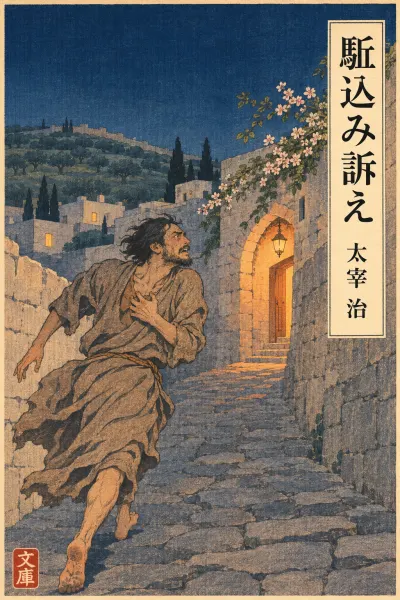
Part 2 of 7 · JLPT N2
駈込み訴え Kakekomi Uttae, part 2: Love, Jealousy and the Precious Oil
In this part
The narrator declares he loves his master more than any other disciple does and dreams of a quiet life together in his village with its peach orchards. He believes in neither Heaven, God nor resurrection, only in the man's beauty, and swings between wanting to live alone with him and wanting him killed. He then recalls how, six days earlier in Bethany, he scolded Mary for pouring costly oil over the master, and how the master rebuked him and said the oil was preparation for his burial.
AI translation · independently checked
ほかの弟子たちが、どんなに深くあなたを愛していたって、それとは較べものにならないほどに愛しています。However deeply the other disciples may love you, I love you so much more that there's no comparing it.
誰よりも愛しています。I love you more than anyone does.
ペテロやヤコブたちは、ただ、あなたについて歩いて、何かいいこともあるかと、そればかりを考えているのです。Peter and James and the rest just tag along after you, thinking of nothing but whether something good might come their way.
けれども、私だけは知っています。But I alone know the truth.
あなたについて歩いたって、なんの得するところも無いということを知っています。I know that following you around brings no profit at all.
それでいながら、私はあなたから離れることが出来ません。And even so, I can't leave you.
どうしたのでしょう。What's the matter with me?
あなたが此の世にいなくなったら、私もすぐに死にます。If you were gone from this world, I would die at once too.
生きていることが出来ません。I couldn't go on living.
私には、いつでも一人でこっそり考えていることが在るんです。There's something I'm always thinking about, alone and in secret.
それはあなたが、くだらない弟子たち全部から離れて、また天の父の御教えとやらを説かれることもお止しになり、つつましい民のひとりとして、お母のマリヤ様と、私と、それだけで静かな一生を、永く暮して行くことであります。It is this: that you would leave all those worthless disciples, give up preaching the teachings of your Father in Heaven or whatever they are, and live a long, quiet life as one of the humble common people, just you and your mother, Lady Mary, and me.
私の村には、まだ私の小さい家が残って在ります。In my village my little house is still standing.
年老いた父も母も居ります。My old father and mother are there too.
ずいぶん広い桃畠もあります。There's a good wide peach orchard as well.
春、いまごろは、桃の花が咲いて見事であります。In spring, about this time of year, the peach trees are in bloom, a magnificent sight.
一生、安楽にお暮しできます。You could live in comfort for the rest of your life.
私がいつでもお傍について、御奉公申し上げたく思います。I would like to stay always at your side and serve you.
よい奥さまをおもらいなさいまし。Do take yourself a good wife.
そう私が言ったら、あの人は、薄くお笑いになり、「ペテロやシモンは漁人だ。美しい桃の畠も無い。When I said that to him, he gave a faint smile and said, "Peter and Simon are fishermen. They have no lovely peach orchards.
ヤコブもヨハネも赤貧の漁人だ。あのひとたちには、そんな、一生を安楽に暮せるような土地が、どこにも無いのだ」と低く独りごとのように呟いて、また海辺を静かに歩きつづけたのでしたが、後にもさきにも、あの人と、しんみりお話できたのは、そのとき一度だけで、あとは、決して私に打ち解けて下さったことが無かった。James and John are dirt-poor fishermen too. Nowhere do they have land where they could live out their lives in comfort like that." He murmured it low, as if talking to himself, and walked on quietly along the shore again. Never before or since have I been able to talk with him so intimately; that was the only time, and after that he never once opened his heart to me.
私はあの人を愛している。I love that man.
あの人が死ねば、私も一緒に死ぬのだ。If he dies, I die with him.
あの人は、誰のものでもない。He belongs to no one.
私のものだ。He's mine.
あの人を他人に手渡すくらいなら、手渡すまえに、私はあの人を殺してあげる。Rather than hand him over to someone else, I will kill him first, as a kindness to him.
父を捨て、母を捨て、生れた土地を捨てて、私はきょう迄、あの人について歩いて来たのだ。I threw away my father, threw away my mother, threw away the land I was born in, and I have followed him all the way up to this day.
私は天国を信じない。I don't believe in Heaven.
神も信じない。I don't believe in God either.
あの人の復活も信じない。I don't believe he'll rise again, either.
なんであの人が、イスラエルの王なものか。How on earth could that man be King of Israel?
馬鹿な弟子どもは、あの人を神の御子だと信じていて、そうして神の国の福音とかいうものを、あの人から伝え聞いては、浅間しくも、欣喜雀躍している。Those idiot disciples believe he is the Son of God, and whenever he passes on to them this thing they call the gospel of the Kingdom of God, they jump for joy, the wretched fools.
今にがっかりするのが、私にはわかっています。I know they're in for a letdown soon enough.
おのれを高うする者は卑うせられ、おのれを卑うする者は高うせられると、あの人は約束なさったが、世の中、そんなに甘くいってたまるものか。He promised, "Whosoever exalteth himself shall be abased, and he that humbleth himself shall be exalted," but do you think the world will go that easily? Not a chance!
あの人は嘘つきだ。He's a liar.
言うこと言うこと、一から十まで出鱈目だ。Every single thing he says, from start to finish, is nonsense.
私はてんで信じていない。I don't believe a word of it.
けれども私は、あの人の美しさだけは信じている。And yet the one thing I do believe in is his beauty.
あんな美しい人はこの世に無い。There's no one in this world as beautiful as he is.
私はあの人の美しさを、純粋に愛している。I love his beauty, purely.
それだけだ。That's all it is.
私は、なんの報酬も考えていない。I'm not thinking of any reward.
あの人について歩いて、やがて天国が近づき、その時こそは、あっぱれ右大臣、左大臣になってやろうなどと、そんなさもしい根性は持っていない。I don't have some mean little scheme of following him until the Kingdom of Heaven draws near, and then, at that moment, grandly making myself Minister of the Right or Minister of the Left.
私は、ただ、あの人から離れたくないのだ。I simply don't want to be parted from him.
ただ、あの人の傍にいて、あの人の声を聞き、あの人の姿を眺めて居ればそれでよいのだ。If I can just be at his side, hearing his voice and gazing at his figure, that's enough for me.
そうして、出来ればあの人に説教などを止してもらい、私とたった二人きりで一生永く生きていてもらいたいのだ。And then, if possible, I want him to give up his preaching and all that, and to live a long life with me, just the two of us alone.
あああ、そうなったら!Ahh, if only it could be so!
私はどんなに仕合せだろう。How happy I would be!
私は今の、此の、現世の喜びだけを信じる。I believe only in the joys of now, of this, of the present world.
次の世の審判など、私は少しも怖れていない。The Judgement in the world to come doesn't frighten me one bit.
あの人は、私の此の無報酬の、純粋の愛情を、どうして受け取って下さらぬのか。Why won't he accept this love of mine, this pure love that asks nothing in return?
ああ、あの人を殺して下さい。Ah, please kill him.
旦那さま。Sir.
私はあの人の居所を知って居ります。I know where he is.
御案内申し上げます。I'll show you the way.
あの人は私を賤しめ、憎悪して居ります。He despises me and hates me.
私は、きらわれて居ります。I'm loathed.
私はあの人や、弟子たちのパンのお世話を申し、日日の飢渇から救ってあげているのに、どうして私を、あんなに意地悪く軽蔑するのでしょう。I see to the bread for him and his disciples and save them from hunger and thirst day after day, so why does he scorn me so spitefully?
お聞き下さい。Please, hear me out.
六日まえのことでした。It happened six days ago.
あの人はベタニヤのシモンの家で食事をなさっていたとき、あの村のマルタ奴の妹のマリヤが、ナルドの香油を一ぱい満たして在る石膏の壺をかかえて饗宴の室にこっそり這入って来て、だしぬけに、その油をあの人の頭にざぶと注いで御足まで濡らしてしまって、それでも、その失礼を詫びるどころか、落ちついてしゃがみ、マリヤ自身の髪の毛で、あの人の濡れた両足をていねいに拭ってあげて、香油の匂いが室に立ちこもり、まことに異様な風景でありましたので、私は、なんだか無性に腹が立って来て、失礼なことをするな!He was dining at the house of Simon in Bethany, when Mary, the younger sister of that Martha woman from the village, came creeping into the banquet room clutching an alabaster jar filled to the brim with oil of nard, and without warning she sloshed the oil over his head, soaking him all the way down to his blessed feet; and far from apologising for such rudeness, she calmly crouched down and carefully wiped his two wet feet with her own hair, while the scent of the oil hung heavy in the room, a truly strange scene, and somehow I grew wildly angry: "Don't be so rude!"
と、その妹娘に怒鳴ってやりました。That's what I shouted at the younger sister.
これ、このようにお着物が濡れてしまったではないか、それに、こんな高価な油をぶちまけてしまって、もったいないと思わないか、なんというお前は馬鹿な奴だ。"Look here, see how his clothes are soaked! And splashing out such expensive oil, don't you think it's a waste? What a fool you are!
これだけの油だったら、三百デナリもするではないか、この油を売って、三百デナリ儲けて、その金をば貧乏人に施してやったら、どんなに貧乏人が喜ぶか知れない。Oil like this would fetch a good three hundred denarii! If you'd sold it and made three hundred denarii and given the money to the poor, who knows how glad the poor would have been.
無駄なことをしては困るね、と私は、さんざ叱ってやりました。Doing such wasteful things just won't do," I said, and I gave her a thorough scolding.
すると、あの人は、私のほうを屹っと見て、「この女を叱ってはいけない。この女のひとは、大変いいことをしてくれたのだ。At that, he looked sharply over at me and said, "You must not scold this woman. She has done a very good thing for me.
貧しい人にお金を施すのは、おまえたちには、これからあとあと、いくらでも出来ることではないか。Giving money to the poor is something you can do as much as you like, from now on and long after.
私には、もう施しが出来なくなっているのだ。そのわけは言うまい。この女のひとだけは知っている。But I can no longer give alms. I will not say why. Only this woman knows.
この女が私のからだに香油を注いだのは、私の葬いの備えをしてくれたのだ。おまえたちも覚えて置くがよい。When this woman poured oil on my body, she was making ready for my burial. You too would do well to remember it."
Vocabulary
| Word | Meaning | JLPT |
|---|---|---|
| 較べものくらべもの | comparison; something to compare withdictionary form: 比べ物Usually in 〜にならない: 'there's no comparison'. 較べる is an older spelling of 比べる. | — |
| 説かれるとく | to preach; to explain (a teaching)dictionary form: 説くHere 説かれる is the honorific passive form, used out of respect. | N1 |
| つつましいつつましい | modest, humble, frugaldictionary form: 慎ましい | — |
| 奉公ほうこう | service (to a master)An old word for serving a household or lord; 御奉公申し上げる is very humble. | — |
| 赤貧せきひん | dire poverty赤 here means 'bare, utter', not 'red'. | — |
| 打ち解けてうちとける | to open up; to become friendly and relaxed with someonedictionary form: 打ち解ける | — |
| 復活ふっかつ | resurrection; revival | N1 |
| 欣喜雀躍きんきじゃくやく | jumping for joyA four-character idiom: 'rejoicing and hopping like sparrows'. | — |
| 出鱈目でたらめ | nonsense; lies; random talkThe kanji only show the sound. The word is usually written in hiragana. | N2 |
| さもしいさもしい | mean, petty, greedy | — |
| 香油こうゆ | scented oil; perfumed ointment | — |
| 施してほどこす | to give (alms, charity)dictionary form: 施すIts noun form 施し ('alms') appears in the master's reply. | N1 |
| 葬いとむらい | funeral; burial ritesdictionary form: 弔い | — |
Grammar
〜たって N3 even if; no matter how
Colloquial form of 〜ても. Together with どんなに it means 'however much …', and the main clause states the opposite of what you might expect.
ほかの弟子たちが、どんなに深くあなたを愛していたって
however deeply the other disciples may love you
〜くらいなら N2 rather than …; if it comes to …
Presents something the speaker finds unbearable, and the main clause gives the preferred, often drastic, choice instead.
あの人を他人に手渡すくらいなら、手渡すまえに、私はあの人を殺してあげる。
Sooner than hand him over to someone else, I'll kill him myself before I hand him over.
〜ものか N2 as if …!; no way …
A rhetorical question that strongly denies the statement. With なんで it becomes a scornful 'How could he possibly be …?'
なんであの人が、イスラエルの王なものか。
How on earth could that man be King of Israel?
〜てたまるものか N1 I won't stand for …; there's no way …
たまる ('to bear') plus rhetorical ものか gives an emphatic, indignant refusal: the speaker can't accept that the world works so easily.
世の中、そんなに甘くいってたまるものか。
Do you think the world will go that easily? Not a chance!
〜てもらいたい N4 to want someone to do something
The te-form with もらいたい expresses a wish that another person will do something for the speaker. Here the speaker wishes the master would stop preaching and live with him.
私とたった二人きりで一生永く生きていてもらいたいのだ。
I want him to live a long life with me, just the two of us alone.
〜どころか N2 far from …; let alone …
Rejects the expected action and introduces something quite different or opposite: instead of apologising, she calmly carries on.
その失礼を詫びるどころか、落ちついてしゃがみ
far from apologising for such rudeness, she calmly crouched down