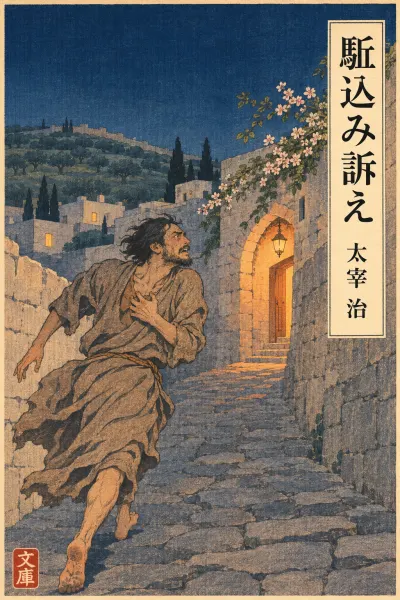
Part 6 of 7 · JLPT N2
駈込み訴え Kakekomi Uttae, part 6: The Morsel of Bread, and Thirty Pieces of Silver
In this part
The narrator's heart had truly changed, but when the master says he is not clean, his shame turns into rage and he resolves to sell him and die with him. At the supper the master foretells his betrayal and presses a morsel of bread into the narrator's mouth, and the narrator runs off to the authorities to reveal where the master is praying. Rattled by the birds singing in the night, he first refuses the thirty pieces of silver and then accepts them as a merchant's revenge.
AI translation · independently checked
けれども、その時は、ちがっていたのだ。But at that moment, I was different.
断然、私は、ちがっていたのだ!I was absolutely different!
私は潔くなっていたのだ。I had become clean.
私の心は変っていたのだ。My heart had changed.
ああ、あの人はそれを知らない。Oh, that man doesn't know it.
それを知らない。He doesn't know it.
ちがう!That's not true!
ちがいます、と喉まで出かかった絶叫を、私の弱い卑屈な心が、唾を呑みこむように、呑みくだしてしまった。"That's not so!" The cry had risen as far as my throat, but my weak, servile heart swallowed it back down, the way you swallow spit.
言えない。I couldn't say it.
何も言えない。I couldn't say anything at all.
あの人からそう言われてみれば、私はやはり潔くなっていないのかも知れないと気弱く肯定する僻んだ気持が頭をもたげ、とみるみるその卑屈の反省が、醜く、黒くふくれあがり、私の五臓六腑を駈けめぐって、逆にむらむら憤怒の念が炎を挙げて噴出したのだ。Once he had said that to me, a warped feeling raised its head and meekly granted that perhaps I had not become clean after all. Before my eyes that servile self-reproach swelled up, ugly and black, and raced through every organ in my body, until instead a surging rage burst out in flames.
ええっ、だめだ。Ah, it's hopeless.
私は、だめだ。I'm hopeless.
あの人に心の底から、きらわれている。He hates me from the bottom of his heart.
売ろう。I'll sell him.
売ろう。I'll sell him.
あの人を、殺そう。I'll kill that man.
そうして私も共に死ぬのだ、と前からの決意に再び眼覚め、私はいまは完全に、復讐の鬼になりました。"And then I will die with him." I woke once more to the resolve I had held for a long time, and now I became, completely, a demon of revenge.
あの人は、私の内心の、ふたたび三たび、どんでん返して変化した大動乱には、お気づきなさることの無かった様子で、やがて上衣をまとい服装を正し、ゆったりと席に坐り、実に蒼ざめた顔をして、「私がおまえたちの足を洗ってやったわけを知っているか。That man seemed not to notice the great upheaval inside me, which had turned itself over and changed twice, three times. Presently he put on his outer robe, set his clothes in order, sat down calmly in his seat and, with a truly pale face, said, "Do you know why I washed your feet?
おまえたちは私を主と称え、また師と称えているようだが、それは間違いないことだ。私はおまえたちの主、または師なのに、それでもなお、おまえたちの足を洗ってやったのだから、おまえたちもこれからは互いに仲好く足を洗い合ってやるように心がけなければなるまい。You seem to praise me as Lord and as Teacher, and in that you are not mistaken. Since I, your Lord and your Teacher, have washed your feet all the same, you too must from now on take care to wash one another's feet in friendship.
私は、おまえたちと、いつ迄も一緒にいることが出来ないかも知れぬから、いま、この機会に、おまえたちに模範を示してやったのだ。I may not be able to stay with you forever, so now, while I have the chance, I have set you an example.
私のやったとおりに、おまえたちも行うように心がけなければならぬ。師は必ず弟子より優れたものなのだから、よく私の言うことを聞いて忘れぬようになさい」ひどく物憂そうな口調で言って、音無しく食事を始め、ふっと、「おまえたちのうちの、一人が、私を売る」と顔を伏せ、呻くような、歔欷なさるような苦しげの声で言い出したので、弟子たちすべて、のけぞらんばかりに驚き、一斉に席を蹴って立ち、あの人のまわりに集っておのおの、主よ、私のことですか、主よ、それは私のことですかと、罵り騒ぎ、あの人は死ぬる人のように幽かに首を振り、「私がいま、その人に一つまみのパンを与えます。You must take care to do just as I have done. A teacher is always greater than his disciples, so listen well to what I say and do not forget it." He said this in a terribly weary tone and quietly began to eat. Then suddenly he bowed his face and, in a pained voice, as if groaning, as if sobbing, began to say, "One of you will sell me." All the disciples were so startled they nearly fell over backwards. As one they kicked back their seats and stood up, crowded around that man, and each of them clamoured and shouted, "Lord, is it me? Lord, is it me you mean?" That man faintly shook his head, like someone about to die, and said, "I will now give that one a morsel of bread.
その人は、ずいぶん不仕合せな男なのです。ほんとうに、その人は、生れて来なかったほうが、よかった」と意外にはっきりした語調で言って、一つまみのパンをとり腕をのばし、あやまたず私の口にひたと押し当てました。That one is a most unfortunate man. Truly, it would have been better for him never to have been born." He said it in a surprisingly clear voice, took a morsel of bread, stretched out his arm, and without missing pressed it right against my mouth.
私も、もうすでに度胸がついていたのだ。By then I too had already found my nerve.
恥じるよりは憎んだ。Rather than feel ashamed, I hated.
あの人の今更ながらの意地悪さを憎んだ。I hated his spite, still showing itself even now.
このように弟子たち皆の前で公然と私を辱かしめるのが、あの人の之までの仕来りなのだ。Humiliating me openly like this in front of all the disciples has always been his habit.
火と水と。Fire and water.
永遠に解け合う事の無い宿命が、私とあいつとの間に在るのだ。Between me and that fellow lies a fate by which we can never, ever blend together.
犬か猫に与えるように、一つまみのパン屑を私の口に押し入れて、それがあいつのせめてもの腹いせだったのか。Shoving a morsel of bread crumbs into my mouth, the way you'd feed a dog or a cat: was that the best bit of spite he could manage?
ははん。Ha!
ばかな奴だ。What a fool.
旦那さま、あいつは私に、おまえの為すことを速かに為せと言いました。Sir, that fellow told me, "Whatever you are going to do, do it quickly."
私はすぐに料亭から走り出て、夕闇の道をひた走りに走り、ただいまここに参りました。At once I ran out of the house where we were dining, ran and ran along the road in the evening dusk, and have just now arrived here.
そうして急ぎ、このとおり訴え申し上げました。And so, in haste, I have laid this accusation before you, as you see.
さあ、あの人を罰して下さい。Now, punish that man.
どうとも勝手に、罰して下さい。Punish him however you please.
捕えて、棒で殴って素裸にして殺すがよい。Seize him, beat him with sticks, strip him naked and kill him.
もう、もう私は我慢ならない。I can't stand it any longer, not any longer.
あれは、いやな奴です。He's a hateful fellow.
ひどい人だ。A cruel man.
私を今まで、あんなにいじめた。He's tormented me so, all this time.
はははは、ちきしょうめ。Ha ha ha ha, damn him!
あの人はいま、ケデロンの小川の彼方、ゲッセマネの園にいます。That man is now beyond the brook of Kidron, in the garden of Gethsemane.
もうはや、あの二階座敷の夕餐もすみ、弟子たちと共にゲッセマネの園に行き、いまごろは、きっと天へお祈りを捧げている時刻です。The supper in that upstairs room is already over, and he has gone with the disciples to the garden of Gethsemane. By now it is surely the hour when he is offering up his prayers to Heaven.
弟子たちのほかには誰も居りません。No one is there but the disciples.
今なら難なくあの人を捕えることが出来ます。Right now you could seize him with no trouble at all.
ああ、小鳥が啼いて、うるさい。Oh, the little birds are singing. What a racket.
今夜はどうしてこんなに夜鳥の声が耳につくのでしょう。Why do the night birds' voices grate on my ears so tonight?
私がここへ駈け込む途中の森でも、小鳥がピイチク啼いて居りました。In the woods on my way running here, too, little birds were twittering away.
夜に囀る小鳥は、めずらしい。Little birds singing at night: that's unusual.
私は子供のような好奇心でもって、その小鳥の正体を一目見たいと思いました。With a child's curiosity, I wanted just one glimpse of what kind of bird it really was.
立ちどまって首をかしげ、樹々の梢をすかして見ました。I stopped, tilted my head, and peered up through the treetops.
ああ、私はつまらないことを言っています。Oh, I'm talking nonsense.
ごめん下さい。Forgive me.
旦那さま、お仕度は出来ましたか。Sir, are your preparations made?
ああ楽しい。Ah, what fun.
いい気持。What a fine feeling.
今夜は私にとっても最後の夜だ。Tonight is my last night too.
旦那さま、旦那さま、今夜これから私とあの人と立派に肩を接して立ち並ぶ光景を、よく見て置いて下さいまし。Sir, sir, please take a good look tonight at the sight of that man and me standing side by side, proudly shoulder to shoulder.
私は今夜あの人と、ちゃんと肩を並べて立ってみせます。Tonight I'll show you. I'll stand right there, shoulder to shoulder with that man.
あの人を怖れることは無いんだ。There's no need to fear him.
卑下することは無いんだ。No need to humble myself.
私はあの人と同じ年だ。I'm the same age as he is.
同じ、すぐれた若いものだ。Just as fine a young man.
ああ、小鳥の声が、うるさい。Oh, the little birds' voices are such a racket.
耳についてうるさい。They grate on my ears. Such a racket.
どうして、こんなに小鳥が騒ぎまわっているのだろう。Why are the little birds making such a fuss?
ピイチクピイチク、何を騒いでいるのでしょう。Tweet-tweet, tweet-tweet: what are they making such a fuss about?
おや、そのお金は?Oh? What's that money?
私に下さるのですか、あの、私に、三十銀。You're giving it to me? Er, to me? Thirty pieces of silver.
なる程、はははは。I see. Ha ha ha ha.
いや、お断り申しましょう。No, I must respectfully decline.
殴られぬうちに、その金ひっこめたらいいでしょう。You'd better put that money away before you get hit.
金が欲しくて訴え出たのでは無いんだ。I didn't come forward to accuse him because I wanted money!
ひっこめろ!Put it away!
いいえ、ごめんなさい、いただきましょう。No, forgive me. I'll take it.
そうだ、私は商人だったのだ。That's right, I was a merchant.
金銭ゆえに、私は優美なあの人から、いつも軽蔑されて来たのだっけ。It was because of money that that elegant man always looked down on me, wasn't it.
いただきましょう。I'll take it.
私は所詮、商人だ。In the end, I'm a merchant.
いやしめられている金銭で、あの人に見事、復讐してやるのだ。With the very money he despised, I'll take a splendid revenge on him.
これが私に、一ばんふさわしい復讐の手段だ。This is the means of revenge that suits me best.
Vocabulary
| Word | Meaning | JLPT |
|---|---|---|
| 潔くいさぎよい | clean, pure of heart; blamelessdictionary form: 潔いUsually means 'manly, graceful in accepting defeat'. Here it echoes 'clean' in the foot-washing scene. | — |
| 絶叫ぜっきょう | a scream, a desperate cry | — |
| 卑屈ひくつ | servile, cringing, abjectな-adjective. It is a key word for the narrator's self-image. | — |
| 僻んだひがむ | to be warped or resentful; to feel slighteddictionary form: 僻むUsually written in kana (ひがむ). | — |
| 憤怒ふんぬ | fury, rageLiterary word. ふんど is also a possible reading. | — |
| 復讐ふくしゅう | revenge復讐の鬼 means 'a demon of revenge', someone possessed by vengeance. | — |
| 物憂ものうい | weary, listless, melancholydictionary form: 物憂いHere it appears as 物憂そう, 'looking weary'. | — |
| 辱かしめるはずかしめる | to humiliate, to disgracedictionary form: 辱めるToday this is normally written 辱める. | — |
| 宿命しゅくめい | fate, destiny (inescapable) | N1 |
| 腹いせはらいせ | spiteful revenge, venting one's angerせめてもの腹いせ means 'at least a little spite'. | — |
| 速かにすみやか | quickly, promptlydictionary form: 速やかThis is a formal word. The modern spelling is 速やかに. | — |
| 卑下ひげ | humbling oneself, self-abasement | — |
| 軽蔑けいべつ | contempt; to look down onHere it is used in the passive: 軽蔑されて来た, 'have been despised'. | N1 |
| 所詮しょせん | after all, in the end (resigned)It carries a nuance of resignation. | — |
Grammar
〜かかる N2 to be about to; to start to (but not finish)
Attached to the masu-stem, かかる shows an action that has begun but has not been completed. In 喉まで出かかった絶叫, the cry reached the throat but never came out.
ちがいます、と喉まで出かかった絶叫を
the cry, 'That's not true', that had risen as far as my throat
〜なければなるまい N2 must surely; will have to
まい is a literary negative volitional or conjectural ending. なければなるまい is a softened, more formal version of なければならない, giving the obligation a tone of 'surely you must'.
おまえたちもこれからは互いに仲好く足を洗い合ってやるように心がけなければなるまい。
you too must from now on take care to wash one another's feet in friendship.
〜んばかりに N1 as if about to; almost to the point of
The ない-stem plus ん(ばかり) comes from the classical volitional ending む. It describes a reaction so strong that the action nearly happens: the disciples almost fell over backwards.
弟子たちすべて、のけぞらんばかりに驚き
all the disciples were so startled they nearly fell over backwards
〜ないうちに(〜ぬうちに) N3 before something happens
The form means 'while X has not yet happened', that is, 'before X'. ぬ is the older negative ending for ない.
殴られぬうちに、その金ひっこめたらいいでしょう。
You'd better put that money away before you get hit.
〜っけ N3 recalling something; 'wasn't it?'
Added to a past form, っけ expresses remembering something or half asking oneself about it. The narrator is reminding himself bitterly of why he was despised.
金銭ゆえに、私は優美なあの人から、いつも軽蔑されて来たのだっけ。
It was because of money that that elegant man always looked down on me, wasn't it.
〜てみせる N3 to show that one will do something; to do it and prove it
The pattern expresses strong determination to do something in front of others. Here the narrator vows to prove himself the master's equal.
私は今夜あの人と、ちゃんと肩を並べて立ってみせます。
Tonight I'll show you. I'll stand right there, shoulder to shoulder with that man.