Part 1 of 8 · JLPT N1
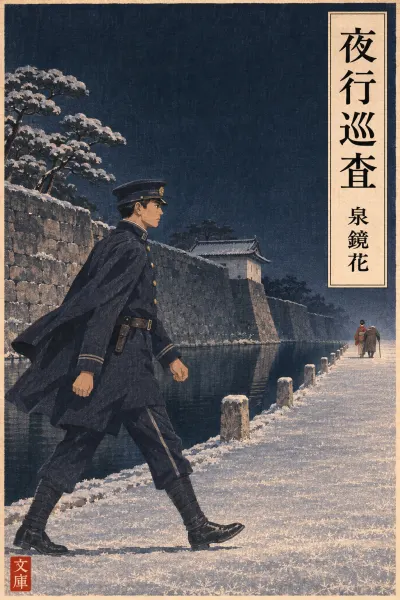
夜行巡査 Yakōjunsa, part 1: A Young Workman Defends an Old Rickshaw Man
In this part
Late on a freezing night by the moat, a constable has just scolded an elderly rickshaw man because his torn drawers leave his legs bare. A young workman who saw it furiously curses the absent officer and takes the old man's side. Moved to pity, he asks about the old man's family and learns that his only son has been taken for the army, so the old man must pull his son's rickshaw himself, earning almost nothing.
AI translation · independently checked
一I
「こう爺さん、おめえどこだ」と職人体の壮佼は、そのかたわらなる車夫の老人に向かいて問い懸けたり。"Say, grandad, where d'you hail from?" asked the young man, who had the look of a tradesman, turning to the old rickshaw man beside him.
車夫の老人は年紀すでに五十を越えて、六十にも間はあらじと思わる。The old rickshaw man seemed already past fifty in years, and not far short of sixty.
餓えてや弱々しき声のしかも寒さにおののきつつ、In a voice feeble perhaps from hunger, and trembling moreover with the cold,
「どうぞまっぴら御免なすって、向後きっと気を着けまする。へいへい」"Oh, I do humbly beg your pardon, sir, I'll be sure to take care from now on. Yes, sir, yes, sir."
と、どぎまぎして慌ておれり。he said, flustered and all in a panic.
「爺さん慌てなさんな。こう己ゃ巡査じゃねえぜ。え、おい、かわいそうによっぽど面食らったと見える、全体おめえ、気が小さすぎらあ。"Easy, grandad, don't get yourself in a flap. Look here, I ain't no copper. Eh, say, poor fellow, seems you've had a proper fright. Truth is, you're a sight too timid."
なんの縛ろうとは謂やしめえし、あんなにびくびくしねえでものことさ。おらあ片一方で聞いててせえ少癇癪に障って堪えられなかったよ。"It ain't as if he said he'd tie you up, so there was no call to go quaking like that. Even just listening from the side, I got so riled I could hardly bear it."
え、爺さん、聞きゃおめえの扮装が悪いとって咎めたようだっけが、それにしちゃあ咎めようが激しいや、ほかにおめえなんぞ仕損いでもしなすったのか、ええ、爺さん」"Eh, grandad, from what I heard he was on at you because your clothes weren't decent, but even so he came down mighty hard. Did you go and slip up some other way as well, eh, grandad?"
問われて老車夫は吐息をつき、Thus questioned, the old rickshaw man heaved a sigh.
「へい、まことにびっくりいたしました。巡査さんに咎められましたのは、親父今がはじめてで、はい、もうどうなりますることやらと、人心地もござりませなんだ。"Yes, sir, I was truly startled. This is the first time ever this old fellow has been taken to task by a constable, sir, and I wondered whatever would become of me, sir, and I was clean out of my wits."
いやもうから意気地がござりません代わりにゃ、けっして後ろ暗いことはいたしません。"Why, I've no backbone to speak of, but to make up for it I never do anything shady."
ただいまとても別にぶちょうほうのあったわけではござりませんが、股引きが破れまして、膝から下が露出しでござりますので、見苦しいと、こんなにおっしゃります、へい、御規則も心得ないではござりませんが、つい届きませんもんで、へい、だしぬけにこら!"Nor was there any particular misconduct just now, but my drawers are torn and I'm bare from the knee down, so he says it's unseemly, like that, sir. It isn't that I don't know the regulations, sir, but I just can't manage it, sir, and so when out of nowhere he bellowed 'Hey, you!'
って喚かれましたのに驚きまして、いまだに胸がどきどきいたしまする」at me like that, I got such a fright that my heart's pounding still."
壮佼はしきりに頷けり。The young man nodded again and again.
「むむ、そうだろう。気の小さい維新前の者は得て巡的をこわがるやつよ。なんだ、高がこれ股引きがねえからとって、ぎょうさんに咎め立てをするにゃあ当たらねえ。"Mm, I'll bet. Timid folk from before the Restoration are always scared of the coppers. What of it? Just because a fellow's got no drawers on, that's no reason to make such a song and dance about it."
主の抱え車じゃあるめえし、ふむ、よけいなおせっかいよ、なあ爺さん、向こうから謂わねえたって、この寒いのに股引きはこっちで穿きてえや、そこがめいめいの内証で穿けねえから、穿けねえのだ。"It ain't as if you were pulling some master's private rickshaw. Hmph, it's none of his business, eh, grandad? Without him telling us, on a cold night like this we'd want our drawers on ourselves. It's that every man has his own private troubles, and if he can't wear 'em, he can't, that's all."
何も穿かねえというんじゃねえ。しかもお提灯より見っこのねえ闇夜だろうじゃねえか、風俗も糸瓜もあるもんか。"It ain't as if he's wearing nothing at all. And on a pitch-black night at that, when there's nothing to see by but your lantern. Decency be hanged!"
うぬが商売で寒い思いをするからたって、何も人民にあたるにゃあ及ばねえ。ん! 寒鴉め。"Just because his own trade makes him feel the cold, there's no call to take it out on the common folk. Hah! Winter crow!"
あんなやつもめったにゃねえよ、往来の少ない処なら、昼だってひよぐるぐらいは大目に見てくれらあ、業腹な。"You don't often meet one like him. Where there's not much traffic, they'll turn a blind eye even if a fellow takes a leak in broad daylight. It makes my blood boil."
おらあ別に人の褌襠で相撲を取るにもあたらねえが、これが若いものでもあることか、かわいそうによぼよぼの爺さんだ。"Not that I've any call to go wrestling in another man's loincloth, but it ain't as if this was some young fellow. It's a poor doddering old man!"
こう、腹あ立てめえよ、ほんにさ、このざまで腕車を曳くなあ、よくよくのことだと思いねえ。"Now, don't you take offence, but honestly, when a man pulls a rickshaw in this state, you've got to reckon he's been driven to it."
チョッ、べら棒め、サーベルがなけりゃ袋叩きにしてやろうものを、威張るのもいいかげんにしておけえ。"Tch, the blasted fool! If it weren't for that sabre of his, we'd all set on him and give him a drubbing. Throwing his weight about! He'd best know when to stop."
へん、お堀端あこちとらのお成り筋だぞ、まかり間違やあ胴上げして鴨のあしらいにしてやらあ」"Hah, this moat-side is our own stamping ground, see! One false step and we'll heave him up and pitch him in to the ducks!"
口を極めてすでに立ち去りたる巡査を罵り、満腔の熱気を吐きつつ、思わず腕を擦りしが、四谷組合と記したる煤け提灯の蝋燭を今継ぎ足して、力なげに梶棒を取り上ぐる老車夫の風采を見て、壮佼は打ち悄るるまでに哀れを催し、「そうして爺さん稼人はおめえばかりか、孫子はねえのかい」Having reviled with every word at his command the constable who had already gone, and breathed out the heat that filled his breast, he had rubbed his arm without thinking; but when he saw the figure of the old rickshaw man, who had just put a fresh candle into his soot-stained lantern marked "Yotsuya Guild" and was feebly lifting the shafts, the young man was moved to such pity that he grew quite subdued. "And tell me, grandad, are you the only breadwinner? Have you no children or grandchildren?"
優しく謂われて、老車夫は涙ぐみぬ。Spoken to so kindly, the old rickshaw man's eyes filled with tears.
「へい、ありがとう存じます、いやも幸いと孝行なせがれが一人おりまして、よう稼いでくれまして、おまえさん、こんな晩にゃ行火を抱いて寝ていられるもったいない身分でござりましたが、せがれはな、おまえさん、この秋兵隊に取られましたので、あとには嫁と孫が二人みんな快う世話をしてくれますが、なにぶん活計が立ちかねますので、蛙の子は蛙になる、親仁ももとはこの家業をいたしておりましたから、年紀は取ってもちっとは呼吸がわかりますので、せがれの腕車をこうやって曳きますが、何が、達者で、きれいで、安いという、三拍子も揃ったのが競争をいたしますのに、私のような腕車には、それこそお茶人か、よっぽど後生のよいお客でなければ、とても乗ってはくれませんで、稼ぐに追い着く貧乏なしとはいいまするが、どうしていくら稼いでもその日を越すことができにくうござりますから、自然装なんぞも構うことはできませんので、つい、巡査さんに、はい、お手数を懸けるようにもなりまする」"Yes, sir, thank you kindly. Why, by good fortune I have one dutiful son, and he worked hard for me, sir, so that on nights like this I could lie abed hugging a foot-warmer, a better lot than I deserved. But my son, you see, sir, was taken for a soldier this autumn, and the ones left behind, his wife and two grandchildren, all look after me gladly, but we just can't make ends meet. The frog's child grows up a frog, as they say, and this old man used to follow this trade himself, so old as I am I still have a bit of the knack, and that's how I come to be pulling my son's rickshaw like this. But what with the ones that have all three virtues, sturdy and clean and cheap, all competing for fares, nobody would ever ride in a rickshaw like mine unless he was an eccentric, or a customer with a very kind heart. They say no poverty can catch up with a man who works, but however hard I work it's a struggle just to get through the day, so naturally I can't give any thought to my clothes and such, and so, sir, I end up putting the constables to trouble."
Vocabulary
| Word | Meaning | JLPT |
|---|---|---|
| 壮佼わかもの | young man, ladLiterary kanji spelling for 若者, which is the usual way to write it today. | — |
| 車夫しゃふ | rickshaw man, rickshaw pullerA common Meiji-era occupation. | — |
| 巡査じゅんさ | police constableThe workman calls them 巡的, a slangy word, and the old man uses the polite おまわりさん. | N2 |
| 咎めたとがめる | to reprimand, to take someone to taskdictionary form: 咎める咎め立て means needless fault-finding. | N1 |
| 人心地ひとごこち | one's composure, feeling oneself again人心地もない: to be beside oneself with fear. | — |
| 後ろ暗いうしろぐらい | shady, underhandLiterally 'dark behind': something you would hide. | — |
| 股引きももひき | close-fitting work drawers, long underpantsRickshaw men were required to wear them, and the constable objected because the old man's were torn. | — |
| 内証ないしょう | private circumstances, one's financesRelated to 内緒 ('secret'); here it means one's private means. | — |
| 業腹ごうはら | infuriating, gallingAn old-fashioned exclamation of anger. | — |
| 腕車くるま | rickshawA Meiji spelling; normally 人力車 (じんりきしゃ). | — |
| 梶棒かじぼう | shafts (of a rickshaw or cart) | — |
| 哀れを催しあわれをもよおす | to be moved to pitydictionary form: 哀れを催す催す here means 'to feel (an emotion) welling up'. | — |
| 行火あんか | portable foot-warmer (charcoal brazier)Hugging one in bed was a winter comfort. | — |
| 活計くらし | livelihood, livingA literary spelling of 暮らし. 暮らしが立たない means 'can't make ends meet'. | — |
Grammar
〜たり (classical) N1 classical perfective / narrative past
In bungo narration, 〜たり attached to the 連用形 marks a completed action, like modern 〜た. It is not the listing 〜たり〜たり of modern Japanese.
そのかたわらなる車夫の老人に向かいて問い懸けたり。
asked, turning to the old rickshaw man beside him.
〜じ N1 classical negative conjecture: 'probably not'
じ is the classical negative counterpart of む and equals modern 〜ないだろう. あらじ means 'there is probably not', so 間はあらじ means 'not far off'.
六十にも間はあらじと思わる
seemed not far short of sixty
〜つつ N2 while doing
A written-style equivalent of 〜ながら. It joins two simultaneous actions, here trembling while speaking.
寒さにおののきつつ
trembling with the cold
〜じゃあるめえし N2 it's not as if…
This is the Edo-speech form of 〜じゃあるまいし. It dismisses a situation as obviously untrue in order to argue a point. Similar べらんめえ sound changes run through this speech: ない→ねえ, まい→めえ, たい→てえ.
主の抱え車じゃあるめえし
It ain't as if you were pulling some master's private rickshaw.
〜には及ばない N2 there is no need to…
Here it is contracted to にゃあ及ばねえ in rough speech. It says that an action is unnecessary or uncalled for. The same idea appears as 〜にゃあ当たらねえ in the earlier speech.
何も人民にあたるにゃあ及ばねえ
there's no call to take it out on the common folk