Part 9 of 9 · JLPT N2
おじいさんのランプ Ojiisan no Ranpu, part 9: The Last Lamps and a Grandfather's Lesson
In this part
Minosuke smashes his lamps one by one until tears stop him, then gives up the lamp trade and becomes a bookseller in town. Back in the present, it is revealed that Minosuke is Tōichi's grandfather. He admits that destroying the lamps was rash, but says he is proud of how he let his old trade go when Japan moved forward. Tōichi looks at him with new respect.
AI translation · independently checked
と巳之助はいった。said Minosuke.
そしてまた一つ石ころを拾った。And he picked up another stone.
二番目に大きかったランプが、パリーンと鳴って消えた。The second-largest lamp shattered with a crash and went dark.
「世の中は進んだ。電気の時世になった」"The world has moved on. This is the age of electricity now."
三番目のランプを割ったとき、巳之助はなぜか涙がうかんで来て、もうランプに狙いを定めることができなかった。When he smashed the third lamp, tears somehow welled up in Minosuke's eyes, and he could no longer take aim at the lamps.
こうして巳之助は今までのしょうばいをやめた。And so Minosuke gave up the trade he had followed until then.
それから町に出て、新しいしょうばいをはじめた。Then he went into town and started a new business.
本屋になったのである。He became a bookseller.
**
「巳之助さんは今でもまだ本屋をしている。もっとも今じゃだいぶ年とったので、息子が店はやっているがね」"Minosuke is still a bookseller even now. Mind you, he's got pretty old these days, so it's his son who runs the shop."
と東一君のおじいさんは話をむすんで、冷めたお茶をすすった。With that, Tōichi's grandfather brought his story to a close and sipped his cold tea.
巳之助さんというのは東一君のおじいさんのことなので、東一君はまじまじとおじいさんの顔を見た。Minosuke was, in fact, Tōichi's own grandfather, and so Tōichi stared hard at his grandfather's face.
いつの間にか東一君はおじいさんのまえに坐りなおして、おじいさんのひざに手をおいたりしていたのである。Without realising it, Tōichi had shifted to sit right in front of his grandfather, and had even rested his hands on the old man's knees.
「そいじゃ、残りの四十七のランプはどうした?」"So what happened to the other forty-seven lamps?"
と東一君はきいた。asked Tōichi.
「知らん。次の日、旅の人が見つけて持ってったかも知れない」"Don't know. Maybe some traveller found them the next day and carried them off."
「そいじゃ、家にはもう一つもランプなしになっちゃった?」"So there weren't any lamps left at home at all?"
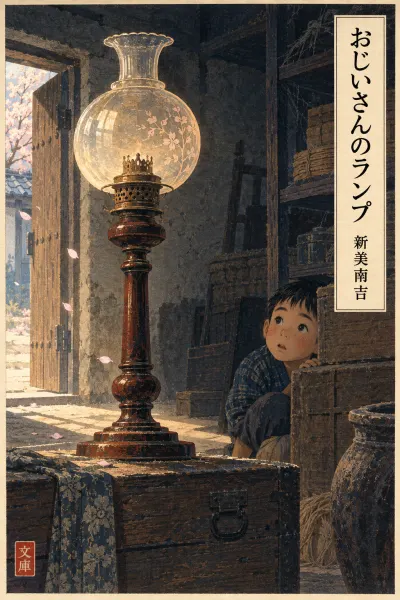
「うん、ひとつもなし。この台ランプだけが残っていた」"Nope, not a single one. Only this table lamp was left."
とおじいさんは、ひるま東一君が持出したランプを見ていった。said Grandfather, looking at the lamp Tōichi had brought out earlier that day.
「損しちゃったね。四十七も誰かに持ってかれちゃって」"That was a waste, wasn't it? Forty-seven of them, taken away by somebody."
と東一君がいった。said Tōichi.
「うん損しちゃった。今から考えると、何もあんなことをせんでもよかったとわしも思う。"Yes, it was a waste. Looking back on it now, I think so myself: there was no need to go and do a thing like that.
岩滑新田に電燈がひけてからでも、まだ五十ぐらいのランプはけっこう売れたんだからな。Even after electric light was put in at Yanabe Shinden, fifty or so lamps would still have sold well enough, you see.
岩滑新田の南にある深谷なんという小さい村じゃ、まだ今でもランプを使っているし、ほかにも、ずいぶんおそくまでランプを使っていた村は、あったのさ。In a little village called Fukaya, south of Yanabe Shinden, they still use lamps even today, and there were other villages too that kept using lamps until quite late.
しかし何しろわしもあの頃は元気がよかったんでな。思いついたら、深くも考えず、ぱっぱっとやってしまったんだ」But the thing is, I was full of fire in those days. Once an idea came to me, I'd go and do it, just like that, without thinking it through."
「馬鹿しちゃったね」"That was silly of you."
と東一君は孫だからえんりょなしにいった。said Tōichi, who didn't hold back, since he was the old man's grandson.
「うん、馬鹿しちゃった。しかしね、東坊――」"Yes, it was silly. But listen, Tō-bō—"
とおじいさんは、きせるを膝の上でぎゅッと握りしめていった。said Grandfather, gripping his long-stemmed pipe tightly on his knee.
「わしのやり方は少し馬鹿だったが、わしのしょうばいのやめ方は、自分でいうのもなんだが、なかなかりっぱだったと思うよ。"The way I went about it was a bit foolish, but the way I gave up my trade was, if I say so myself, a pretty fine thing.
わしの言いたいのはこうさ、日本がすすんで、自分の古いしょうばいがお役に立たなくなったら、すっぱりそいつをすてるのだ。What I'm trying to say is this: when Japan moves forward and your old trade is no longer of any use, you throw it away, clean and without regret.
いつまでもきたなく古いしょうばいにかじりついていたり、自分のしょうばいがはやっていた昔の方がよかったといったり、世の中のすすんだことをうらんだり、そんな意気地のねえことは決してしないということだ」It means never doing anything so spineless as clinging shabbily to your old trade forever, or saying the old days were better when your business was thriving, or resenting the world for moving forward."
東一君は黙って、ながい間おじいさんの、小さいけれど意気のあらわれた顔をながめていた。Tōichi said nothing, and for a long time he gazed at his grandfather's face, small but full of spirit.
やがて、いった。At last he spoke.
「おじいさんはえらかったんだねえ」"You were really something, Grandfather."
そしてなつかしむように、かたわらの古いランプを見た。And he looked fondly at the old lamp beside them.
Vocabulary
| Word | Meaning | JLPT |
|---|---|---|
| 時世じせい | the times, the ageA slightly formal word for the era someone lives in. | — |
| 狙いを定めるねらいをさだめる | to take aim狙い (aim, target) + 定める (to fix, decide). | — |
| すすったすする | to sip, to slurpdictionary form: すするUsed for tea and noodles. The sound is part of the meaning. | — |
| まじまじとまじまじと | (to stare) hard, intentlyUsed with 見る: to look at someone closely, often in surprise. | — |
| 坐りなおしてすわりなおす | to shift and sit again, to settle into a new seatdictionary form: 坐りなおす〜なおす means to redo. 坐る is an older spelling of 座る. | — |
| 損そん | loss, waste損する means to lose out. The opposite is 得 (とく). | N3 |
| 電燈でんとう | electric lightOlder spelling of 電灯. 電燈がひける means electric lines are brought in. | N4 |
| 何しろなにしろ | anyway, the thing isIntroduces the main reason for something. | N2 |
| えんりょえんりょ | reserve, holding backdictionary form: 遠慮えんりょなしに means frankly, without holding back. | N4 |
| きせるきせる | long-stemmed Japanese tobacco pipedictionary form: 煙管A thin pipe with a small metal bowl, common before cigarettes. | — |
| すっぱりすっぱり | cleanly, completely, once and for allDescribes a clean cut. Here it means giving something up with no regrets. | — |
| かじりついてかじりつく | to cling todictionary form: かじりつくThe literal meaning is to bite into and hold on. Used figuratively for clinging to a job or a place. | — |
| 意気地いくじ | backbone, gutsUsually appears in the negative: 意気地のない means spineless. ねえ is a rough form of ない. | — |
| なつかしむなつかしむ | to think of fondly, to feel nostalgic fordictionary form: 懐かしむVerb form of the adjective 懐かしい. | — |
Grammar
〜のである N2 explanatory or emphatic ending in written style
This is a written, literary form of 〜のだ. It gives a conclusion or explanation with emphasis. Here it states the outcome of the story: Minosuke became a bookseller.
本屋になったのである。
He became a bookseller.
いつの間にか N3 before one knew it, without noticing
This describes something that happened without the person being aware of it. Here Tōichi has moved closer to his grandfather without realising it, because he was so absorbed in the story.
いつの間にか東一君はおじいさんのまえに坐りなおして
Without realising it, Tōichi had shifted to sit right in front of his grandfather
〜かも知れない N4 might, perhaps
This expresses a possibility the speaker is not sure about. It attaches to the plain form. 持ってった is a casual contraction of 持って行った.
旅の人が見つけて持ってったかも知れない
maybe some traveller found them and carried them off
〜なくてもよかった(〜せんでもよかった) N3 didn't need to, there was no need to
〜なくてもいい means it is fine not to do something. In the past tense it expresses regret over an unnecessary action. せんでも is a dialectal or old-fashioned form of しなくても.
何もあんなことをせんでもよかったとわしも思う
I think so myself: there was no need to go and do a thing like that
自分でいうのもなんだが N2 if I say so myself
This set phrase softens self-praise. なん stands for something like 'awkward': it feels awkward to say it about oneself. The phrase comes right before the boast.
わしのしょうばいのやめ方は、自分でいうのもなんだが、なかなかりっぱだったと思うよ
the way I gave up my trade was, if I say so myself, a pretty fine thing
〜たり〜たり N4 doing things like A and B
This lists representative actions without claiming the list is complete. Here the grandfather lists several spineless behaviours, then sums them all up with そんな…こと.
古いしょうばいにかじりついていたり、自分のしょうばいがはやっていた昔の方がよかったといったり、世の中のすすんだことをうらんだり
clinging to your old trade, saying the old days were better when your business was thriving, or resenting the world for moving forward