Part 1 of 10 · JLPT N2
鮨 Sushi, part 1: A Quiet Sushi Shop Among the Slopes
In this part
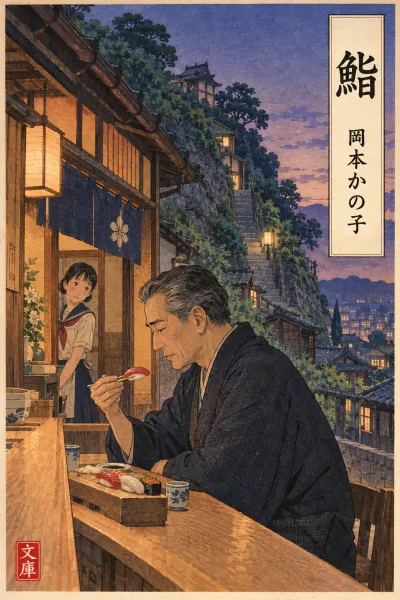
In a hilly Tokyo neighbourhood between the downtown and the uptown districts stands Fukuzushi, a small sushi shop that Tomoyo's parents took over and that gradually began to prosper. Its varied regulars come to escape the pressures of daily life and to enjoy small, carefree pleasures. In the late afternoon the shop is at its busiest, and the owner sometimes brings out a plate of pressed sushi for them himself.
AI translation · independently checked
東京の下町と山の手の境い目といったような、ひどく坂や崖の多い街がある。In Tōkyō there is a neighbourhood full of slopes and cliffs that lies, as it were, on the boundary between the old downtown and the hilly uptown districts.
表通りの繁華から折れ曲って来たものには、別天地の感じを与える。Anyone who turns off the bustle of the main street and wanders in feels as if they have entered another world.
つまり表通りや新道路の繁華な刺戟に疲れた人々が、時々、刺戟を外ずして気分を転換する為めに紛れ込むようなちょっとした街筋――It is, in short, one of those modest little streets where people worn out by the busy stimulation of the main streets and the new roads slip away now and then to escape that stimulation and change their mood—
福ずしの店のあるところは、この町でも一ばん低まったところで、二階建の銅張りの店構えは、三四年前表だけを造作したもので、裏の方は崖に支えられている柱の足を根つぎして古い住宅のままを使っている。Fukuzushi stands at the lowest point in the whole neighbourhood; its two-storey, copper-clad shopfront came from remodelling only the front three or four years ago, while at the back the old house is still used as it was, the feet of its pillars, which are supported by the cliff, having been spliced with new timber.
古くからある普通の鮨屋だが、商売不振で、先代の持主は看板ごと家作をともよの両親に譲って、店もだんだん行き立って来た。It had long been an ordinary sushi shop, but business was poor, and the previous owner handed the building, signboard and all, over to Tomoyo's parents, after which the shop gradually began to prosper.
新らしい福ずしの主人は、もともと東京で屈指の鮨店で腕を仕込んだ職人だけに、周囲の状況を察して、鮨の品質を上げて行くに造作もなかった。The new owner of Fukuzushi had originally trained his skills at one of the finest sushi shops in Tōkyō, so it was no trouble at all for him to read the local situation and steadily raise the quality of his sushi.
前にはほとんど出まえだったが、新らしい主人になってからは、鮨盤の前や土間に腰かける客が多くなったので、始めは、主人夫婦と女の子のともよ三人きりの暮しであったが、やがて職人を入れ、子供と女中を使わないでは間に合わなくなった。In the past it had done almost nothing but deliveries, but under the new owner more and more customers sat at the sushi counter or in the earth-floored front room, so although at first the household had been just the three of them—the owner, his wife and their daughter Tomoyo—before long they could not manage without taking on a sushi chef and employing a boy and a maid.
店へ来る客は十人十いろだが、全体に就ては共通するものがあった。The customers who came to the shop were all different, but there was something they had in common.
後からも前からもぎりぎりに生活の現実に詰め寄られている、その間をぽっと外ずして気分を転換したい。Hard pressed from behind and in front by the realities of life, they wanted to slip away for a moment from between them and change their mood.
一つ一つ我ままがきいて、ちんまりした贅沢ができて、そして、ここへ来ている間は、くだらなくばかになれる。Here each little whim of theirs was indulged, they could enjoy a small, neat luxury, and, while they were here, they could be silly in a trivial, foolish way.
好みの程度に自分から裸になれたり、仮装したり出来る。They could strip themselves bare of their own accord, or put on a disguise, to whatever degree they liked.
たとえ、そこで、どんな安ちょくなことをしても云っても、誰も軽蔑するものがない。Whatever cheap thing they did or said there, no one would look down on them.
お互いに現実から隠れんぼうをしているような者同志の一種の親しさ、そして、かばい合うような懇な眼ざしで鮨をつまむ手つきや茶を呑む様子を視合ったりする。With the particular friendliness of people who are, as it were, all playing hide-and-seek with reality, they would watch one another's way of picking up their sushi and drinking their tea with a kind, almost protective gaze.
かとおもうとまたそれは人間というより木石の如く、はたの神経とはまったく無交渉な様子で黙々といくつかの鮨をつまんで、さっさと帰って行く客もある。Then again, there were also customers who, more like trees or stones than human beings and with no connection whatsoever to the nerves of those around them, would silently eat a few pieces of sushi and briskly leave.
鮨というものの生む甲斐々々しいまめやかな雰囲気、そこへ人がいくら耽り込んでも、擾れるようなことはない。The brisk, earnest atmosphere that sushi creates is such that however deeply people lose themselves in it, it never becomes disordered.
万事が手軽くこだわりなく行き過ぎて仕舞う。Everything passes by lightly and without fuss.
福ずしへ来る客の常連は、元狩猟銃器店の主人、デパート外客廻り係長、歯科医師、畳屋の伜、電話のブローカー、石膏模型の技術家、児童用品の売込人、兎肉販売の勧誘員、証券商会をやったことのあった隠居――このほかにこの町の近くの何処かに棲んでいるに違いない劇場関係の芸人で、劇場がひまな時は、何か内職をするらしく、脂づいたような絹ものをぞろりと着て、青白い手で鮨を器用につまんで喰べて行く男もある。Among the regulars at Fukuzushi were a former owner of a hunting-gun shop, a section chief in charge of visiting customers for a department store, a dentist, the son of a tatami maker, a telephone broker, a plaster-model craftsman, a salesman of children's goods, a canvasser selling rabbit meat, and a retired man who had once run a securities firm—and besides these there was also a man, a performer connected with the theatre who must surely have lived somewhere near the neighbourhood and who seemed to take on some side job when the theatre was quiet, who, dressed loosely in a greasy-looking silk kimono, would deftly pick up and eat his sushi with his pale hands before leaving.
常連で、この界隈に住んでいる暇のある連中は散髪のついでに寄って行くし、遠くからこの附近へ用足しのあるものは、その用の前後に寄る。Regulars who lived in the area and had time on their hands would drop in on the way to or from a haircut, while those who came from afar on errands in the vicinity stopped by before or after their business.
季節によって違うが、日が長くなると午後の四時頃から灯がつく頃が一ばん落合って立て込んだ。It varied with the season, but once the days grew longer, the shop was at its most crowded, with everyone gathering together, from about four in the afternoon until the lamps were lit.
めいめい、好み好みの場所に席を取って、鮨種子で融通して呉れるさしみや、酢のもので酒を飲むものもあるし、すぐ鮨に取りかかるものもある。Each took a seat in the spot they liked best; some drank sake with sashimi or vinegared dishes that the shop kindly made up from its sushi toppings, while others started on sushi straight away.
ともよの父親である鮨屋の亭主は、ときには仕事場から土間へ降りて来て、黒みがかった押鮨を盛った皿を常連のまん中のテーブルに置く。The owner of the sushi shop, Tomoyo's father, would sometimes come down from his workplace onto the earthen floor and set a plate heaped with dark pressed sushi on the table in the middle of the regulars.
Vocabulary
| Word | Meaning | JLPT |
|---|---|---|
| 下町したまち | the old downtown districts (of Tokyo)Contrasted with 山の手, the hilly uptown residential districts; the two words suggest different social worlds. | N2 |
| 崖がけ | cliff, steep bank | N1 |
| 別天地べってんち | a world apart, another worldLiterally 'separate heaven and earth'; used for a place that feels removed from ordinary life. | — |
| 刺戟しげき | stimulation, excitementOlder spelling of 刺激. | N3 |
| 譲ってゆずる | to hand over, to transfer (ownership)dictionary form: 譲る | N3 |
| 屈指くっし | leading, one of the bestLiterally 'bending the fingers' to count—among the few you could count on your fingers. | — |
| 出まえでまえ | food delivery (from a restaurant)dictionary form: 出前 | — |
| 土間どま | earth-floored area at the front of a house or shopLower than the raised wooden floor; in shops it is where customers stand or sit. | — |
| 十人十いろじゅうにんといろ | everyone is different; so many people, so many tastesdictionary form: 十人十色Set idiom; 色 is read いろ, and 十 here is と. | — |
| 軽蔑けいべつ | contempt; to look down on | N1 |
| 常連じょうれん | regular customer | — |
| 隠居いんきょ | retired person (who has handed over the family business) | N1 |
| 界隈かいわい | neighbourhood, vicinity | — |
| 鮨種子すしだね | sushi toppings (the fish etc. placed on the rice)dictionary form: 鮨種Usually written 鮨種 or すしネタ today. | — |
Grammar
〜だけに N2 precisely because; as one would expect from
Gives a reason that naturally leads to the result. Because the owner trained at a top shop, raising the quality was easy for him.
もともと東京で屈指の鮨店で腕を仕込んだ職人だけに、周囲の状況を察して、鮨の品質を上げて行くに造作もなかった。
Having originally trained his skills at one of the finest sushi shops in Tōkyō, he had no trouble at all reading the local situation and raising the quality of his sushi.
〜ないでは〜ない N2 cannot … without doing
A double negative expressing necessity. 使わないでは間に合わなくなった means that without hiring help they could no longer cope.
やがて職人を入れ、子供と女中を使わないでは間に合わなくなった。
Before long they could not manage without taking on a sushi chef and employing a boy and a maid.
たとえ〜ても N3 even if; no matter
たとえ signals a concession that is completed by 〜ても. Combined with どんな, it means 'whatever they might do or say'.
たとえ、そこで、どんな安ちょくなことをしても云っても、誰も軽蔑するものがない。
Whatever cheap thing they did or said there, no one would look down on them.
〜の如く N1 like, as if (literary)
A written equivalent of 〜のように. Here it compares the silent customers to trees and stones.
人間というより木石の如く
more like trees or stones than human beings
〜て仕舞う N4 to do completely; to end up doing
Older kanji spelling of 〜てしまう (completion; can also carry regret). Here it conveys that everything simply goes by and is over, lightly and without fuss.
万事が手軽くこだわりなく行き過ぎて仕舞う。
Everything passes by lightly and without fuss.
〜に違いない N3 must surely be
Expresses the narrator's strong conviction. No one knows for certain where the performer lives, but he must surely live nearby.
この町の近くの何処かに棲んでいるに違いない劇場関係の芸人
a performer connected with the theatre who must surely live somewhere near the neighbourhood