Part 5 of 10 · JLPT N2
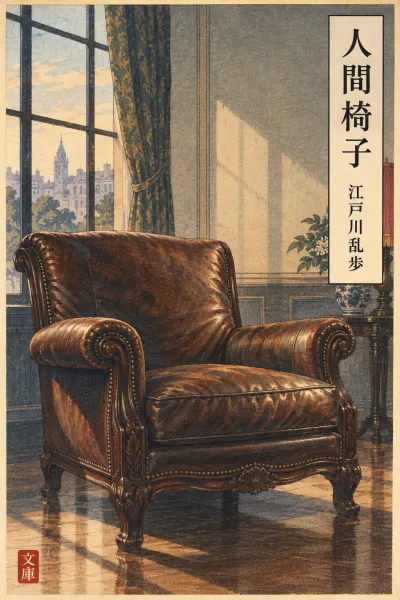
人間椅子 Ningenisu, part 5: A Hermit Crab in the Hotel Lounge
In this part
The armchair holding the letter-writer is set down in a busy hotel lounge, and he begins slipping out at quiet moments to steal from the guests. He compares himself to a hermit crab and admits that theft soon gave way to a far stranger pleasure, which he says is the true subject of his letter. He then describes the first time a large foreign man sat down on the chair, pressing against him through a single layer of leather.
AI translation · independently checked
非常に心配しましたけれど、結局、何事もなく、その日の午後には、もう私の這入った肘掛椅子は、ホテルの一室に、どっかりと、据えられて居りました。I was dreadfully anxious, yet in the end nothing went amiss, and by that very afternoon the armchair I had crept into was already set down, solid and heavy, in one of the rooms of the hotel.
後で分ったのですが、それは、私室ではなくて、人を待合せたり、新聞を読んだり、煙草をふかしたり、色々の人が頻繁に出入りする、ローンジとでもいう様な部屋でございました。I learned afterwards that it was no private room. It was what one might call a lounge, a room where all manner of people constantly came and went, waiting to meet someone, reading the newspaper, or puffing at a cigarette.
もうとっくに、御気づきでございましょうが、私の、この奇妙な行いの第一の目的は、人のいない時を見すまして、椅子の中から抜け出し、ホテルの中をうろつき廻って、盗みを働くことでありました。You will no doubt have guessed long ago that the first object of my strange undertaking was to wait for a moment when no one was about, slip out of the chair, prowl through the hotel, and commit theft.
椅子の中に人間が隠れていようなどと、そんな馬鹿馬鹿しいことを、誰が想像致しましょう。For who, I ask you, would ever imagine anything so absurd as a man hiding inside a chair?
私は、影の様に、自由自在に、部屋から部屋を、荒し廻ることが出来ます。Like a shadow, I could go wherever I pleased, ransacking one room after another.
そして、人々が、騒ぎ始める時分には、椅子の中の隠家へ逃げ帰って、息を潜めて、彼等の間抜けな捜索を、見物していればよいのです。Then, by the time people began to raise an alarm, I had only to flee back to my hiding place inside the chair, hold my breath, and look on at their foolish searching.
あなたは、海岸の波打際などに、「やどかり」という一種の蟹のいるのを御存じでございましょう。You will surely know, Madam, of the creature called the hermit crab, a kind of crab found at the water's edge along the shore.
大きな蜘蛛の様な恰好をしていて、人がいないと、その辺を我物顔に、のさばり歩いていますが、一寸でも人の跫音がしますと、恐ろしい速さで、貝殻の中へ逃げ込みます。It is shaped rather like a large spider, and when no one is near it swaggers about as though it owned the place; but at the slightest sound of a human footstep it darts with fearful speed back into its shell.
そして、気味の悪い、毛むくじゃらの前足を、少しばかり貝殻から覗かせて、敵の動静を伺って居ります。And there it waits, a little of its hideous, hairy front legs poking out of the shell, watching its enemy's every move.
私は丁度あの「やどかり」でございました。I was exactly like that hermit crab.
貝殻の代りに、椅子という隠家を持ち、海岸ではなくて、ホテルの中を、我物顔に、のさばり歩くのでございます。Instead of a shell I had a chair for my hiding place, and instead of the seashore it was the hotel through which I swaggered about as though I owned it.
さて、この私の突飛な計画は、それが突飛であった丈け、人々の意表外に出でて、見事に成功致しました。Now, this outlandish scheme of mine, precisely because it was so outlandish, took everyone wholly by surprise and succeeded splendidly.
ホテルに着いて三日目には、もう、たんまりと一仕事済ませて居た程でございます。Indeed, by my third day at the hotel I had already finished a handsome piece of work.
いざ盗みをするという時の、恐ろしくも、楽しい心持、うまく成功した時の、何とも形容し難い嬉しさ、それから、人々が私のすぐ鼻の先で、あっちへ逃げた、こっちへ逃げたと大騒ぎをやっているのを、じっと見ているおかしさ。The feeling, at once terrifying and delightful, at the very moment of stealing; the joy, beyond all words, when I had succeeded; and then the amusement of lying perfectly still and watching people make a tremendous uproar right under my nose, crying, 'He ran that way!' and 'He ran this way!'
それがまあ、どの様な不思議な魅力を持って、私を楽しませたことでございましょう。Oh, with what strange fascination all of this delighted me!
でも、私は今、残念ながら、それを詳しくお話している暇はありません。But I regret that I have no time now to tell you of it in detail.
私はそこで、そんな盗みなどよりは、十倍も二十倍も、私を喜ばせた所の、奇怪極まる快楽を発見したのでございます。It was then that I discovered a pleasure of the most bizarre kind, one that gave me ten, even twenty times more delight than any mere theft.
そして、それについて、告白することが、実は、この手紙の本当の目的なのでございます。And to confess that pleasure, Madam, is in truth the real purpose of this letter.
お話を、前に戻して、私の椅子が、ホテルのローンジに置かれた時のことから、始めなければなりません。I must take my story back a little and begin from the time my chair was placed in the hotel lounge.
椅子が着くと、一しきり、ホテルの主人達が、その坐り工合を見廻って行きましたが、あとは、ひっそりとして、物音一つ致しません。When the chair arrived, the hotel's proprietor and his people came round for a while to try how it sat, but after that all fell quiet, and not a sound was to be heard.
多分部屋には、誰もいないのでしょう。Most likely there was no one in the room.
でも、到着匆々、椅子から出ることなど、迚も恐ろしくて出来るものではありません。Still, coming out of the chair so soon after arriving was far too frightening; it was simply not something I could have done.
私は、非常に長い間(ただそんなに感じたのかも知れませんが)少しの物音も聞き洩すまいと、全神経を耳に集めて、じっとあたりの様子を伺って居りました。For a very long while (though perhaps it only seemed so to me), determined not to miss the faintest sound, I gathered every nerve in my body into my ears and lay still, listening intently to what was going on around me.
そうして、暫くしますと、多分廊下の方からでしょう、コツコツと重苦しい跫音が響いて来ました。Then, after some time, there came the heavy echo of footsteps, tap, tap, most likely from the direction of the corridor.
それが、二三間向うまで近付くと、部屋に敷かれた絨氈の為に、殆ど聞きとれぬ程の低い音に代りましたが、間もなく、荒々しい男の鼻息が聞え、ハッと思う間に、西洋人らしい大きな身体が、私の膝の上に、ドサリと落ちてフカフカと二三度はずみました。When they drew within a few yards of me, the carpet spread on the floor softened them into a sound so low I could scarcely make it out; but soon I heard a man's rough breathing, and before I could even gasp, a large body, that of a Westerner by the look of it, dropped heavily onto my lap and bounced softly two or three times.
私の太腿と、その男のガッシリした偉大な臀部とは、薄い鞣皮一枚を隔てて、暖味を感じる程も密接しています。My thighs and the man's sturdy, massive buttocks were pressed so close, with only one thin layer of tanned leather between them, that I could feel his warmth.
幅の広い彼の肩は、丁度私の胸の所へ凭れかかり、重い両手は、革を隔てて、私の手と重なり合っています。His broad shoulders leaned back squarely against my chest, and his heavy hands lay upon mine, separated by the leather.
そして、男がシガーをくゆらしているのでしょう。And the man, it seemed, was smoking a cigar.
男性的な、豊な薫が、革の隙間を通して漾って参ります。A rich, manly fragrance came drifting in to me through the gaps in the leather.
Vocabulary
| Word | Meaning | JLPT |
|---|---|---|
| 据えすえる | to set (something heavy) in place; to installdictionary form: 据えるUsed for furniture or objects placed firmly in one position. | N1 |
| 頻繁ひんぱん | frequent, constantUsed as 頻繁に (frequently) before a verb. | N1 |
| 盗みを働くぬすみをはたらく | to commit theft働く here means 'to commit (a crime)'. It is a set phrase with 盗み or 悪事. | — |
| 見すましてみすます | to watch carefully for (the right moment)dictionary form: 見すますLiterary. It implies waiting until one is sure the coast is clear. | — |
| 隠家かくれが | hiding place, hideoutdictionary form: 隠れ家Now usually written 隠れ家. | — |
| 息を潜めていきをひそめる | to hold one's breath; to keep perfectly quietdictionary form: 息を潜める | — |
| 我物顔わがものがお | as if one owned the placedictionary form: 我が物顔Usually used as 我が物顔に + verb. It suggests arrogant, unchecked behaviour. | — |
| のさばり歩いてのさばりあるく | to swagger about uncheckeddictionary form: のさばり歩くのさばる means to act as one pleases, and it carries a negative tone. | — |
| 動静どうせい | movements; what someone is doingFormal. 動静を伺う means to keep watch on someone's movements. | — |
| 突飛とっぴ | outlandish, wildly unexpectedA na-adjective. | — |
| 意表いひょう | what is expectedNormally used in 意表を突く or 意表に出る, 'to take someone by surprise'. | — |
| 奇怪きっかい | bizarre, grotesqueAlso read きかい. 奇怪極まる means 'utterly bizarre'. | — |
| 鞣皮なめしがわ | tanned leatherdictionary form: 鞣革鞣す (なめす) means to tan hides. | — |
| くゆらしてくゆらす | to puff on (a cigar or pipe); to let smoke curl updictionary form: くゆらすA literary verb. | — |
Grammar
〜たり〜たり N4 doing things like A and B
This pattern lists typical actions as examples without claiming the list is complete. Here it describes what people do in the lounge.
人を待合せたり、新聞を読んだり、煙草をふかしたり
waiting to meet someone, reading the newspaper, or puffing at a cigarette
誰が〜ましょう(反語) N2 who would ever…? (= no one would)
A question with 誰が and the volitional form is rhetorical and expects the answer 'no one'. The humble 致しましょう keeps the letter's polite tone.
そんな馬鹿馬鹿しいことを、誰が想像致しましょう。
who would ever imagine anything so absurd?
〜ていればよい N3 all one has to do is keep doing…
The ている form plus ばよい says that simply staying in a state is enough. The writer only has to watch quietly from inside the chair.
彼等の間抜けな捜索を、見物していればよいのです。
I had only to look on at their foolish searching.
〜(た)だけ N2 precisely because…; all the more since…
When だけ follows a clause, it means the result is in proportion to that quality. The plan was so outlandish that this very fact made it succeed.
それが突飛であった丈け、人々の意表外に出でて
precisely because it was so outlandish, it took everyone by surprise
〜難い(がたい) N2 hard to…; impossible to…
Attached to the verb stem, がたい means the action is extremely difficult, often for emotional reasons. 何とも形容し難い means 'impossible to describe at all'.
何とも形容し難い嬉しさ
a joy beyond all words